Nuclear TigeRES: The “Atomic Tigers’” Journey from a Youth Project to BLAST Bounty Summer 2026

Nuclear TigeRES started as a project to develop young players, and in the summer of 2026, it received an invitation to BLAST Bounty. We’ll take a closer look at how the team made it into the top 40 of the VRS, what helped them win NODWIN Clutch Series 9, and why their loss to MOUZ was still an important test.
A Project, Not a Random Mix
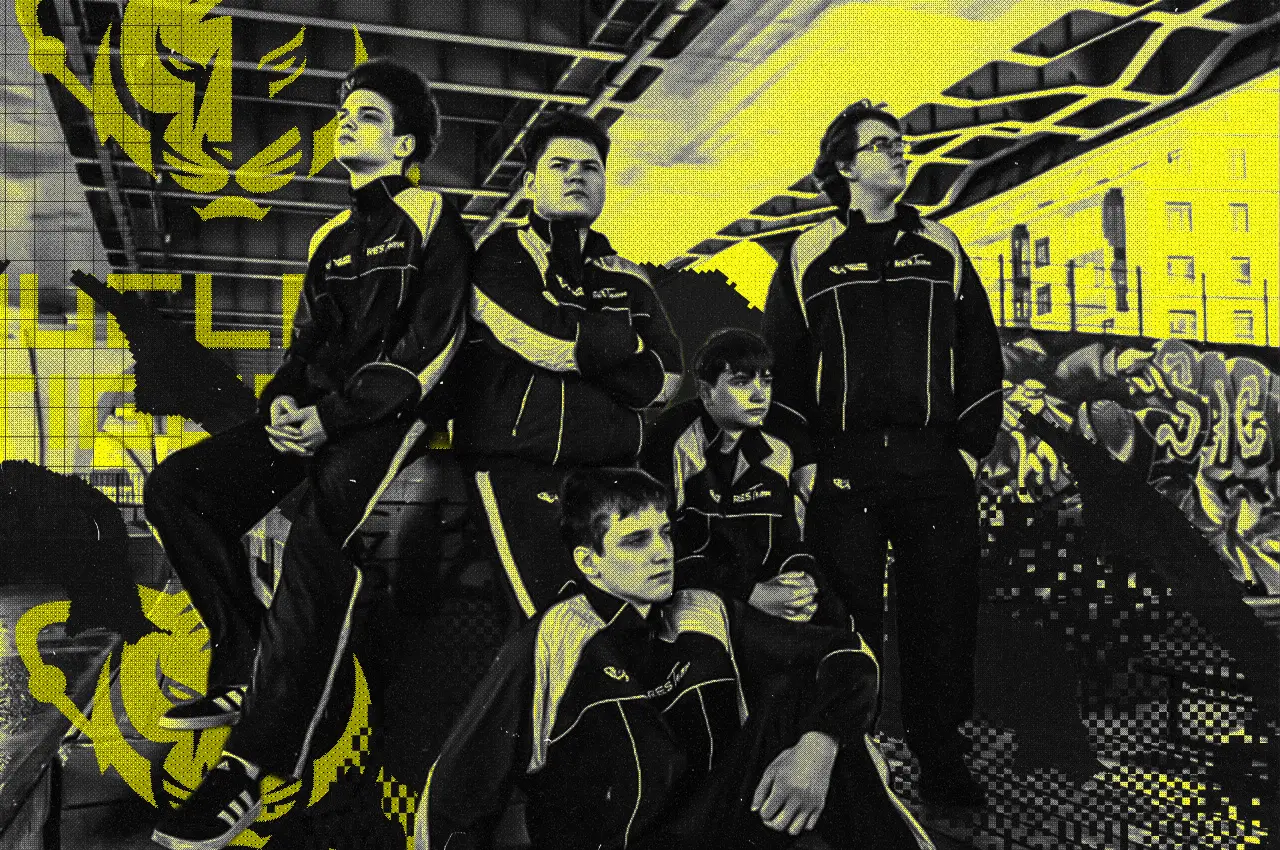
Nuclear TigeRES was founded in August 2024 in St. Petersburg. From the very beginning, the organization positioned itself not only as a professional team but also as a platform for developing young players. This is a key distinction: the club sought to assemble a promising roster that could train, compete online, and gradually gain experience at LAN tournaments.
The project also has strong organizational backing. In January 2025, the St. Petersburg-based company RES Engineering—a developer and supplier of equipment and pipeline fittings for nuclear power plants—became the general sponsor of Nuclear TigeRES. On its own website, the company explicitly refers to Nuclear TigeRES as its esports team.
The first few months gave no reason to talk about a new contender for major tournaments. The team had no well-known players, no spot in the upper echelons of the VRS, and no significant international experience. The team was firmly entrenched in the European Tier 3 scene: playing in smaller leagues, rotating players in certain positions, and trying to find a starting five where youth wouldn’t mean chaos.
That’s exactly why their current progress is more interesting than the usual short winning streak. Nuclear TigeRES didn’t buy a ready-made, successful core, nor did they receive an invitation based on a high-profile tag. The team made it to the match against MOUZ through a gradual roster overhaul, local tournaments, and a string of results that began to pay off in the Valve Regional Standings system.
The First Roster and a Year of Searching
In the fall of 2024, the core of Nuclear TigeRES consisted of Arseniy “senka” Kozlovsky, Ilya “flouzer” Selifonov, Matvey “k0s” Abramov, Yuri “h1kaN” Rotar, and Vladislav “fluffy” Galimov. Nikita “waterfaLLZ” Matveev served as the team’s manager. Of this original lineup, only senka and flouzer—the captain and one of the team’s main sources of firepower—remained with the team until 2026.
A major restructuring began in the summer of 2025. First came sniper Timur “z1k4” Askhadulin, followed by coach Anton “tonyblack” Kolesnikov and rifler Denis “m1QUSE” Karpovich. The team struggled to fill the last position for some time: various players came and went, and in August, Daniil “Re1GN” Chekanin secured the spot.
This five-man lineup wasn’t quite a finished product yet, but it was this group that gave Nuclear TigeRES its first notable milestones. At Majestic LanDaLan #3, the team lost to PARIVISION, defeated Nemiga, and fell to 9BOOMPRO in a best-of-three series. Their final 5th–6th place finish wasn’t exactly a sensation, but it did show that the young core was capable of keeping pace against more experienced opponents—and not just in their usual online environment.
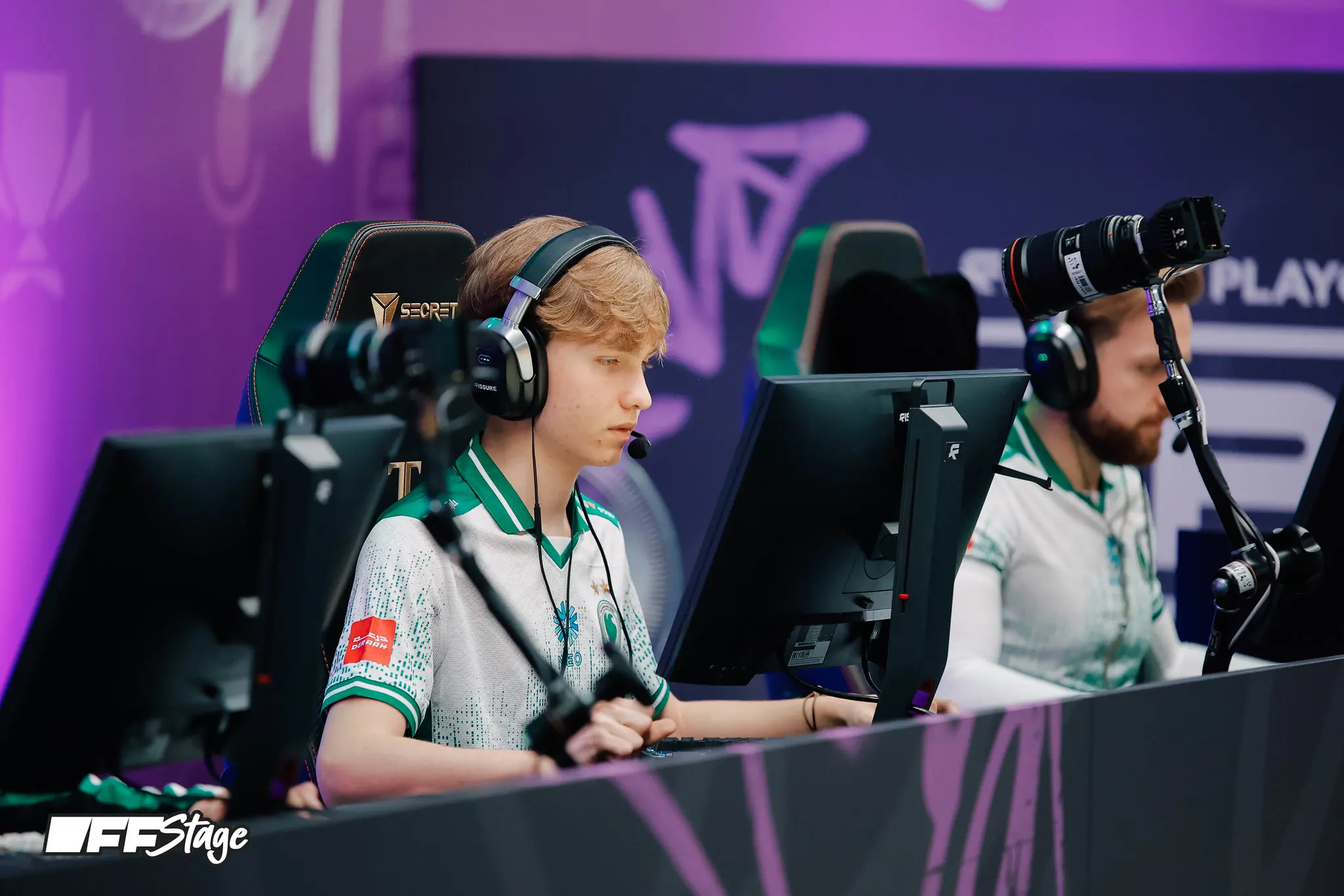
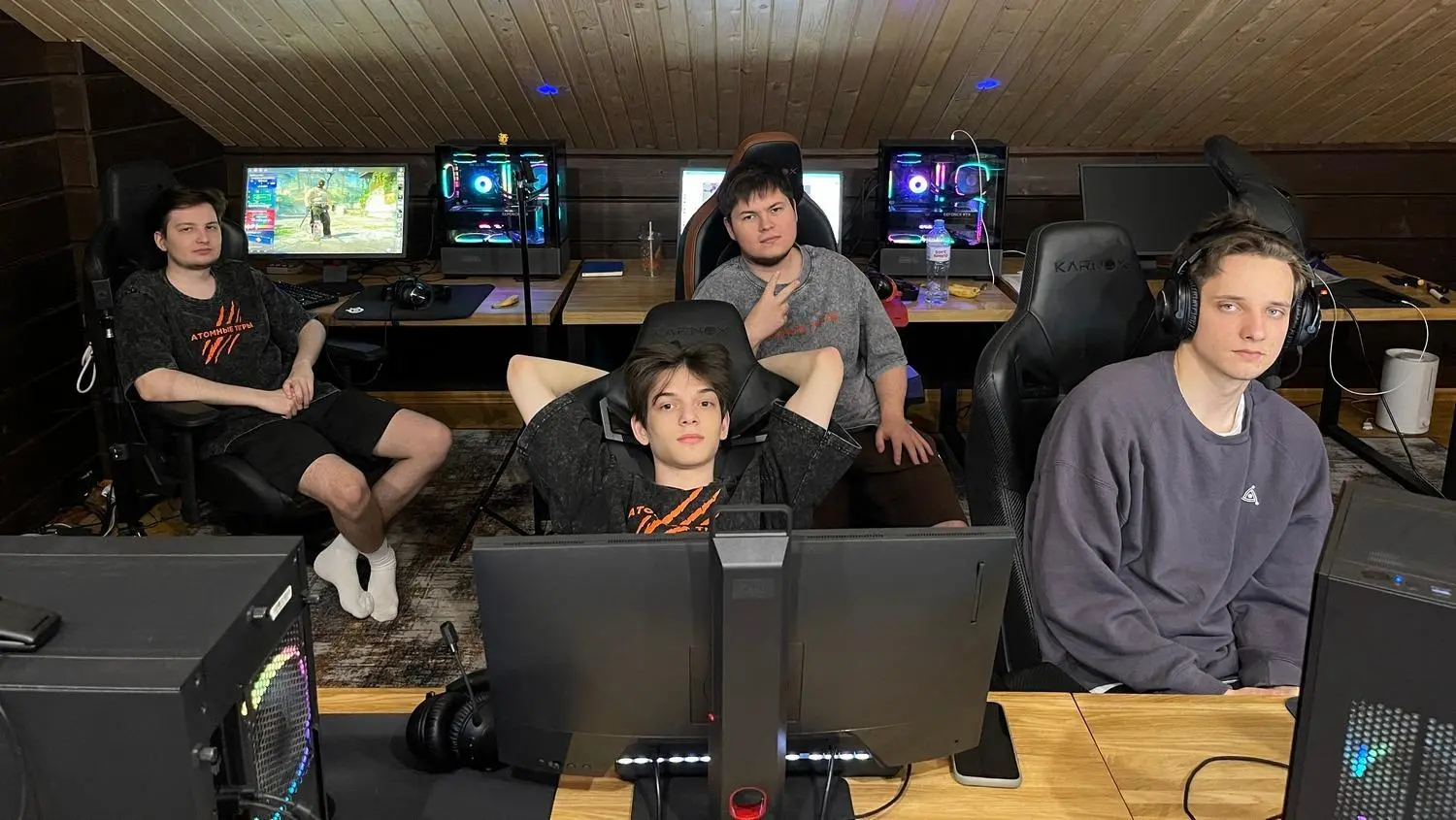
In January 2026, Re1GN was benched, and his spot was taken by Egor “ayuki” Ershov. Two months later, Vadim “Polt” Tsirov took over as team captain. The search wasn’t over for good, but the roles finally stopped feeling like stopgap measures. Nuclear TigeRES now had a clear-cut captain, a primary sniper, two active young riflers, and a player who tied their actions together.
A Roster That Has Found Balance
The 20-year-old senka remains the captain. His stats are more modest than those of his teammates, but his set of responsibilities is different: managing the attack, grenades, taking difficult positions, and preserving the structure after a firefight. This is especially valuable for a young team. When the captain doesn’t demand the best spots for himself, players who are more effective at turning those spots into frags get the space they need.
The main rifle duo consists of flouzer and 18-year-old ayuki. The former starts rounds well and isn’t afraid to seek early engagement, while the latter combines strong entry play with high-quality exchanges. In the run-up to BLAST Bounty, both maintained a rating of around 1.13. This doesn’t make them ready-made Tier 1 stars, but it explains why Nuclear TigeRES is increasingly winning maps not just because of a single successful AWP streak.
z1k4 handles the sniper rifle and usually provides the team with the most consistent baseline performance. m1QUSE complements the attacking riflers. Coach Polt has a young but already well-functioning five-man roster, in which each player understands why they’re in their specific position.
What are Nuclear TigeRES’s strengths?
The team’s key strength is its ability to adapt beyond a single playstyle. Nuclear TigeRES can start a map with quick engagements from flouzer and ayuki, but they don’t have to turn every round into a firefight within the first twenty seconds. senka often saves his grenades and maintains space for rotations, while z1k4 gets the chance to influence the mid-round phase once the opponent has revealed part of their positioning.
Going into the match against MOUZ, the team had a fairly broad map pool. Over the previous three months, Nuclear TigeRES had won about 71% of their series. Anubis remained their strongest pick—13 wins and two losses. The team picked Ancient particularly often, but the results were noticeably less consistent: eight wins and six losses. Dust2, Mirage, and Nuke also didn’t look like bad map choices. This is an important indicator: it’s not enough for an opponent to counter just one pick to completely derail the “Tigers’” game plan for a series.
That said, the team currently looks better in a prepared attack than in a protracted adjustment phase against top-tier opponents. When their opening plan works, Nuclear TigeRES quickly builds up their economy and keeps the opponent guessing. However, if several rounds in a row fall apart due to an early deficit or unexpected aggression, it’s harder for the young five-man squad to slow down, gather information anew, and adjust their strategy for the second half.
Seven Wins at NODWIN Clutch Series 9
Nuclear TigeRES’s most impressive run came at NODWIN Clutch Series 9. During that single tournament, the team won seven matches in a row: they defeated RUSTEC, AM, CYBERSHOKE, illwill, and Gentle Mates, and then beat K27 and Nemesis over three maps. This wasn’t just a lucky day in the open qualifiers, but a full-fledged run against various opponents and across two series, in which they had to bounce back after losing a map.
In the final against Nemesis, the “Tigers” lost Nuke 10–13 but didn’t fall apart, taking Dust 2 13–9 and Ancient 13–7. z1k4 finished the series with a rating of 1.35, flouzer scored 1.24, and ayuki—1.17. This distribution of stats clearly illustrates the team’s strength: the sniper creates an advantage, the two young riflers maintain the pace, and the captain doesn’t have to win the match single-handedly.
It’s important to clarify the scope of the series. Between these matches, Nuclear TigeRES lost to Oxuji in another tournament, so this isn’t about seven consecutive wins across the entire schedule, but rather seven matches won within the NODWIN tournament. But that doesn’t diminish the value of the result: the team reached the title without relying on a single fluke and demonstrated its ability to bounce back during best-of-3 series.
After the victory came a nearly month-long hiatus, and their return turned out to be a rough one—a 0-2 loss to Atreides. Therefore, the invitation to BLAST Bounty served as both a reward for their accumulated results and a stress test. Instead of their usual rival from the European online scene, Nuclear, TigeRES had the opportunity to choose MOUZ—the fourth-seeded team and a regular participant in major tournaments.
BLAST: We Have the Ideas, but We’re Still Missing the Finishing Touches
The series ended with a 0-2 score, but it wasn’t hopeless. MOUZ immediately picked Anubis, depriving Nuclear TigeRES of their most productive map, after which the “Tigers” selected Ancient. On attack, they fought back to tie the score at 6–6, but on defense they failed to win a single round and lost 6–13. MOUZ quickly identified weak spots and didn’t allow the young team to adjust their positioning. On Nuke, the difference in skill level seemed much smaller. Nuclear TigeRES started with a 5–0 lead, extended their advantage to 11–7 after the side switch, and were just two rounds away from forcing a third map.
The turning point came with a triple kill by Lotan “Spinx” Giladi using a Desert Eagle: MOUZ took a half-buy, regained their economic advantage, and won six rounds in a row—13–11. This is where the key difference between a promising team and a consistent Tier 1 contender became apparent. Nuclear TigeRES already had a well-prepared attack, bold decisions, and the ability to put the favorite on the back foot, but they lacked experience.
Why the loss to MOUZ is still significant
The match didn’t turn Nuclear TigeRES into a Tier 1 team and shouldn’t be viewed as a near-upset. MOUZ won both maps. On Ancient, MOUZ completely controlled the second half, and on Nuke, the European team handled the decisive rounds better. But for this young five-man squad, a series like this is more valuable than yet another confident victory over a familiar opponent.
The good news is that everything can be fixed. The roster already understands how it wants to attack, has a solid map pool, and is capable of winning series. It would be much harder to attribute a loss to a lack of roles, a weak AWP player, or complete dependence on a single marksman—Nuclear TigeRES currently shows none of these signs.
Where Is the Team’s Ceiling?
By the time of BLAST Bounty, Nuclear TigeRES had climbed to around 40th place in the VRS. This is already the territory of regular international invitations, but it’s not yet a guarantee of matches against the top 20. To solidify their position higher up, the team needs not only new online wins but also LAN championships.
The most realistic near-term goal is the VRS top 30. To achieve this, Nuclear TigeRES simply needs to keep its core roster intact, turn strong tournament weeks into titles, and close out maps more often against opponents of their own caliber. The path to the top 20 will require preparation: consistent wins over teams in the top 30, more flexible defense, and the ability to close out maps with scores like 11-7 on Nuke.
The potential for such a leap is there. flouzer and ayuki are only 18 years old, senka has not yet reached his full potential as captain, and z1k4 provides the team with stability in the most critical position. Nuclear TigeRES’s main advantage is time: this isn’t a roster that’s expected to immediately justify its large transfer costs. But time only works in tandem with progress, so the coming months will reveal what happens next.
The next step is learning how to close out maps
Nuclear TigeRES’s story so far isn’t one of a sudden breakthrough into the elite. It’s been a steady journey from an unremarkable youth project to a team that won an international online tournament, climbed into the VRS top 40, and forced MOUZ to come back from a 7-11 deficit. This progress has already made the “Atomic Tigers” a notable name beyond the local scene.
Now they face the most challenging part of their development. It’s easier to surprise a favorite with a few strong rounds than to consistently close out evenly matched maps. Putting together a strong offense is easier than defending with equal flexibility against different playstyles. If Nuclear TigeRES maintains its current balance and learns to weather pivotal moments without a string of mistakes, the match against MOUZ will be remembered not as the ceiling for this five-man squad, but as the first true demonstration of its potential.