All Landscapes in Dota 2: Which Ones You Can Buy, How to Change Them, and Which One to Choose

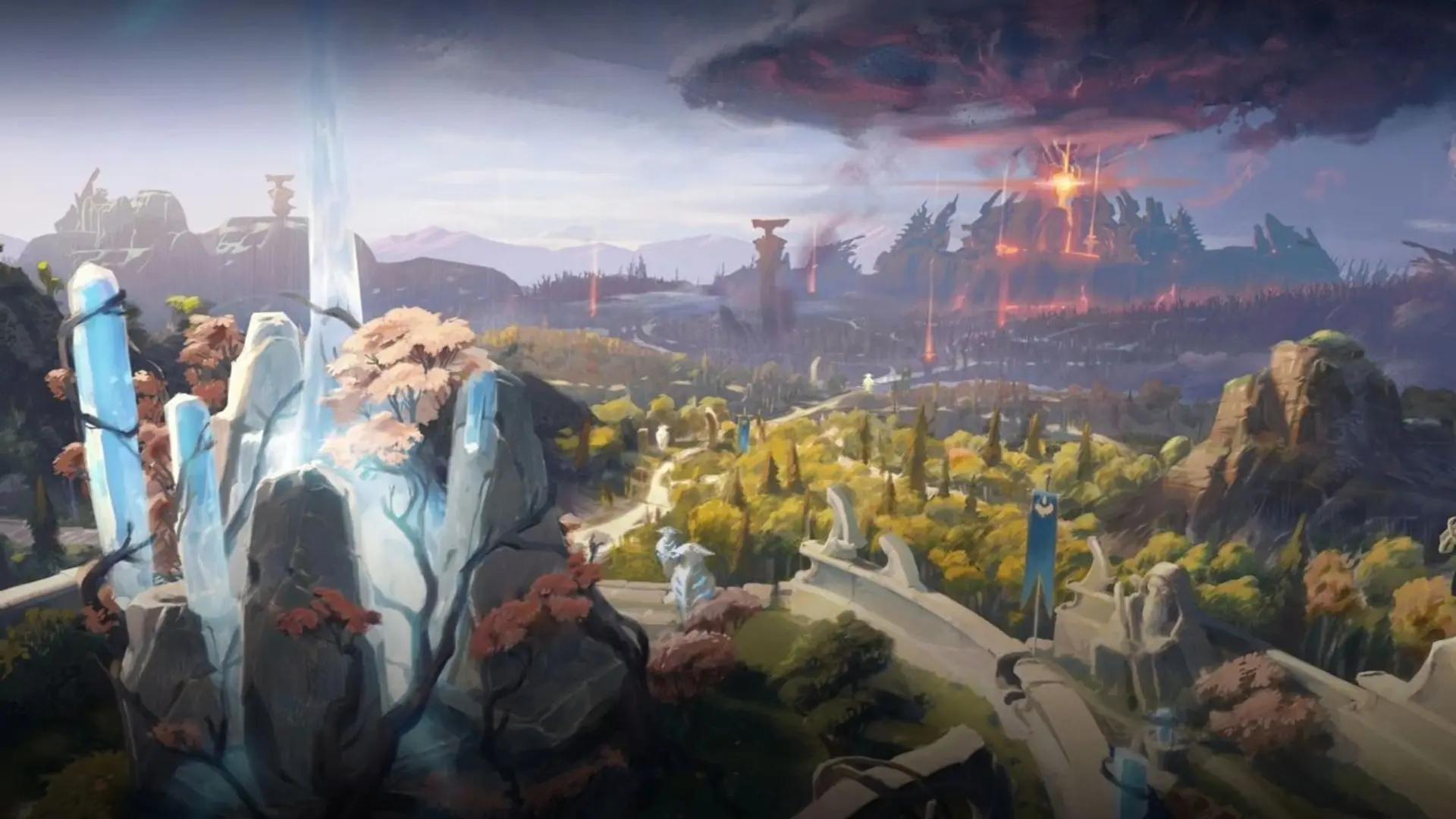
Maps in Dota 2 are cosmetic items just like hero skins, but instead of changing a character, they change the map. They completely transform the map’s appearance—including creatures, trees, plants, and other objects on both sides. In this article, we’ll tell you about each one.
List of All Map Skins in Dota 2
There are currently 11 maps in the game. Valve hasn’t released any new ones since May 2020. The most recent one was “Sanctums of the Divine,” which was released in conjunction with The International 10. They are divided into three tiers: Mythical, Immortal, and “Seasonal.” The full list of maps in order of release date is as follows:
| Name | Quality | Release Date |
| Desert | Mythical | December 16, 2015 |
| Winter | Seasonal | January 27, 2015 |
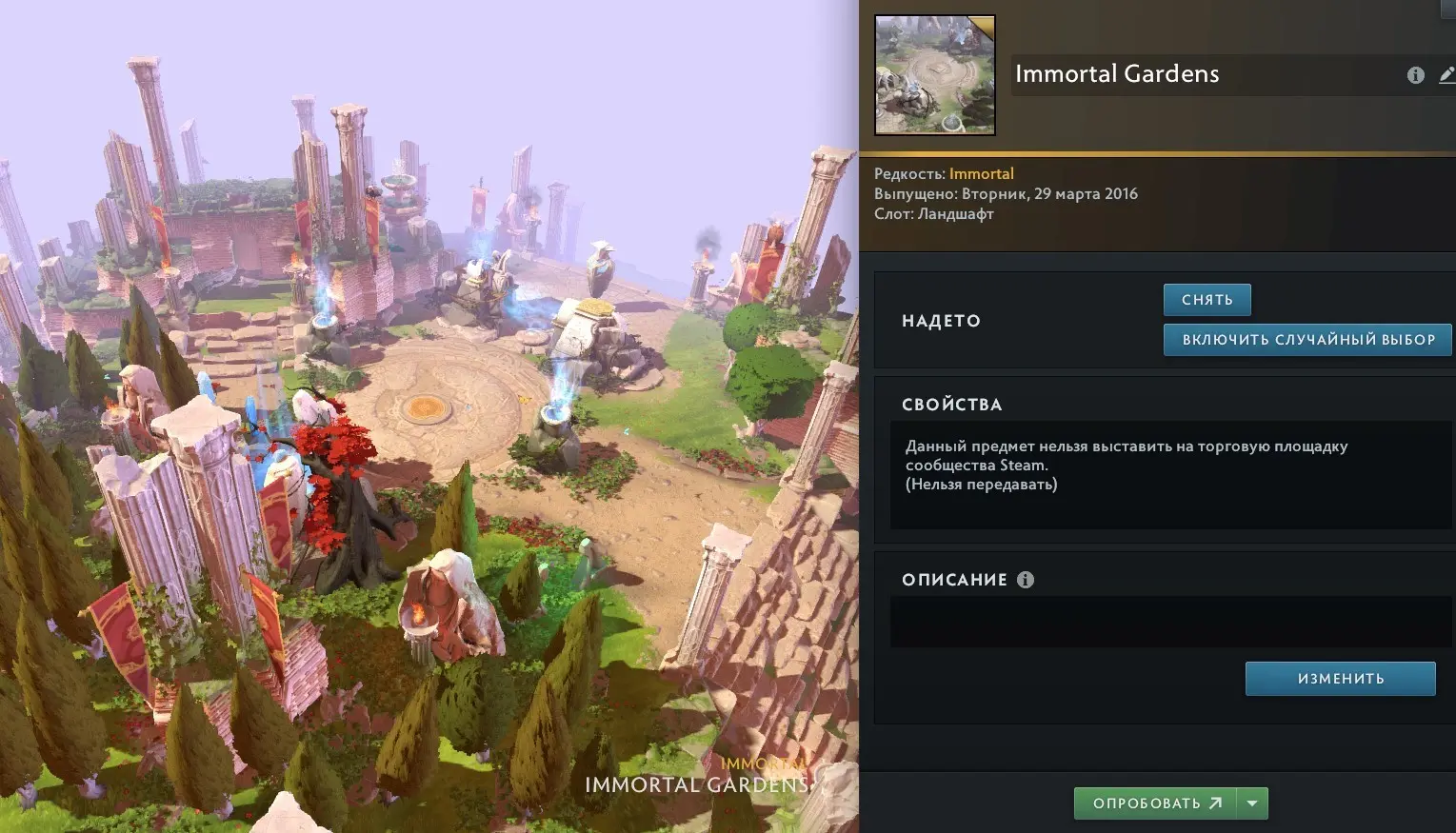
| Immortal Gardens | Immortal | May 16, 2016 |
| The King’s New Journey | Mythical | May 16, 2016 |
| Spring | Seasonal | May 16, 2016 |
| Fall | Seasonal | October 5, 2016 |
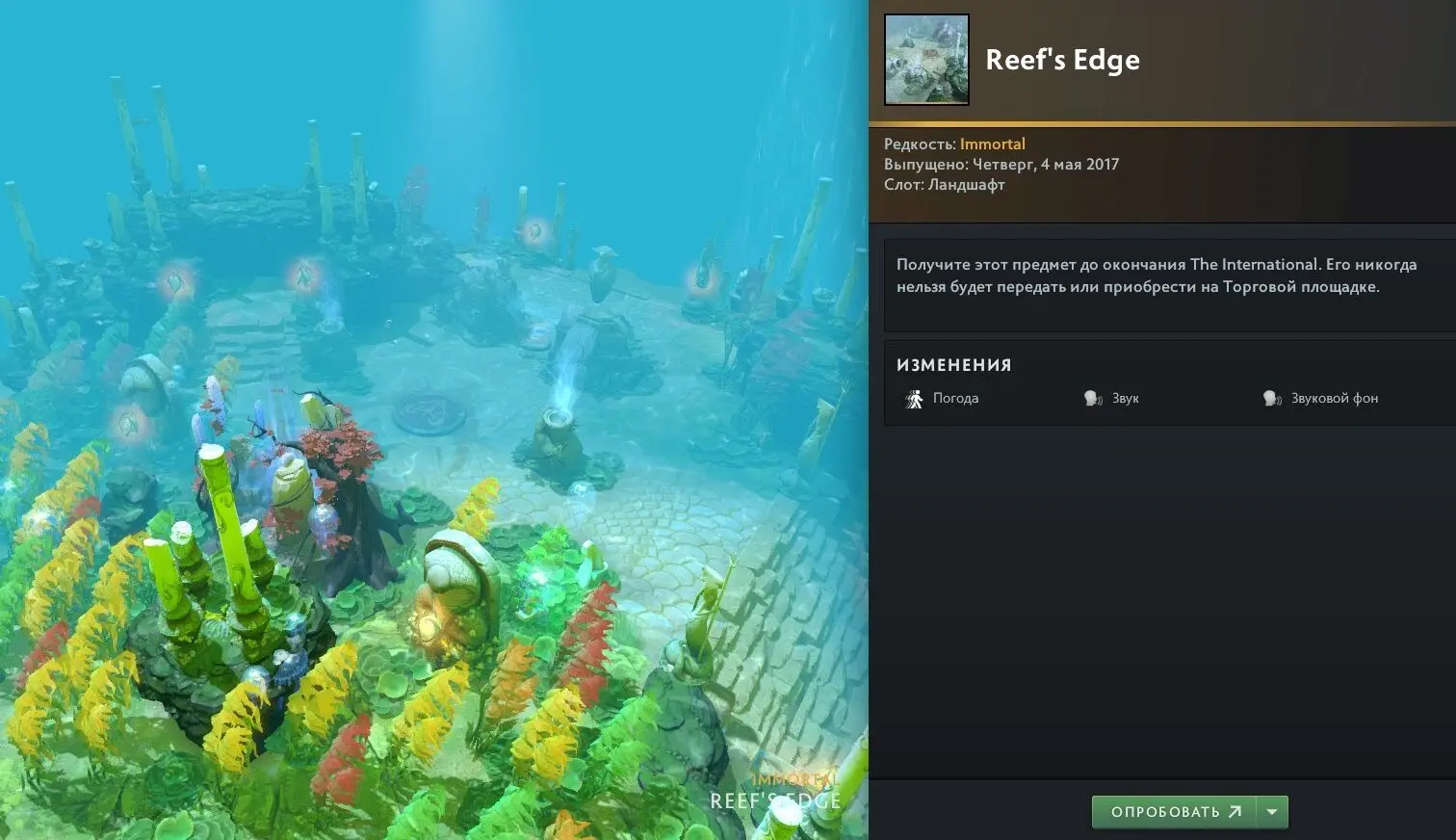
| Reef’s Edge | Immortal | May 4, 2017 |
| Summer | Seasonal | July 11, 2018 |
| Overgrow Empire | Immortal | May 7, 2019 |
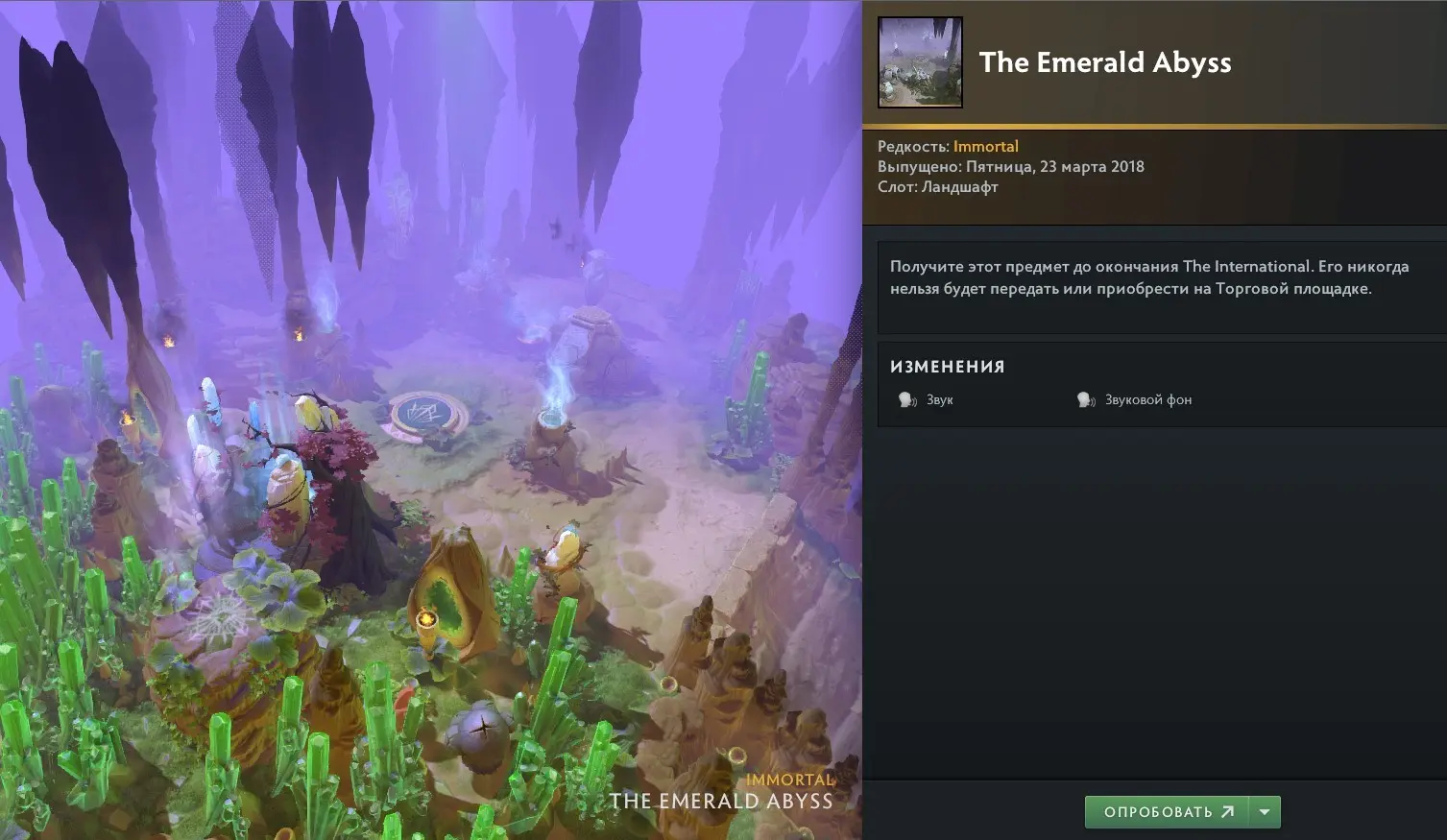
| The Emerald Abyss | Immortal | May 8, 2018 |
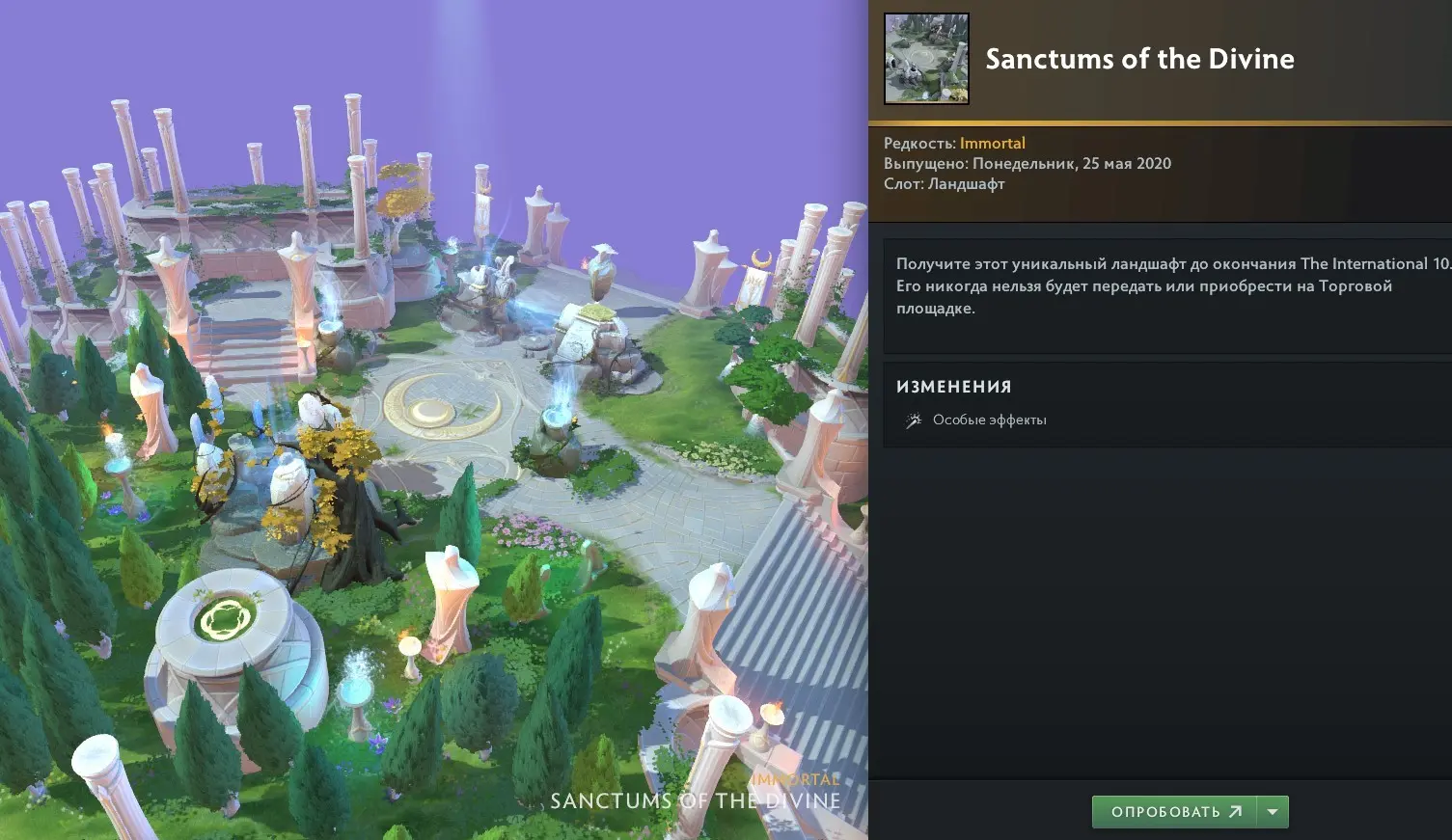
| Sanctums of the Divine | Immortal | May 25, 2020 |
How to Change the Map in Dota 2
You can preview or equip any map (even one that’s not available) through the “Arsenal.” To do this:
- Open the “Arsenal” at the top, go to the “Environment” tab, then to “Landscapes.”
- Find the map you want and click “Equip” or select “Preview.”
- If you preview it, you won’t be able to play with it—you can only view it in the lobby.
Which Dota landscape can you buy on Steam?
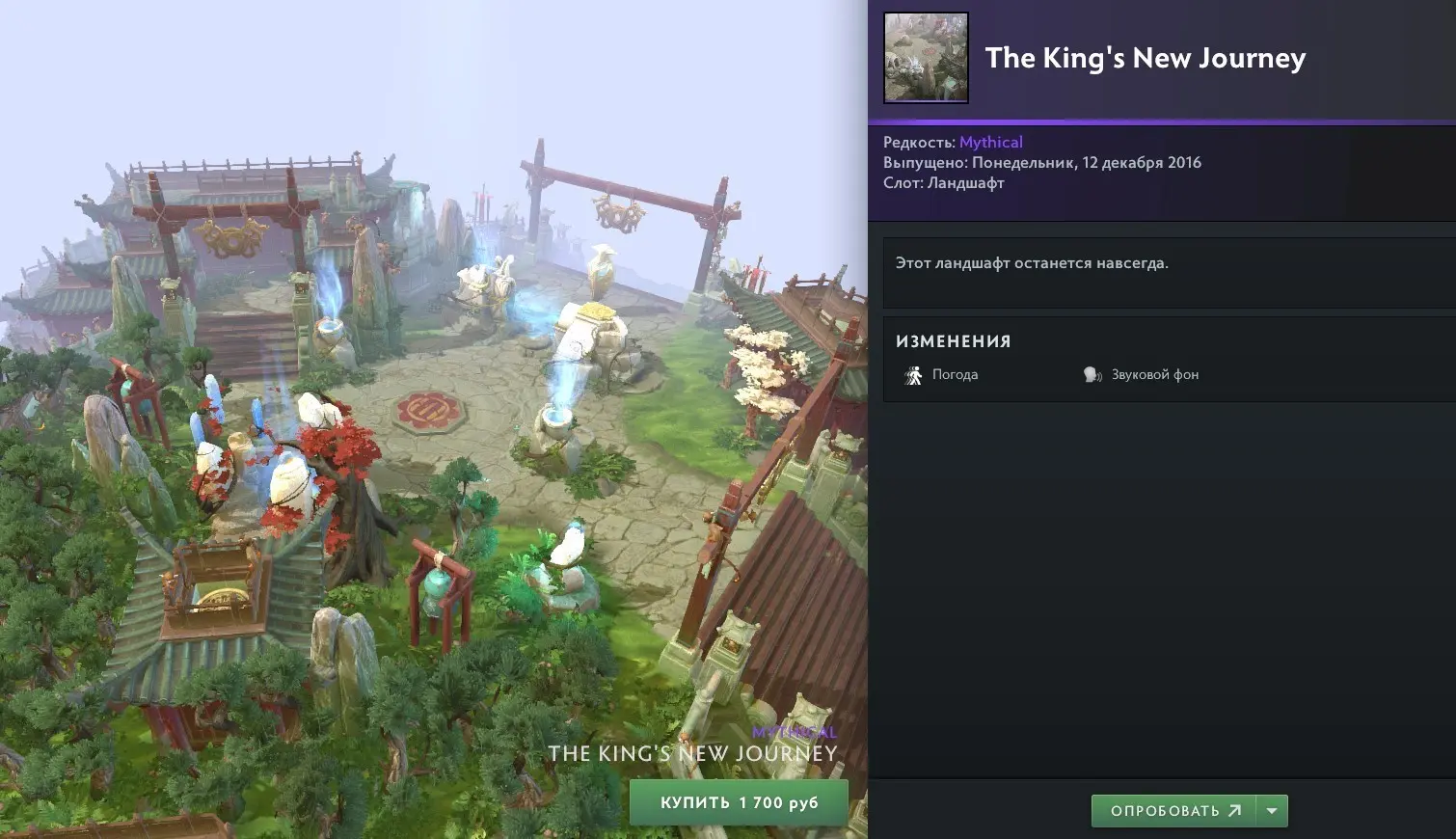
Only one landscape is available for purchase on the Steam marketplace: The King’s New Journey. It was released on December 12, 2016, alongside Patch 7.00 and Monkey King. At the time of writing, its price starts at 1,485 ₽, while in the client itself, it’s exactly 1,700 ₽.
How to get the Dota map for free
This was possible as part of The International 2026 fantasy league: users had to earn a certain number of points to at least reach the 90th percentile of the event. Anyone who reached this milestone received a Dota map token, which allowed them to choose one of six styles:
- Immortal Gardens;
- Overgrown Empire;
- The Emerald Abyss;
- Sanctums of the Divine;
- Desert Terrain;
- Reef’s Edge.
Any landscape a player chose remained theirs permanently. It could not be sold, transferred, or gifted—it was tied to the account.
Seasonal Scenes
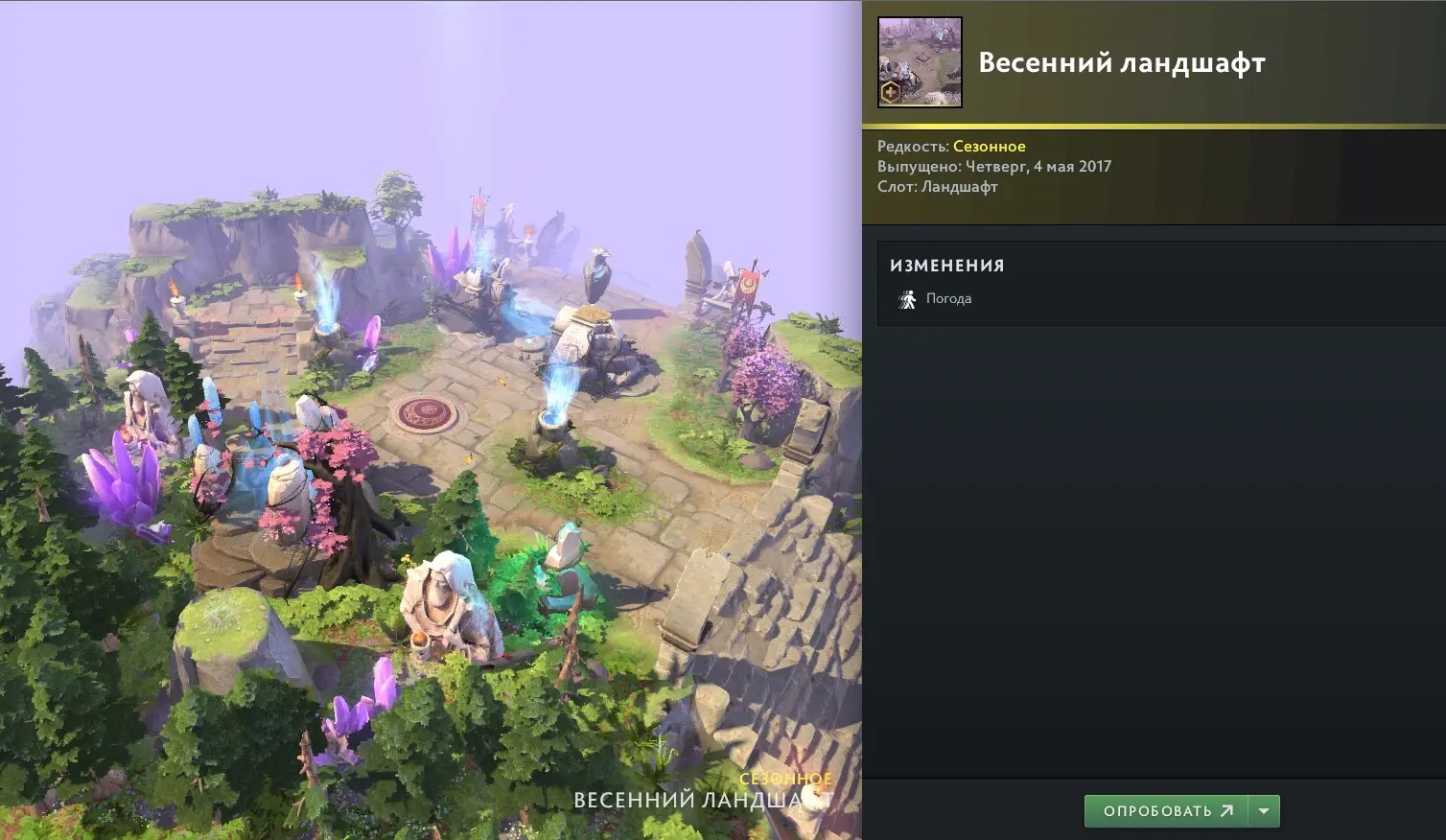
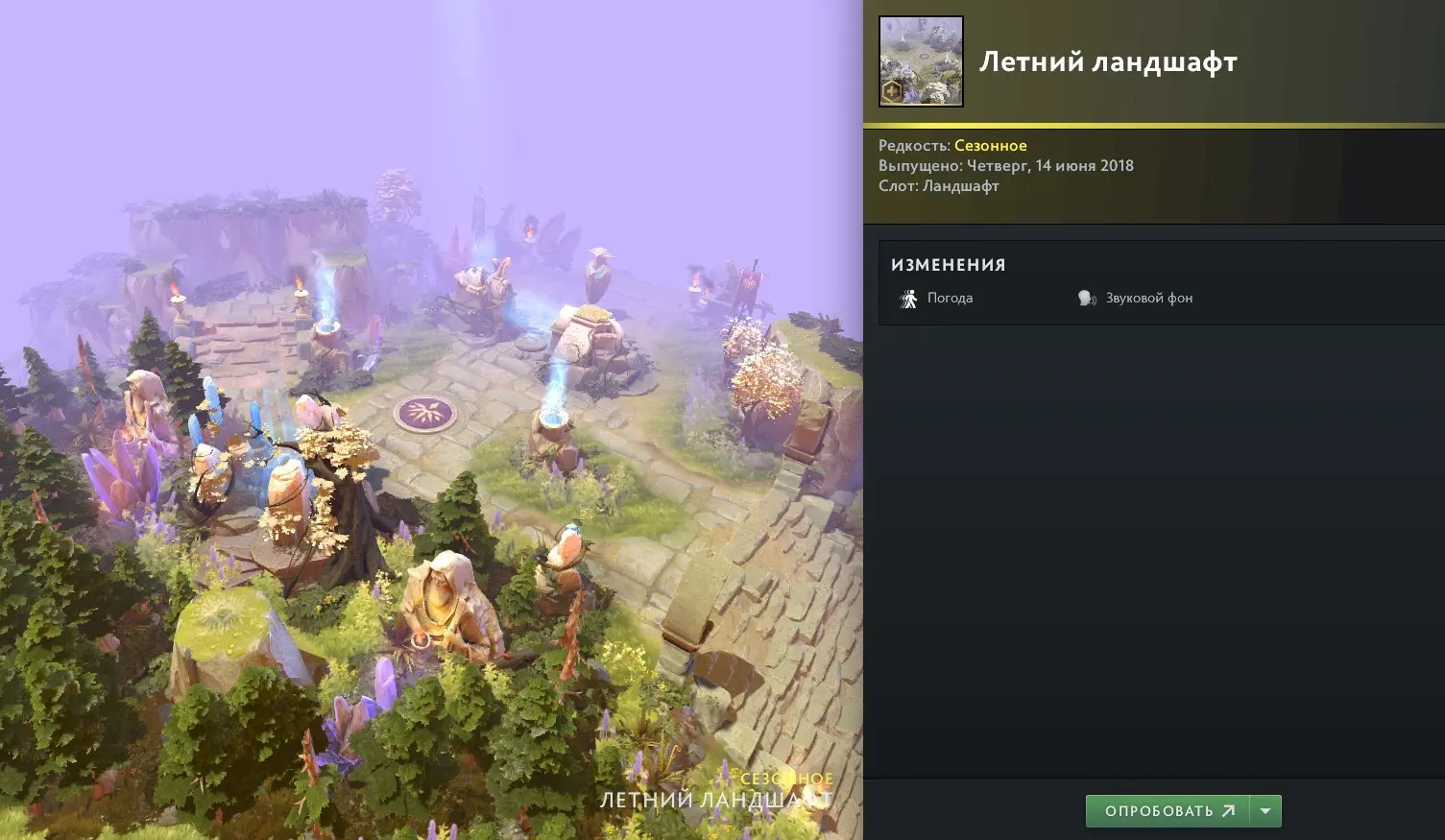
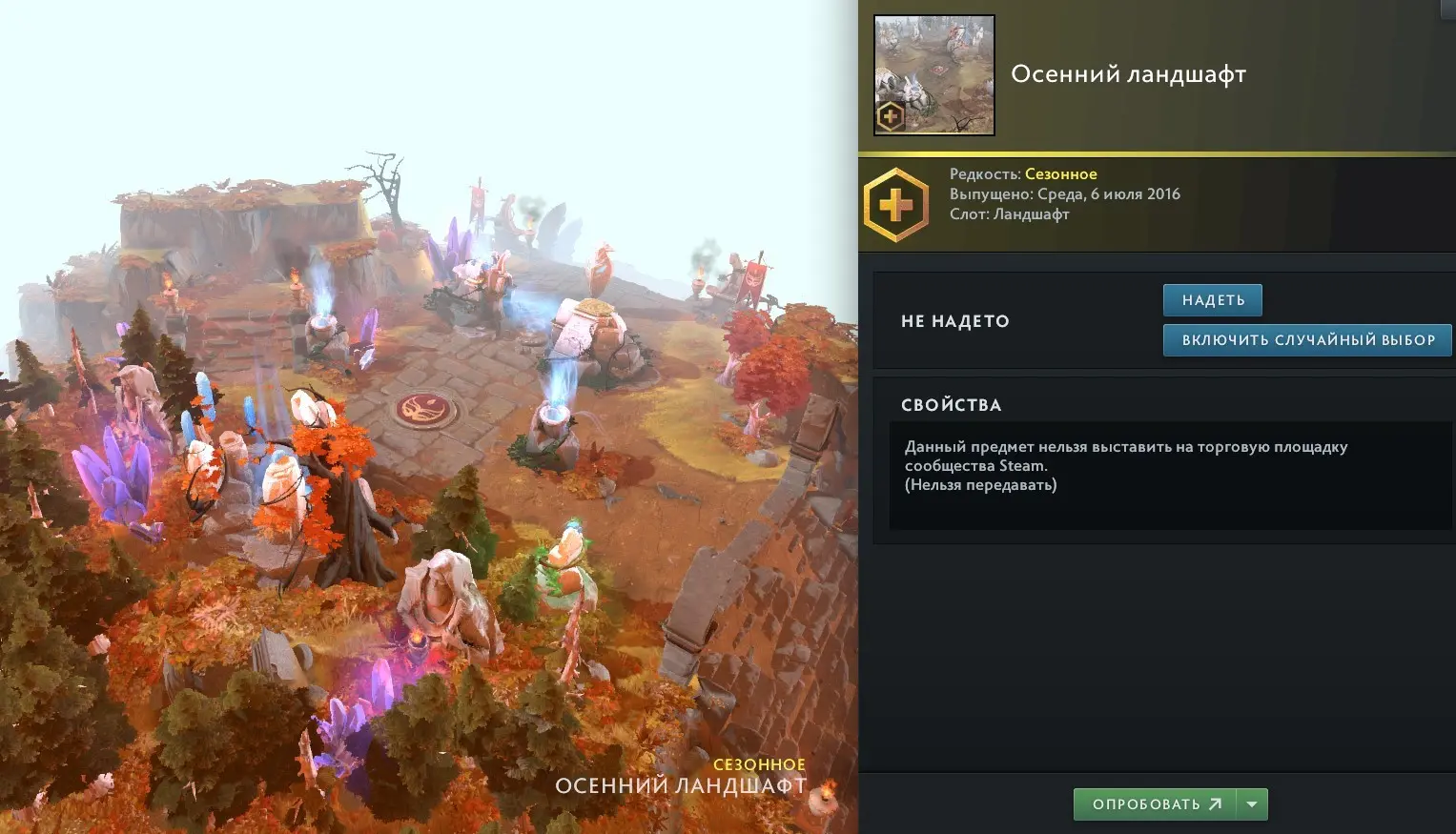
These appear in a user’s inventory only with a Dota Plus subscription and change depending on the season. With a subscription, you can enjoy spring, summer, fall, and winter landscapes in Dota 2. They are not sold on the Steam Marketplace. They look like this:
Spring
Summer
Fall
Winter
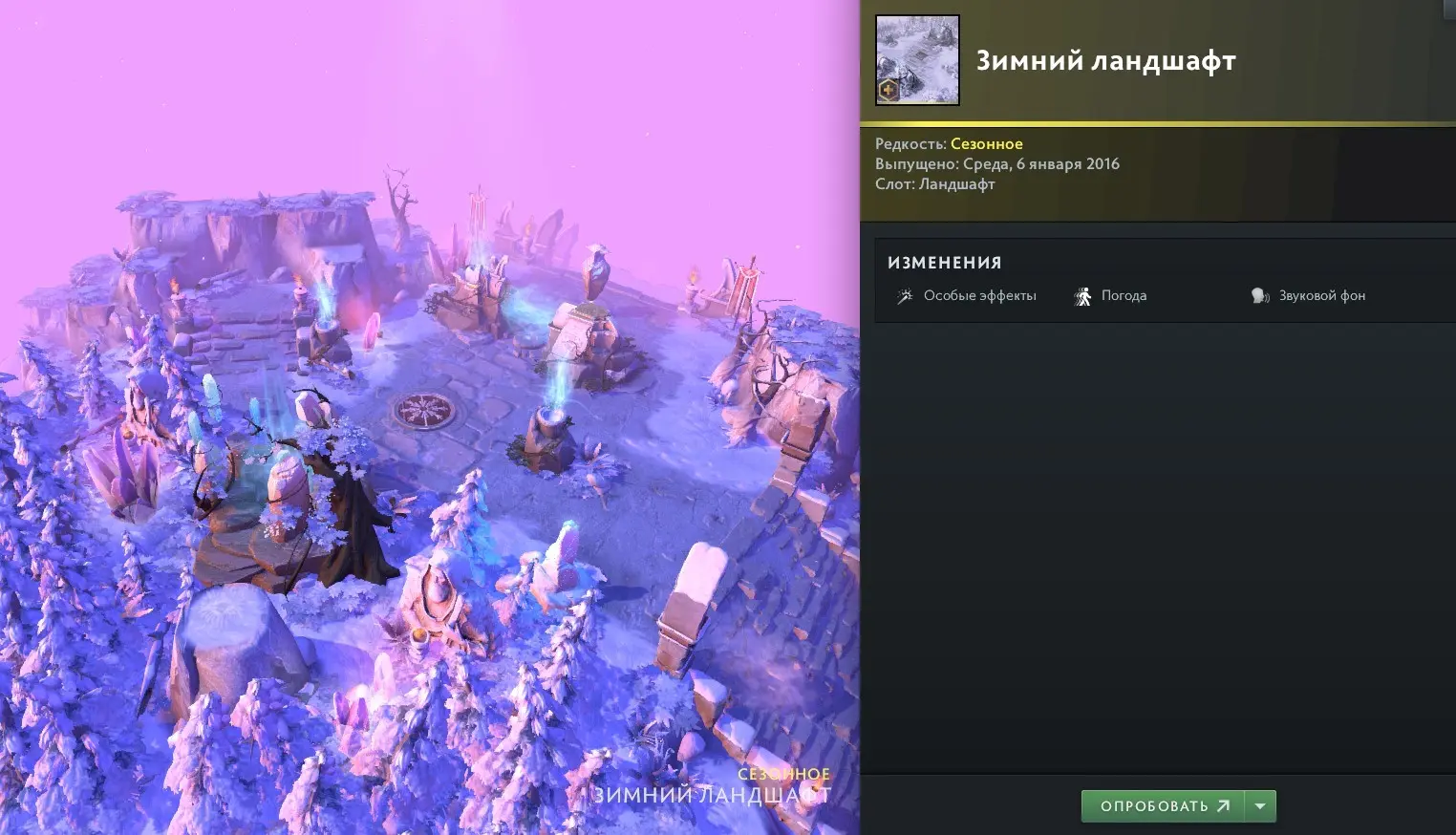
At the time of writing, a subscription costs 339 ₽, but if you purchase a six-month or one-year subscription, you can save 6% (1,920 ₽) and 12% (3,570 ₽) off the base price, respectively. Also, in Dota 2, seasonal skins cannot be traded or gifted, and they are awarded based on the current season.
Scenes Not Available for Purchase
All other maps in Dota 2—including those awarded via a token as part of The International 2026—cannot be purchased on the Steam Marketplace. Most of them remain exclusive, and the full list is as follows:
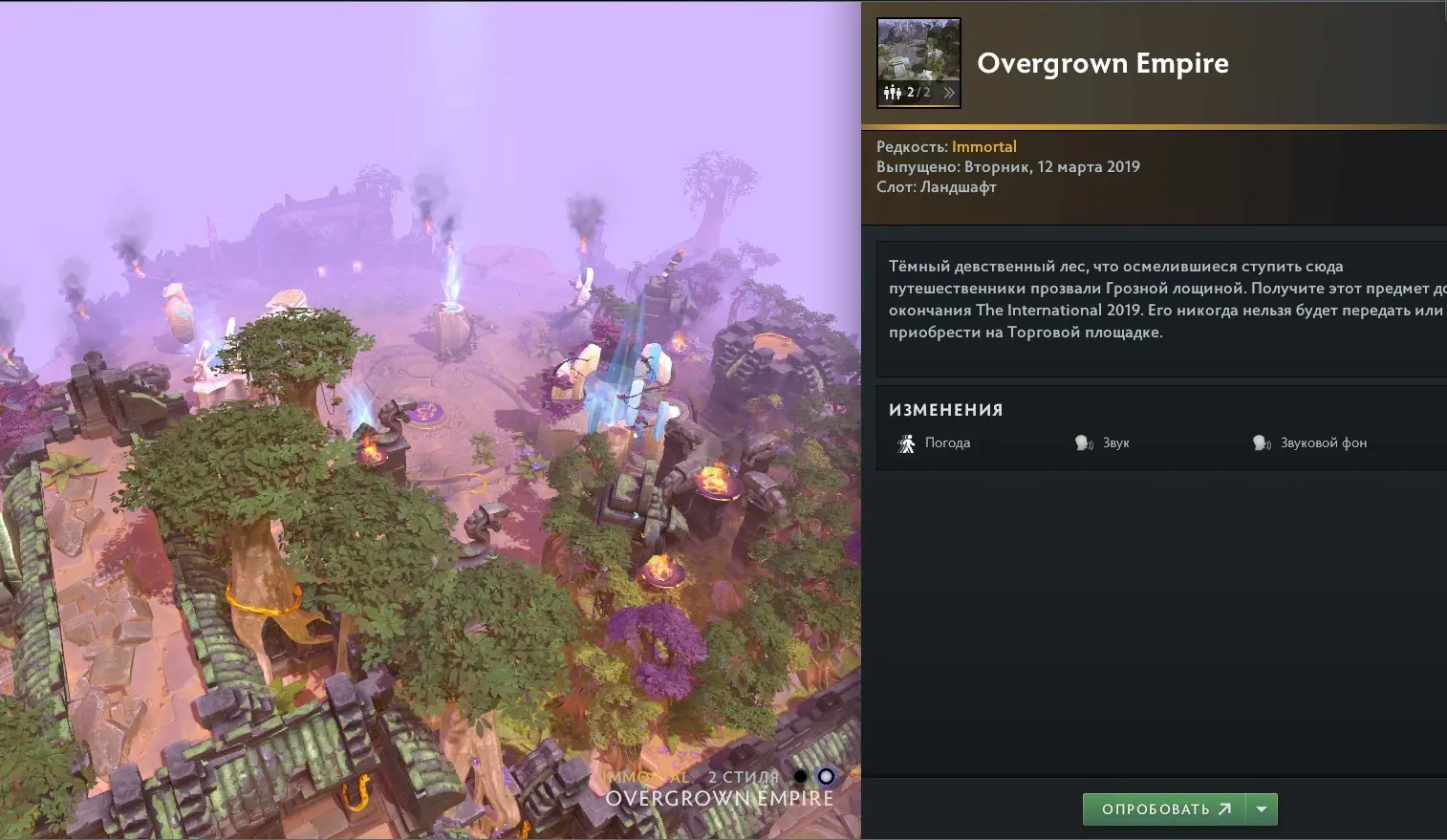
Overgrow Empire
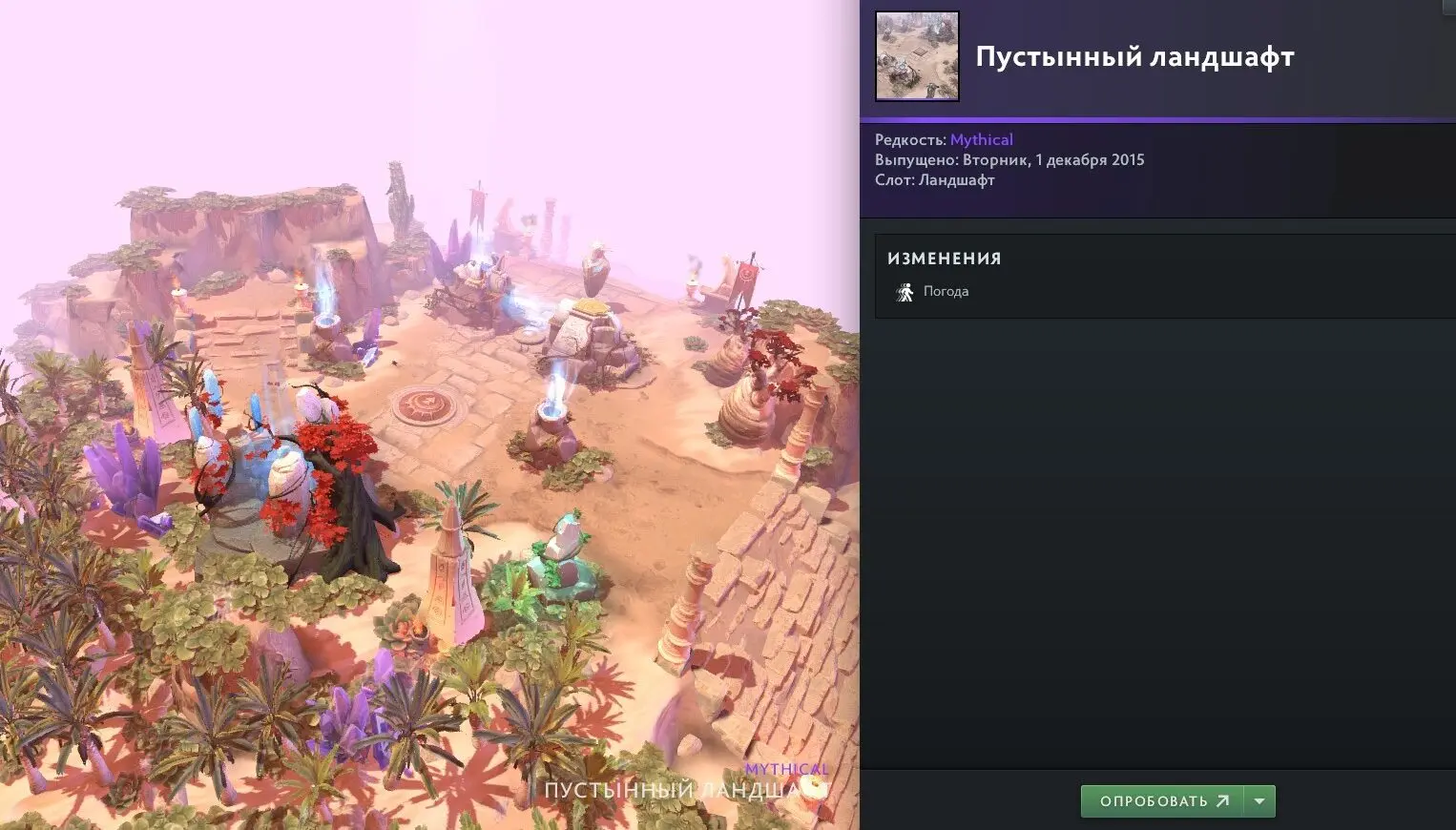
Desert Terrain in Dota (also known as Desert Terrain)
Reef’s Edge
Sanctums of the Divine
The Emerald Abyss
The Immortal Gardens terrain in Dota 2
Prohibited Terrains
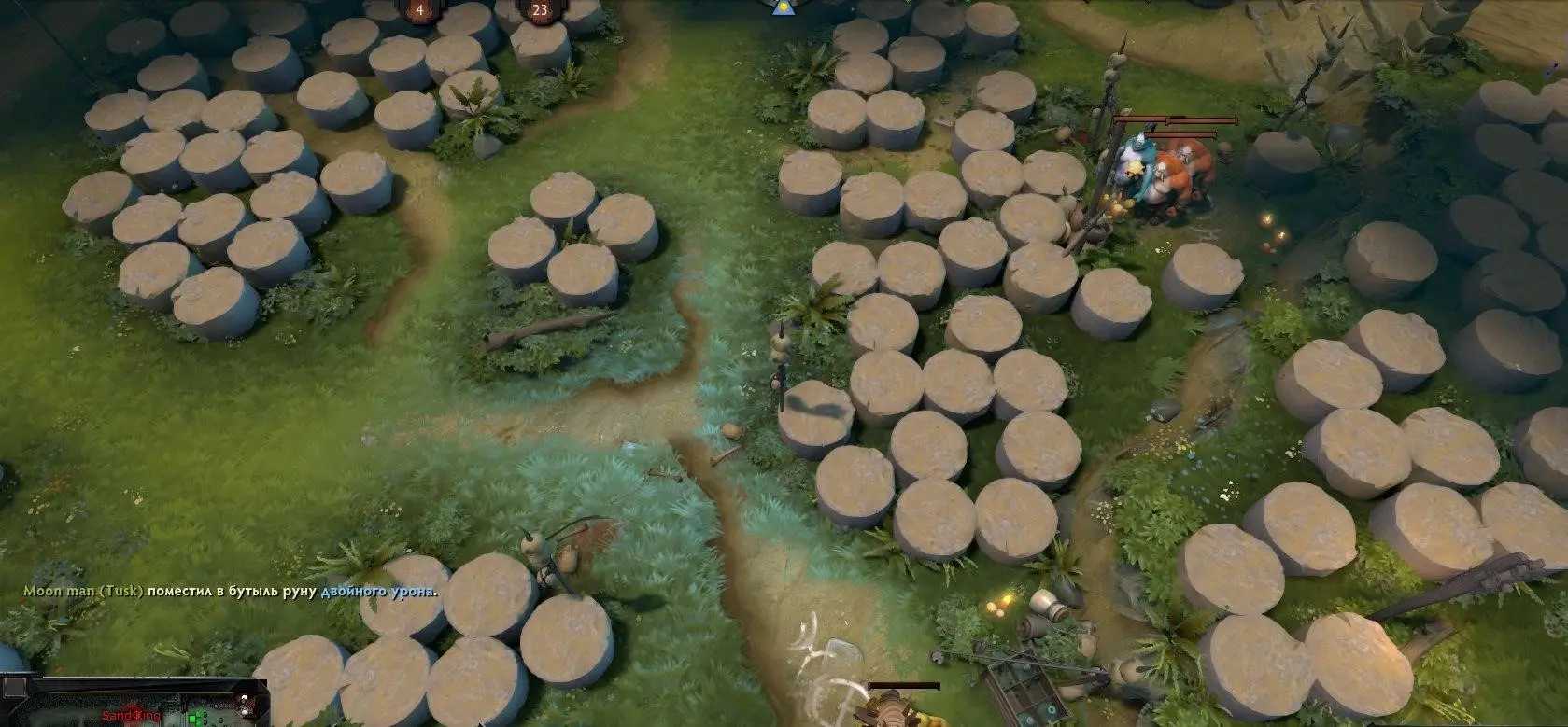
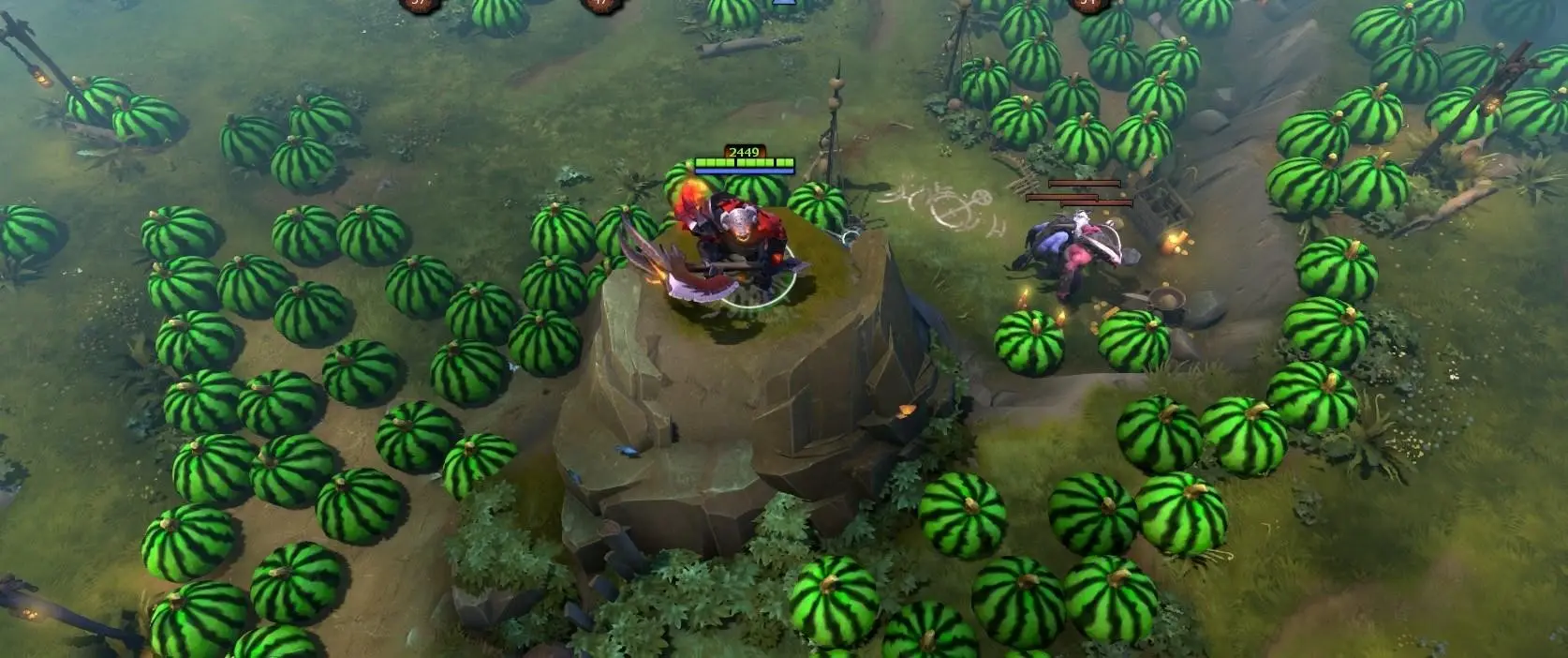
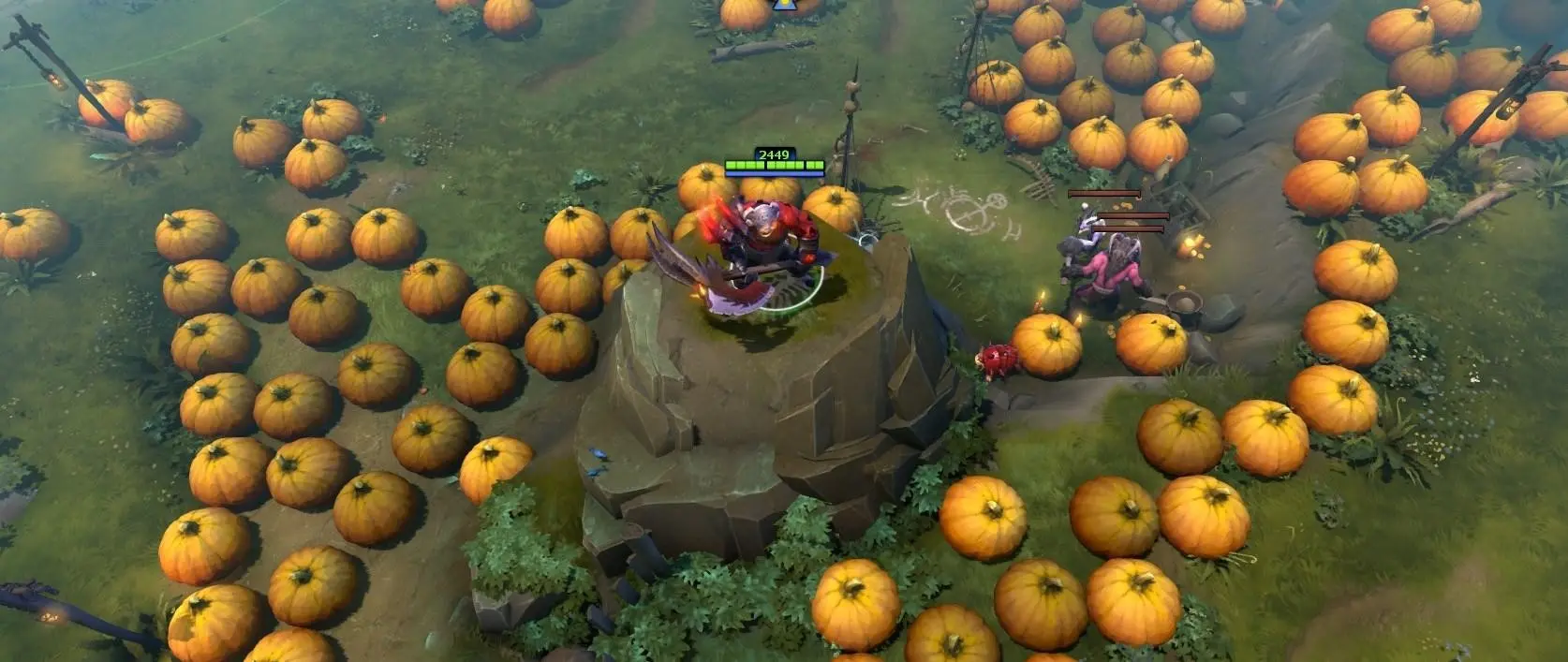
You can only change the Dota map to the ones shown below using the Overplus program; however, Valve will ban your account for using it, since it modifies in-game files, which is prohibited. This cheating utility offers various features, one of which is a “skin changer” that allows you to modify the map, thereby making it easier to navigate. For example, trees are replaced with:
A landscape with stumps
A landscape with watermelons
Landscape with pumpkins
Purchasing landscapes on third-party platforms
Is it possible to buy a landscape in Dota 2 on third-party platforms? Not on its own. Anyone offering this is trying to scam you. However, it is possible to buy it along with an account that already has it. Now that The International has ended, there are quite a few accounts like this with various backgrounds available. The only caveat: we cannot recommend any reliable platforms, so any such transaction is made at your own risk.
Which Map to Choose in Dota 2
All maps have their pros and cons, but if you’re having trouble deciding, we recommend focusing on three key factors: optimization, usability, and aesthetics. In that case, the following maps will suit you:
- For FPS—choose Desert or Reef’s Edge. They lack additional lighting, weather effects, and a large number of objects.
- For convenience—The Emerald Abyss or Sanctums of the Divine. These maps feature angular trees, making it much easier to move through the forest without losing sight of enemies.
- For beauty—any other landscape based on your personal taste.
The King’s New Journey and Overgrown Empire are considered the most uncomfortable. The first is because of the extra walls everywhere (for example, in the center), which create visual barriers, even though abilities and attacks actually pass right through them. The second is because the map is overloaded with extra vegetation: this not only significantly reduces FPS but also causes heroes to get lost behind the textures of trees and plants.
The Best Landscape in Dota 2
In terms of a balance of optimization, beauty, and usability, the desert landscape can be called the best. Its closest competitor is Reef’s Edge, but it’s inferior due to the stalactites, stalagmites, and other objects that are partially transparent and block the view on the sides of the screen. The desert map doesn’t have this problem: a minimal number of objects, slender palm trees, and sand everywhere instead of flowers, grass, and other similar objects make it the best choice.
Frequently Asked Questions (FAQ)
На данный момент — 11 вариантов. Каждый из них отличается по качеству, дизайну и внутриигровым объектам.
Для этого следует перейти в «Арсенал» или инвентарь, найти ландшафт, нажать на него правой кнопкой мыши и выбрать «Надеть».
Единственный доступный для покупки — это The King’s New Journey. На момент написания цена этого ландшафта составляет 1 485 ₽ на торговой площадке и 1 700 ₽ в клиенте.
Сейчас это невозможно. Такая возможность была в рамках фэнтези-лиги, приуроченной к The International 2026. Игроки, которые достигли 90-го процентиля, получали специальный жетон — с его помощью можно было выбрать один из шести ландшафтов.
Таким можно назвать пустынный: с ним повышается частота кадров, удобно передвигаться в лесу, не упустить врагов из виду, а также нет большого количества объектов, которые сбивают с толку.