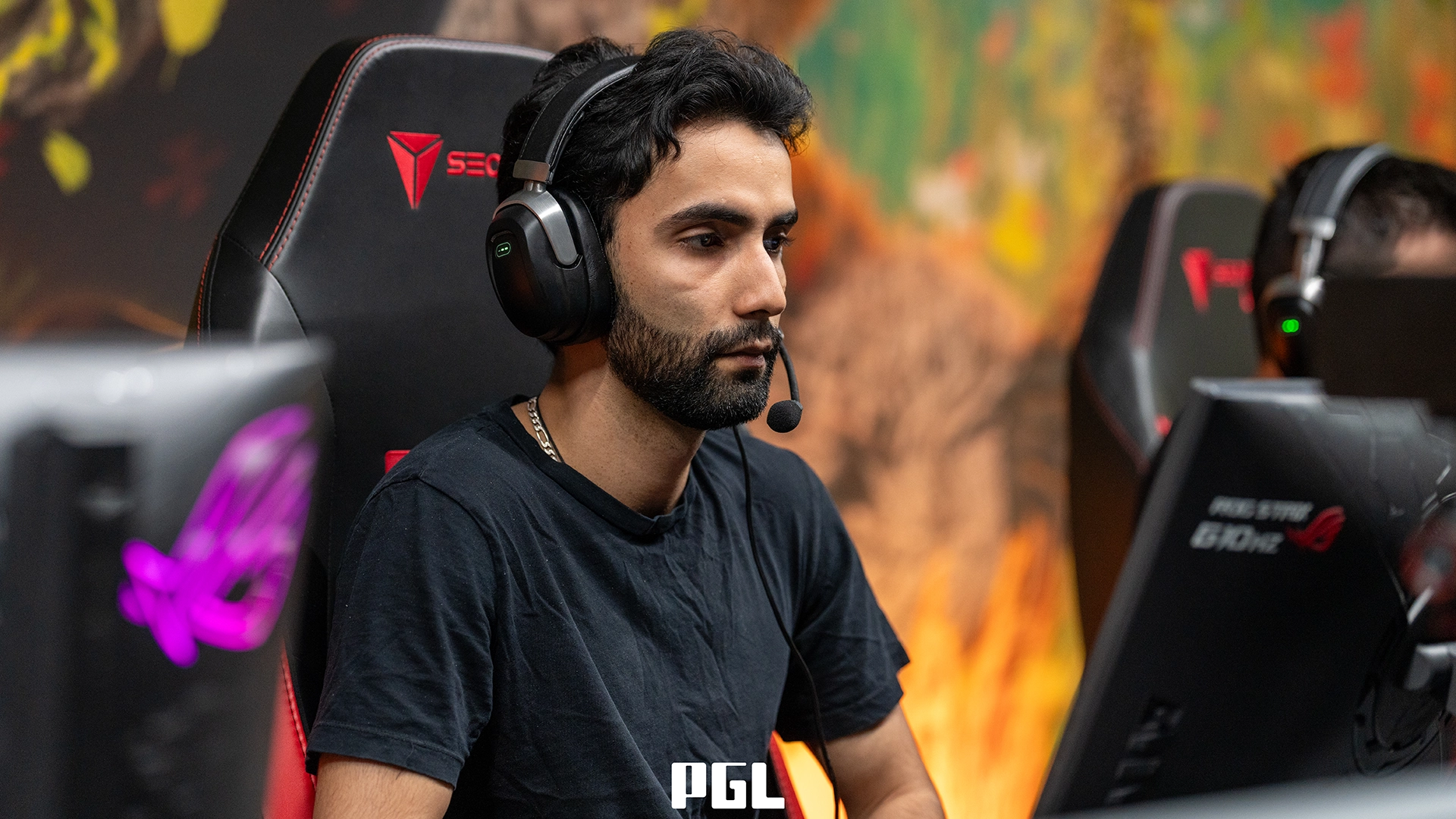
Astini criticized the community’s reaction to TaiLung’s lifetime ban


Former Team Nemesis coach Filipe “Astini” Astini Ribeiro commented in detail on X about the suspension of Santiago Gustavo “TaiLung” Olivos Agüero at The International 2026 and PGL tournaments, criticized the community’s attitude toward match-fixing, and urged people not to bully the 17-year-old player.
On the normalization of match-fixing in Peru
I said I wouldn’t bring this story up again. And I really didn’t intend to. But you only have to open the comments under any recent post about TI—there are JUST A TON OF MATCH-FIXING DEFENDERS—to see in real time exactly what KJ was complaining about in his Stories. So I’ll have to address this once more.
In Peru, there’s an entire community that ELEVATES MATCH-FIXERS TO CULT STATUS. Fixed matches have turned into a joke, a meme, some kind of entertainment.
And then everything goes as usual: a person banned for breaking the rules suddenly becomes a victim, unfairly punished and practically an IDOL. The one who refused to participate in the fix ends up being blamed and hated by everyone. And the person who reports violations and tries to clean up the region becomes a laughingstock.
Values have been completely turned upside down.
Now there are people who question a LIFETIME ban using the most absurd argument possible: “Surely there isn’t enough evidence, because I haven’t seen it.”
There’s also a more polite version of the same argument: “There’s no 100% proof; there’s only a lot of circumstantial evidence, and the investigation is ongoing.” Let’s take this step by step.
On Evidence and the Lifetime Ban
First, “there is no evidence” and “I haven’t seen the evidence” are not the same thing.
Some of the information is publicly available, and anyone can track it down. The blockchain is public. Public betting groups are public. I myself gathered everything that could be traced and published it. At the same time, I explicitly stated that this file alone proves nothing and only makes sense when considered alongside non-public information. That is the crux of the matter. Public data allows us to get closer to the answer. But only those who have access to all the other information can definitively close the case. And it was precisely these people who issued the ban.
I published this data because some people think investigating match-fixing is impossible, almost like detective work. That’s not true. A great deal of information is publicly available—you just have to be willing to look for it. And the more people who know about this, the harder it becomes to engage in match-fixing in the region.
But a disciplinary investigation is an entirely different matter. Testimony, internal complaints, investigation reports, the identities of those who provided information. No organization in any sport publishes such information—and rightly so. They don’t disclose it to protect whistleblowers, to avoid jeopardizing an ongoing investigation, and, in this case, because a minor is also involved.
So when someone says, “There’s no evidence because it hasn’t been published,” ask yourself what these people are really demanding. It’s not transparency. They want a list of those who gave testimony.
The absence of publicly available evidence does not mean there is no evidence at all.
Second, and this completely undermines the entire argument: if an investigation is still ongoing, a TEMPORARY SUSPENSION is applied. This measure exists and is used regularly. ESIC itself temporarily suspended the PlayTime players in July precisely because the investigation was still ongoing. PGL did not issue a temporary suspension. PGL BANNED THEM. FOR LIFE.
No one imposes the maximum penalty and permanently bars someone “just in case.” You can’t ban someone for life and then figure out later whether they’re guilty or not.
And let’s talk about what HE HIMSELF wrote.
He’s demanding proof. And in that very same letter, he apologizes for getting rid of his phone during the investigation.
Read that again. He destroyed the evidence. And now he’s demanding to see evidence.
And PGL didn’t make this story up. It was LGD that received the information, conducted an internal investigation, and reported on its own player—its own midlaner—just a few days before TI, without having a replacement. What organization would destroy its own player’s career just for fun on the eve of the year’s biggest tournament? No one would do that unless they were certain of what happened.
On the community’s reaction and the player’s backlash
And there remains a question that no one wants to answer: why do so many people want to see proof SO BADLY?
It’s not for the sake of justice. They want to understand exactly what they were caught doing. They want to know where others went wrong. They want to find out who reported the violation so they can later threaten that person. They want to keep doing the same thing—just without getting caught again.
Because no matter what evidence surfaces, the answer is always the same. If there’s a screenshot, it’s fake. If the screenshot is real, “it was a joke—you just don’t get the local humor.” If there’s evidence—the phone gets thrown out the window, and we’re told, “That’s a normal reaction; he was just scared.” If there’s a bank transfer—the money somehow ended up in the account by accident.
Notice anything? “It was just a joke”—the very same phrase this community has used for years to justify treating match-fixing like a meme. And it’s no coincidence that this phrase has now become a line of defense. It’s become a defense because for years you’ve conditioned people to view match-fixing as something funny. When a joke turns into an alibi, it means it was never a joke to begin with.
And one last thing. I want to make this as clear as possible: the threats and harassment directed at a 17-year-old boy are despicable. Anyone who sends him threats is not on my side—they’re only harming the very cause I stand for. No matter what this player has done, threats against him are unacceptable. My issue has never been with any one specific player. My issue is with a community that has turned match-fixing into a joke and the people banned for it into idols. Criticize the act. Leave the person alone.
This was supposed to be the best week of the year. Instead, it’s turned into a week of hate and glorification of match-fixing. I’ll be watching TI and ignoring everything else. And I advise you to do the same.
Read also: TaiLung denied the allegations regarding “322” and asked PGL and LGD Gaming to provide evidence
Astini had previously commented on the problem of cheaters and match-fixers in Dota 2. “We need a lot more of these people to be banned to ensure a healthy competitive environment for everyone else,” the coach said.
Photo: Esports Foundation.