SVG on TORONTOTOKYO’s departure from OG: “It just wasn’t going to work”

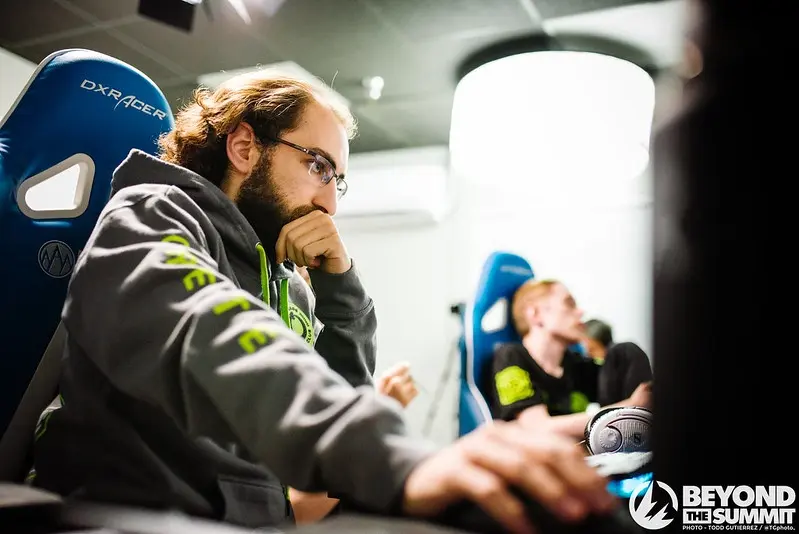
Commentators Avery “SVG” Silverman and Austin “Cap” Walsh discussed the sale of the Tundra Esports roster and Alexander “TORONTOTOKYO” Hertak’s departure from OG on the Not For Broadcast podcast.
On the sale of the Tundra Esports roster
SVG: I actually think there’s an interesting idea here: I’m not sure if that’s exactly how they reasoned, but if so—I even respect it. Instead of buying a roster before TI, when its value is at its peak for the year, you can sell the team right before TI. And then buy it back after the tournament, when it will either fail or, even if it wins, still won’t be able to maintain that value.
This might be the smartest move, because many organizations do exactly that: for example, MOUZ, Cloud9—Cloud9 did this six times in a row. They come in, buy a roster for TI, get big sponsorship opportunities and potential profits, though often, if you come in late, you don’t get some of the money.
And the question is—how profitable is this even now? You’re just spending a ton of money on a roster that’s already selling for a high price. I myself have sold out at a high price several times before TI, because back then betting sponsors paid a lot to have their name on a TI team—there was a huge amount of attention. But is that still just as valuable now? I don’t know. Maybe for 1w Team, having their name on the TI roster is still important for the brand. But, for example, for Tundra Esports, it might be more profitable to sell contracts when their value is at its peak, wait out a couple of months of decline after TI, then buy back 33, give him four players—and you’re almost back to the same roster, but you’ve already saved a million dollars. If you think about it, that’s actually a really good strategy. Because what does winning TI even do for an organization these days? Apparently nothing.
On the poor timing of buying the Tundra Esports roster
SVG: Why even buy a team right before TI if your name won’t even be at TI? Isn’t that incredibly stupid?
Cap: Maybe they have a 10-year long-term plan.
SVG: If that’s the case, they could easily wait another two months and buy the team after it finishes, say, 10th place, and its value drops significantly.
Cap: I don’t know exactly how the EWC works, but maybe they want to become an organization that actually competes for the prize money at the EWC or something like that. In any case, they’ll still be referred to as 1w Team in Russian-language news and so on. And anyway, does Valve even keep track of this? In the English broadcast, we’ll use certain names, but does Valve do a Russian broadcast? If it’s not China and just a Russian broadcast, do you think they force them to use the official names too, or is English coverage the only thing that matters to them?
SVG: Most likely, they only care about the English one.
Cap: So, the Russian broadcast will still refer to them as 1w Team. Maybe that’s the broadcast they actually consider important.
SVG: All I know is—they just need to make 33 get their name tattooed on his forehead, and then all the problems will be solved. Because what are they actually going to do? Make him cover up the tattoo? That’s some kind of civil rights issue or something. You can’t do that.
On TORONTOTOKYO leaving OG
SVG: I said this right away, man. I’m not proud that I was right, but what the hell is going on? We’re just in some kind of circus. And that’s exactly what I was talking about—that was the problem. You can’t just go ahead and kick a player you have chemistry with, who’s from your own region and culture, for the sake of someone you know almost nothing about, who doesn’t have the best reputation, who is a very aggressive coordinator and player with no cultural connection to the team, and who will stick out from the roster while also having to fulfill captain duties. What the hell is going on? And then you kick him. If you really have an unsolvable problem with Nikko—okay, I get it. I never fully believed that, honestly. I’ll admit now: I used to downplay it a bit when I talked about it.
Cap: You wanted the team to have a replacement lined up in advance, rather than just: “Let’s kick him out and figure it out later”? And in the end, they’re left with less than the best option.
SVG: That’s part of the problem, too. I think they should have given Nikko an ultimatum: either he meets their demands, or they tell him straight up, “We’re kicking you.” And give him a month to see if anything changes. And if not—then kick him and pick up the best available player before EWC or TI. Maybe that’s what they did; we don’t know for sure, but I get the feeling they didn’t—they backed off from applying direct pressure a bit. And this player just wasn’t a good fit. No offense to TORONTOTOKYO—he’s actually a very unique player and can make teams stronger, but only the right teams. That’s not the case here at all. This isn’t a situation where they picked a bad player. It’s a situation where they picked a player who’s bad for both sides. It just couldn’t have worked.
If you want to build these kinds of mixed-regional teams, you shouldn’t have a 4+1 format. It should be something like 2+3 or 3+3, including the coach. That’s the ideal setup because then no one ends up isolated or under pressure. Because when I listened to OG explain why TORONTOTOKYO didn’t work out, a lot of it was about the ideas—who adapts to whom and how the gameplay concepts mesh.
- Read also: TORONTOTOKYO leaves OG
Earlier, Avery “SVG” Silverman and Austin “Cap” Walsh discussed the invite system for The International 2026, Team Spirit’s debut, team management strategies for roster building, and Tundra Esports’ slump.
Photo — Beyond The Summit.