Esports in the Real World of Sports: How the 2026 Asian Games Went

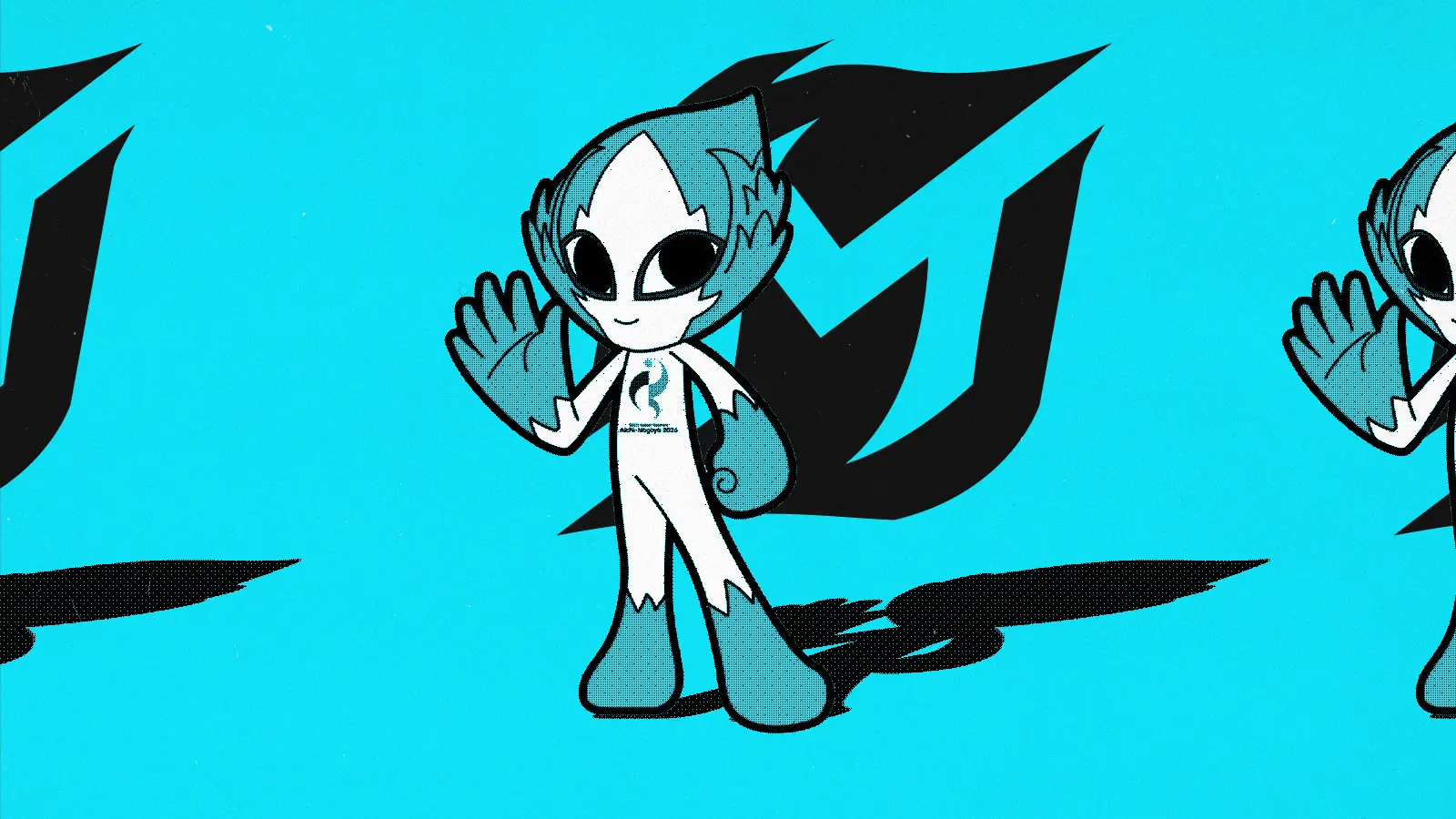
On Sunday, October 4, the Asian Games—the equivalent of the Olympic Games for countries in one of the world’s most populous regions—came to a close in Japan, featuring esports competitions among other events. More than 500 players from 37 countries competed for 11 sets of awards, which carry the same significance as medals in soccer, the 100-meter dash, or other traditional sports.
For many gamers, such events remain a dream because they are part of the world of major sports—the prospects of a career in esports are much harder to explain to parents and others than a career in basketball or tennis. But what do video game matches actually look like in the context of professional sports?
Organizational Challenges
The Olympic Games, the FIFA World Cup, and other similar events have always served as a benchmark for esports tournaments—but in practice, things aren’t quite so rosy. The Asian Games weren’t a failure, but they didn’t avoid the mistakes typical of such events.
Even before the tournament, it was clear that the organizers lacked significant experience in esports. Even ESL and PGL spent years refining the mechanics of running top-tier events, and this applies to a dozen different details—from their approach to players to the organization of broadcasts. In this case, even if the tournament operator allocates sufficient funds to esports, it simply lacks the necessary expertise to live up to the status of a Tier 1 championship.
Such problems were evident at the Future Games for Dota 2 and MLBB, tournaments organized by the Olympic Committee, the IESF, and regional sports organizations. The previous Asian Games were also unable to avoid this: Korean pro gamers later reported that the organizers didn’t understand the rules and changed the format on the fly, and most matches were unwatchable: TV channels holding the rights to the Games were unwilling to broadcast them, let alone provide free online streams.
This time, the event managed to avoid some of these difficulties. The organizing committee took the right approach and collaborated directly with the developers. As a result, MOONTON handled the Mobile Legends: Bang Bang streams, Riot assisted with the LoL tournament, and so on. But this wasn’t the case for all games, so there were still some controversies.
The most telling example was the Indian national team’s elimination from the eFootball tournament (the equivalent of FIFA and Konami’s FC 27). The team was awarded a technical victory because Mongolia was a few minutes late, but the score was recorded as 0–0. This only made matters worse for the Indian team—it was unable to improve its goal differential and, based on tiebreakers, missed out on a spot in the playoffs. Could something like this have happened at another Tier 1 event?
Another misstep was the “virtual martial arts” tournament—which lumped together the fighting games *Street Fighter 6*, *Tekken 8*, and *The King of Fighters XV* into a single category. The Asian Games’ decision to drop solo disciplines seems strange in and of itself, but in this case, it also led to organizational difficulties. The event lacked support from developers and attention from top players, and none of the communities for these games showed sufficient interest in this format.
Returning to the topic of tournament coverage—problems with live streams were reduced thanks to support from the developers, but it wasn’t possible to eliminate them entirely. Even at the venue in Japan, spectators could only watch the playoff matches, and broadcast rights were often granted to national federations. South Korea’s KESPA handled the coverage of Lee “Faker” Sang-hyeok’s matches quite well, but not everyone was able to organize streams.
Most misunderstandings between organizers and participants remain behind the scenes, so broadcasts become an important indicator of a tournament’s quality for the community. In MLBB, PUBG Mobile, and Naraka: Bladepoint, there were no issues with this thanks to the developers’ efforts, but it was impossible to find streams of fighting game matches or Gran Turismo 7—esports fans had to rely on social media and the news to find out the results.
Participant Lineup
Another important factor for such tournaments is the selection of participants. The Asian Games do not offer the prize pools typical of esports, and clubs are generally reluctant to send world-class stars to events from which they derive no profit.
The players themselves are also far from always willing to gain valuable experience and represent their country amid an already grueling season. In short, putting together a “dream team” is extremely rare, as demonstrated in the past by the WESG, the IESF World Championship, and the recently postponed Nations Cup organized by the Esports World Cup.
However, the organizers of the Asian Games managed to do so, albeit not entirely. Here are just a few of the participants in the esports competitions in Japan:
- a League of Legends “dream team” from Korea featuring Zeus, Faker, and Gumayusi;
- Team Liquid, Alter Ego, Yangon Galacticos, and the trio from SRG in MLBB;
- Kuaishou Gaming, the Honor of Kings world champions from China;
- 4Thrives and Dplus in PUBG Mobile;
- Korzhiro “Higuchi” Higuchi, leader of the Capcom Pro Tour 2026 (SF6).
Even so, the lineup was still far from ideal. Many top fighting game players skipped the event, with the exception of the Japanese, who were the Games’ hosts. The League of Legends tournament did not feature any Chinese players—South Korea’s main rivals. The rosters for PUBG Mobile and Honor of Kings could have been even stronger if all the star players from Asia had competed.
Furthermore, unlike traditional sports like soccer or basketball, in esports it’s easy to assemble a national team consisting of five members from an existing club—and that team will have an advantage over all-star mix teams. At the Esports Nations Cup or WESG, there were restrictions limiting participation to “no more than three representatives from a single club,” which at least somewhat leveled the playing field and encouraged the formation of strong lineups drawn from two or three teams.
There was no such rule at the Asian Games, so the outcome was quite predictable: almost all team disciplines were won by players who regularly compete together in regular tournaments. The only exception was South Korea’s success in League of Legends, but the team simply had no worthy opponents.
The competition definitely lacked solo disciplines: at such events, fighting game tournaments, Fortnite, and StarCraft II work well, where top players compete in a familiar environment. But for some reason, even eFootball, Tekken, and Street Fighter were turned into team events, which drove away the general audience. Individual events were held only for Gran Turismo and Puyo Puyo.
As a result, the Asian Games didn’t really stand out from other similar tournaments, which top players tend to skip and where established teams—rather than national teams—end up winning. The South Korean national League of Legends team and a standout MLBB tournament only partially remedied this situation.
2026 Asian Games Results
The Chinese national team emerged as the esports champion of the 2026 Asian Games—even without LoL or MLBB—taking home three sets of gold medals for victories in Identity V, Honor of Kings, and Naraka: Bladepoint. The Japanese team won only the “Pokémon” and Puyo Puyo tournaments, while sensationally missing out on first place in the fighting games.
Esports athletes from South Korea also won two gold medals, finishing in third place overall—and while victory in League of Legends was almost guaranteed, their success in the fighting games came as a surprise. The national teams from Malaysia (Gran Turismo 7), Myanmar (MLBB), Thailand (PUBG Mobile), and Iran (eFootball) each won one tournament.
Unlike many other sports, the Games in Japan did not become a major milestone for either the esports athletes or their fans. The only lasting impression might come from the Korean League of Legends “dream team,” which never faced a worthy opponent—but just as surely, viewers will remember yet another clumsy attempt by mainstream sports to adapt games to their own rules.
Even before the Asian Games began, rumors were circulating that esports would be excluded from the main program at the next tournament. At the same time, the Olympic Council of Asia is organizing a new tournament—the Mind Sports Games will be held in Kuwait in 2027, featuring not only video games but also chess, checkers, Go, and other similar games. This format will likely be more suitable for esports than yet another attempt to squeeze it into the framework of traditional sports.