“I’d really love to play against Verso Time”: An interview with Boro ahead of MSC 2026

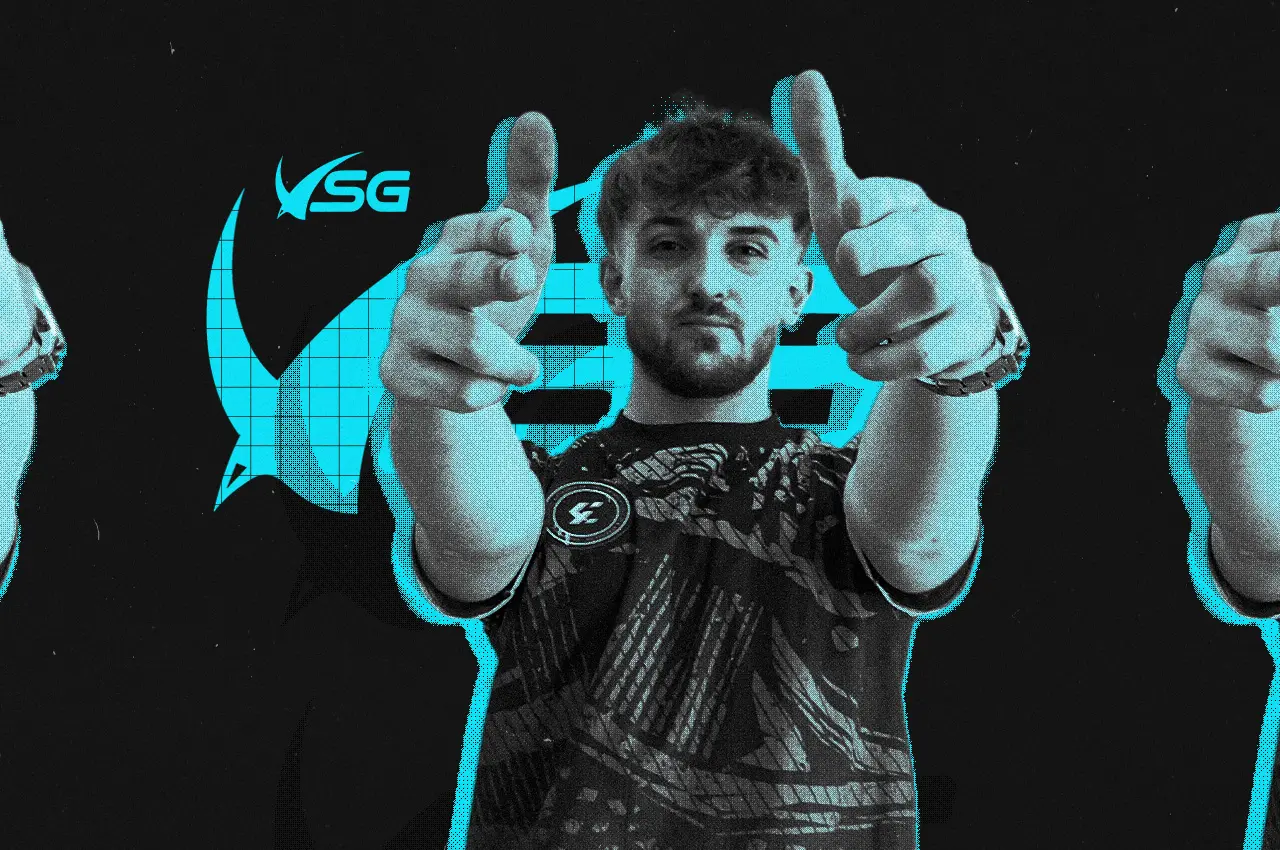
This year, the MOONTON esports system expanded to include several new regions, among them Europe. VSG, featuring our good friend Michael “Boro” Busch, emerged as the champion of the MLBB European Championship Season 2.
The German roamer spoke with OFFSTAGE about the season in Europe, reminisced about his time with Verso Time, and reflected on the Old World’s upcoming debut at the 2026 Mid-Season Cup in Paris.
Hi! Congratulations on your victory at MEC Season 2 and qualifying for the Mid-Season Cup. First off, about the tournament—what were your impressions and feelings after the regional tournament in Europe?
Hi, thanks. We’re glad we were able to secure a spot at the MSC, but right now our team’s main goal is to stay focused. The 2026 Mid-Season Cup is an important tournament, and we want to play our best there. Every team will be aiming for that, and we understand that we can’t let our guard down. It’s important for us to keep training hard and getting better every day so we can win the wild card and make it to the main stage of the tournament.
Looking back at MEC Season 2, what moment stands out the most? Was there a particular match or moment that made you feel like you were ready for the Mid-Season Cup?
To be honest, I can’t single out any one specific moment during the tournament itself. It actually happened during our preparation, while we were training. We played scrimmages against teams from other regions, and in some games we managed to completely control the flow of the match and impose our style of play on our opponents. That gave us confidence because it showed that we’re not only strong at the local level, but also capable of competing with teams on the international stage.
You’ve been playing together for about 2.5 months. How would you assess your team’s potential—how close is VSG to reaching its peak?
I think this is just the beginning for us. Two and a half months isn’t that long, so we still have enormous potential for growth. We have every opportunity to improve: we haven’t yet achieved perfect teamwork, we can improve our communication, and learn to understand each other better. And that’s inspiring, because we’ve already managed to achieve a lot in such a short time. That’s why I’m confident we’ll only get stronger from here on out—especially as the MSC progresses.
How difficult was the adjustment process to a new team and a new region after competing at the MCC for Verso Time?
I wouldn’t say the adjustment was too difficult, especially mentally. The mindset here is very similar: whether in EECA or Europe, everyone wants to win and is willing to work hard for the common goal.
The main difference for me is communication. At Verso Time, we spoke a mix of Russian and English, while at VSG, we mainly use English. Sometimes at the start of a game, I can still talk to Dikson in Russian for a few minutes about how we want to play on the line, but after that, all communication switches to English.
So overall, the transition went pretty smoothly. The most important thing right now is to keep improving communication and building trust within the team.
Europe now has a full-fledged league and its first slot in a major international tournament. How would you assess the region’s future overall? Are there already teams showing long-term potential?
I think Europe has enormous potential. There are many very talented players here, and now that the region has a full-fledged league and a slot in a major international tournament, everyone has even more motivation to develop.
MEC Season 2 was the first tournament in Western Europe that truly felt significant, and the level of competition was already quite high. That’s why I believe the region will continue to grow with support from MOONTON Games.
When it comes to long-term potential, I wouldn’t single out any one team. It seems to me that the entire region has a lot of room to grow, and if players and teams continue to receive these kinds of opportunities, Europe could become much stronger on the professional MLBB scene.
Many people say that the European MLBB scene is still in its early stages of development. In your opinion, what is WEU lacking most right now in order to close the gap with leading regions like the Philippines or Indonesia?
I think the most important thing for Europe right now is stability. At the moment, many teams are still in the process of forming, and rosters change frequently, so it’s difficult to build real team chemistry.
Teams need time to catch up with the Philippines or Indonesia. Once players get used to each other, the game becomes much easier: communication flows more smoothly, trust between players grows, and everyone better understands what their teammates want.
As for VSG, I think we had a slight advantage because all the players on our roster already have professional experience. We’re used to adapting quickly, especially during tournaments. But speaking of Europe as a whole, I’m confident that if teams can keep their rosters together longer, the region will progress much faster.
Now your next big goal is the Mid-Season Cup. From what I’ve heard, VSG will be holding a boot camp in the Philippines. What are the team’s goals for this period, and how long will the preparation last?
Yes, we’re currently holding a boot camp in Southeast Asia, and our main goal is to improve our gameplay as much as possible ahead of the MSC. The teams here are significantly stronger than most of the opponents we usually face in scrims in Central and Western Europe, so this is a great opportunity to take our game to the next level.
We want to use this time to get used to playing against stronger teams, correct our mistakes more quickly, and give it our all every day. While we’re here, we’re trying to make every day of training as productive as possible.
Are you concerned about the flights and adjusting to new environments? You’ve just flown to Asia, and then you’ll be returning to Europe for the Esports World Cup—that means different climates, time zones, and so on.
To be honest, the travel schedule doesn’t worry me too much. Of course, constant flights between countries, changes in climate, and time zones can be tiring—but, after all, we’re professional players. It’s part of our job, and we’re expected to perform at a high level regardless of the circumstances.
That’s largely what sets pro players apart from amateurs—the ability to adapt quickly and perform at our best when it really matters. So for us, the main thing is to prepare properly, monitor our condition, and do everything possible to be in top form for the matches.
What are you personally looking forward to most from this boot camp? The chance to train against the strongest teams, gain a better understanding of the regional meta, or simply immerse yourself in the local MLBB scene?
I think what inspires me most is the opportunity to train against some of the strongest teams in the world. It’s a great chance to see what they do better than us, what we can learn from them, and how quickly we can adapt those things to our own game.
Of course, there might be some tough scrims or less-than-ideal results along the way, but that’s part of the process. For us, it all comes down to mindset, and I believe our team has a very strong mental game even when things don’t go according to plan. That’s why I’m looking forward to the opportunity to be in this environment, test our mettle, and see how much we can improve before the MSC begins.
Have you been following the MCC since moving from EECA? What can you say about the league’s results from last season?
Yes, I’ve been following it a bit. It seems to me that Team Spirit and Verso Time were the favorites from the start, especially after zaur_egoist joined Team Spirit. These teams have the strongest rosters and a lot of experience, so I wasn’t surprised that they were the ones to make it to Paris.
That said, I believe there are plenty of talented players in the region overall. Some teams just need more time and consistency to reach the same level. The scene is still developing, and I think that in the future, more and more teams will be able to close the gap with the favorites.
Your former team, Verso Time, will also be competing in the 2026 Mid-Season Cup. Have you been following the “Monkeys’” performances, and would you like to face Verso on the international stage?
Yes, I’d really love to play against Verso Time. That would be really interesting, especially against Kodjikk. I’d like to see just how strong my boy will be when he starts playing against me instead of with me.
Overall, I have a lot of fond memories of my time with this team, so I’ll definitely be happy to see the guys in Paris. But, of course, if we face off in an official match, I’ll do everything I can to win.
Have you had a chance to study the other wild-card opponents yet? Which opponents look particularly dangerous, and who might be the most interesting to play against?
We’ve already looked at the list of wild-card participants and concluded that there are three main contenders for a spot in the main stage: FUT Esports, Verso Time, and us. FUT Esports is one of the two strongest teams in Turkey, Verso Time is among the top two in the EECA region, and, of course, we believe in our own abilities. We’re primarily preparing for the matches against Verso and FUT. To make it to the Main Stage, we need to beat opponents like these.
Tell us what you think of the current MLBB meta. Which heroes do you especially enjoy playing right now?
As a roamer, I’m very happy with the current meta. Many of my favorite heroes are strong on the esports scene—for example, Chu, Kalea, Atlas, and Grok. So this is a really enjoyable period for me. It also gives me more motivation ahead of international tournaments, because the meta allows me to better showcase my skills and play the heroes I feel comfortable with.
How much does the meta differ between Europe, EECA, and regions like the Philippines? For example, was it difficult to adjust after leaving Verso? And what can we expect from the Mid-Season Cup?
Of course, the meta differs in every region. It’s not just about the drafts—a lot depends on the playstyle itself. For example, in Turkey, they usually prefer to play fast and aggressively—it’s somewhat similar to Indonesia. In EECA, on the other hand, the play is often more measured and calculated, which is closer to the Philippine style.
As for me, the transition after leaving Verso Time wasn’t particularly difficult, because as a player, you always have to be ready to adapt. But at the MSC, I’ll have to readjust again, because these kinds of international tournaments usually develop their own meta. Some heroes that currently seem weak might suddenly become the subject of fierce competition in the draft, while characters considered too strong today might, on the contrary, disappear completely from the meta. That’s exactly what makes international tournaments so interesting.
Looking a little ahead: once the Mid-Season Cup is over, what result would convince you that the decision to start this season in Europe with VSG was the right one?
To be honest, I already believe it was the right decision. One of my dreams was to become the MLBB European champion, and now I’ve achieved that. I’m very proud of this achievement, and at the same time, I’m immensely grateful for this opportunity and for everything we’ve already managed to accomplish with VSG.
Whatever happens next will be a nice bonus and another important step in my career. But, of course, I still want more. I can’t wait to show the whole world what Europe is capable of in MLBB.
- Read also: “The Goal Is Always the Same—To Win”: An Interview with Ospreay Ahead of the MCC Season 7 Playoffs