Thunderpick World Championship 2026 Recap: FURIA Takes the Title and BetBoom Team Makes a Breakthrough

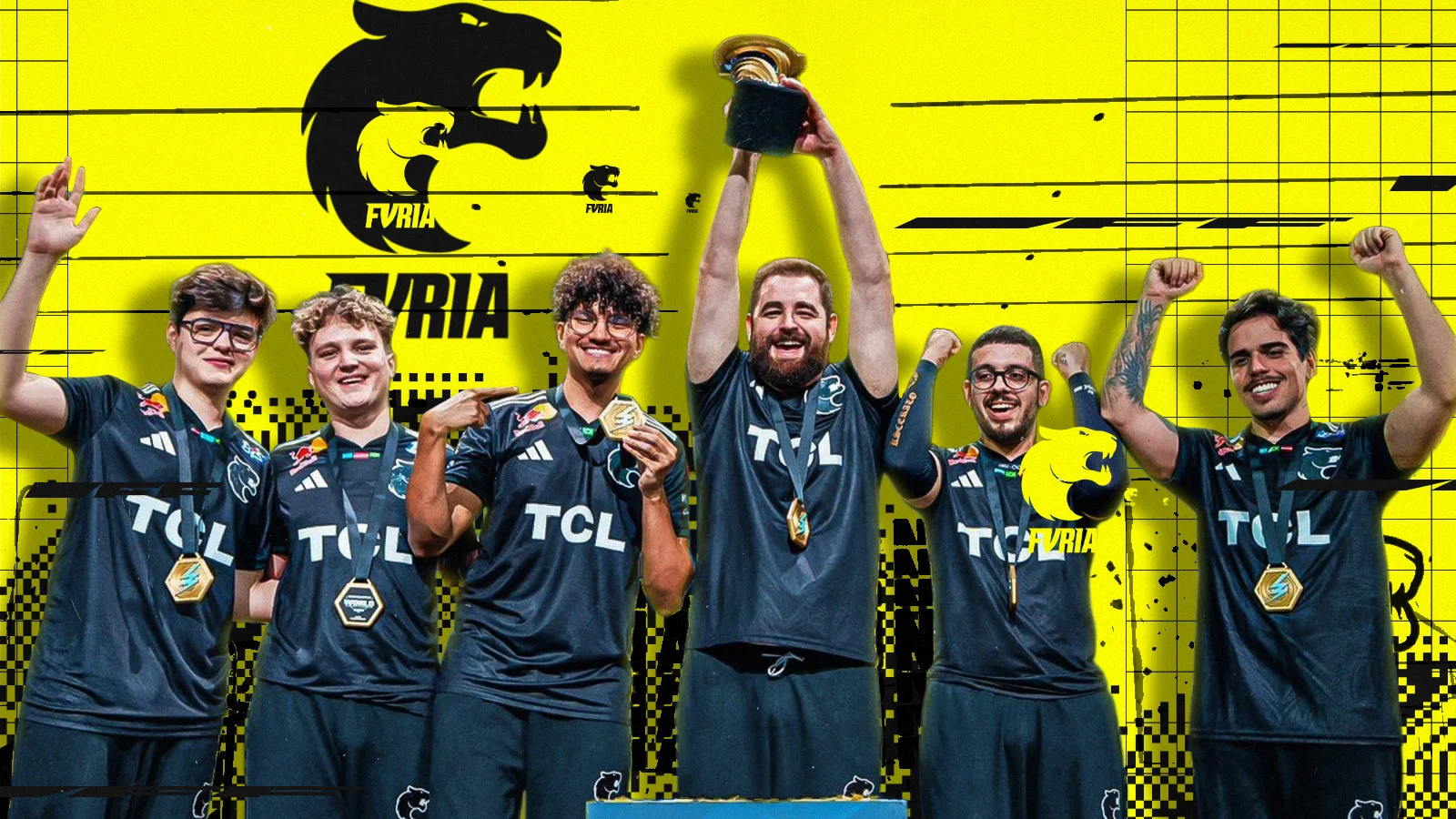
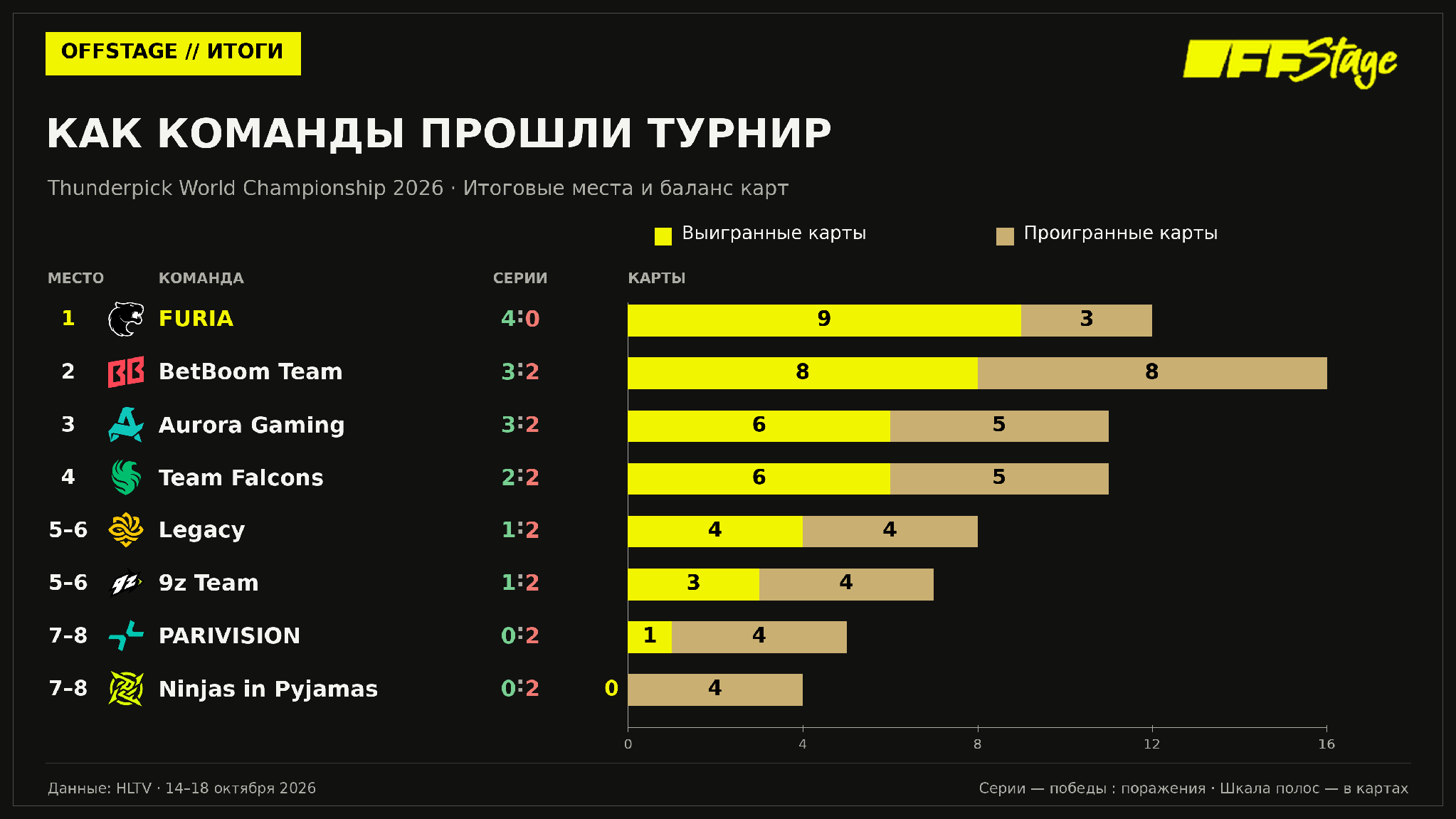
On October 18, FURIA won the 2026 Thunderpick World Championship, defeating BetBoom Team 3-2 in the final. In Malta, there was both an unexpected title contender and disappointment among the favorites. We break down what’s behind the final standings and what questions the tournament left unanswered.
FURIA Found Solutions Even Before the Finals
The main argument in FURIA’s favor emerged as early as the group stage. The match against Legacy was a good test: in their two previous head-to-head matches—at the Esports World Cup 2026 and FISSURE PLAYGROUND 3—FURIA had lost to Legacy on CS. This time, FURIA changed their map selection, leaving Inferno on the bench and choosing Cache. On Inferno, captain Gabriel “FalleN” Toledo de Alcántara Sguario also switched his defensive position: instead of supporting Point B, he began playing on the rotation.
Their map pick didn’t lead to a win—Cache ended with a score of 10–13. However, FURIA then won Inferno 13–5 and Mirage 13–8, and in the semifinals defeated Aurora Gaming, taking Inferno once again. This doesn’t prove that a single lineup change decided the entire tournament, but it does demonstrate a willingness to adjust an approach that isn’t working.
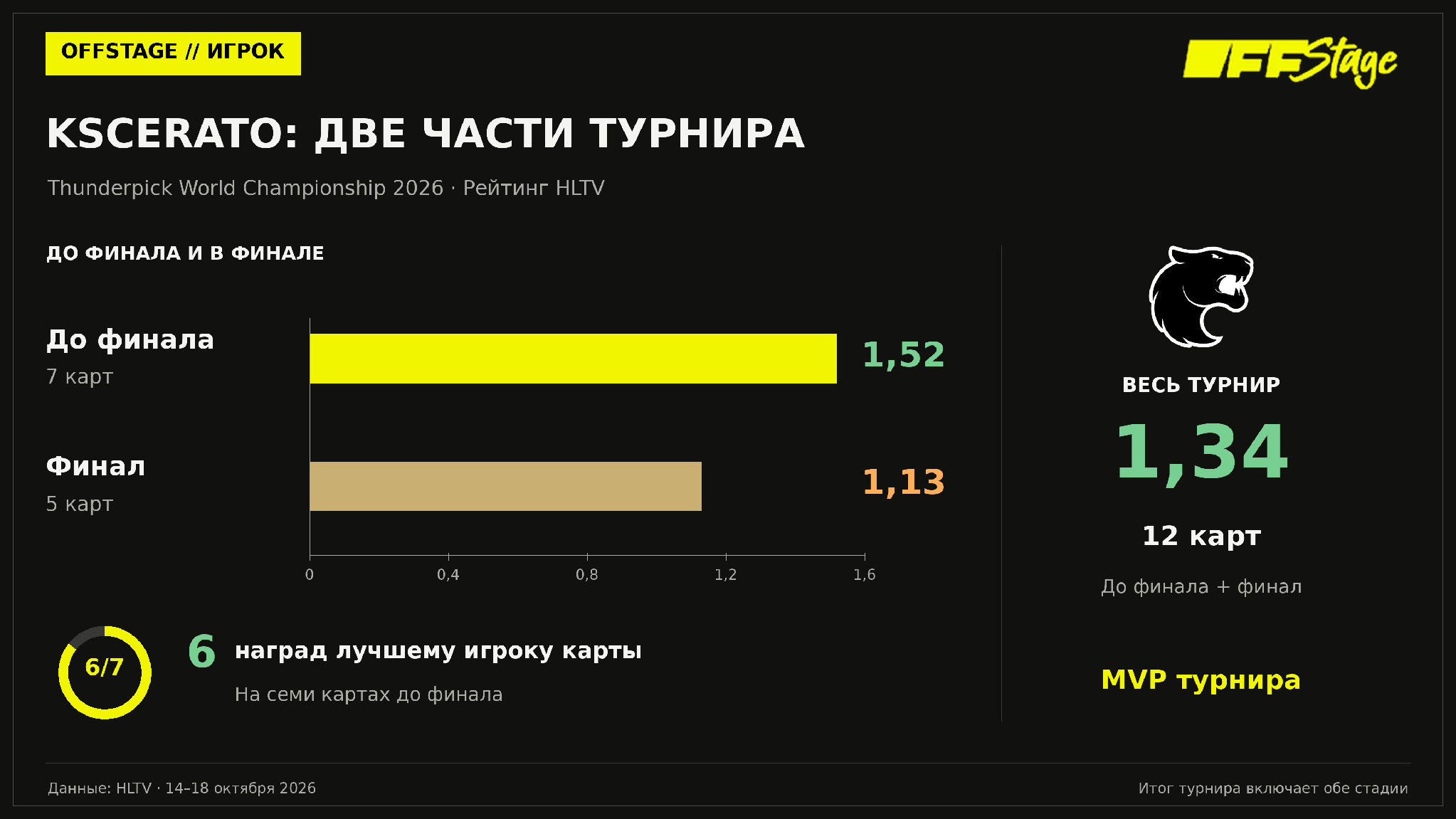
At the same time, FURIA had a clear individual standout heading into the final. Rifler Kaike “KSCERATO” Silva Serato posted an HLTV rating of 1.52 across the first seven maps and was named Map MVP six times. His final rating of 1.34 and second career MVP award seem well-deserved, even without trying to attribute every victory to them. KSCERATO’s strong play helped the team advance through the early stages, but the decisive match demanded much more from the rest of the team than simply supporting their leader.
The final revealed both FURIA’s strengths and weaknesses
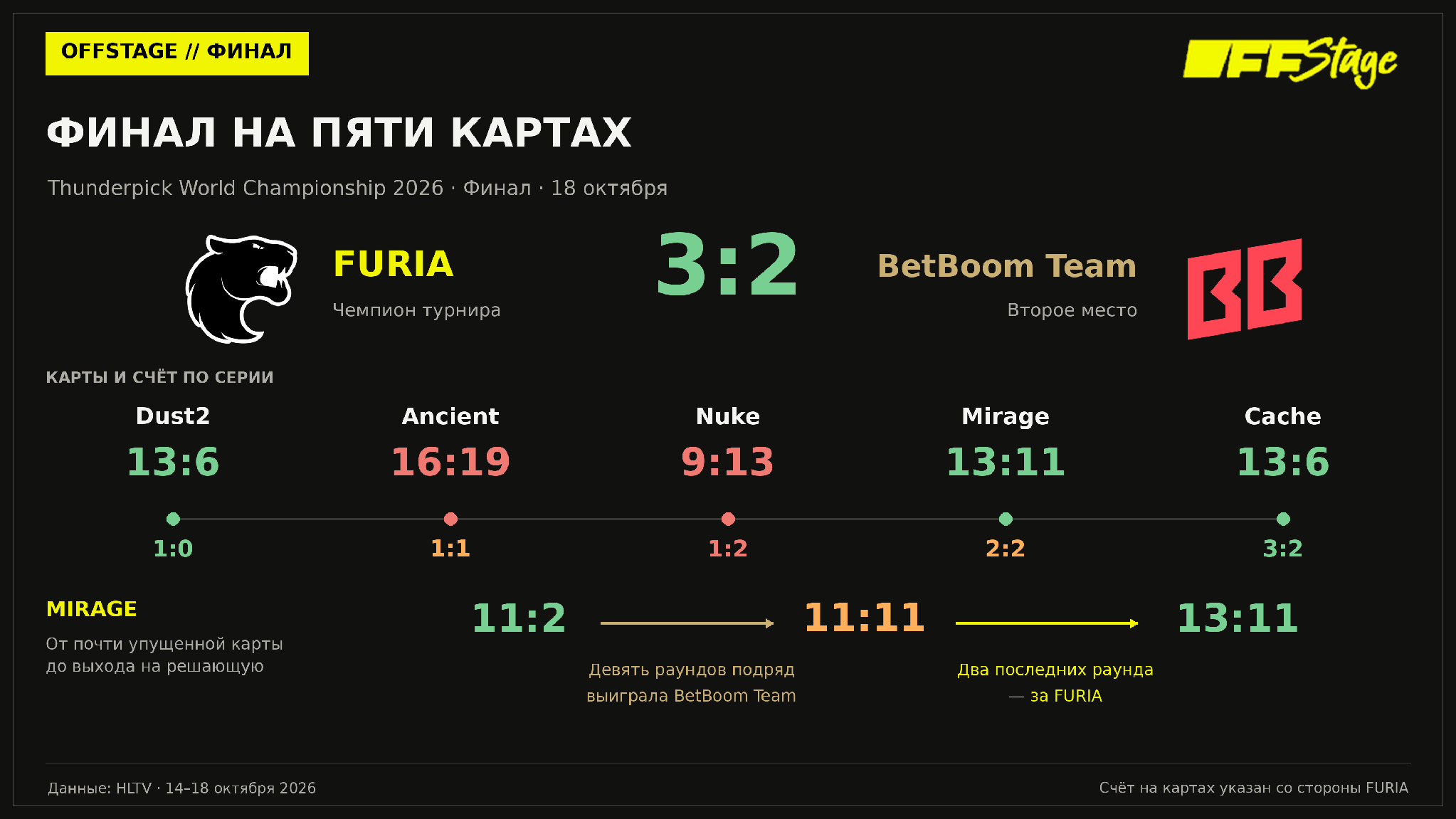
The victory over BetBoom Team was too nail-biting to declare all their problems solved. On Ancient, FURIA led 7–1, but two teamkills in a single round helped their opponent get back into the game, and the map ended in a 16–19 loss. On Mirage, an 11–2 lead turned into an 11–11 tie. Such moments mean a long series can’t be attributed solely to the opponent’s tenacity: FURIA itself left openings for a comeback.
This time, the mistakes didn’t lead to a loss. With the score at 12–11 on Mirage, FalleN secured three kills in a two-on-four situation and helped force the series to a fifth map. FURIA then won Cache 13–6 by focusing on quick attacks on Site B. Here, it’s important to distinguish between the result and the quality of execution: the ability to weather a tough stretch deserves praise, but giving up nine rounds in a row with such an advantage is still risky.
In the final, KSCERATO’s rating was 1.13, significantly lower than his average from previous matches in the tournament. Therefore, the story of their championship victory cannot be explained by a single player who won everything for the rest of the team: the captain secured the decisive round on Mirage, and the team’s overall strategy paid off on Cache. FURIA claimed its first title in 2026, repeating last year’s success in Malta. This is a major achievement, though questions about their consistency when holding a large lead remain after the final.
BetBoom Team was the tournament’s biggest surprise
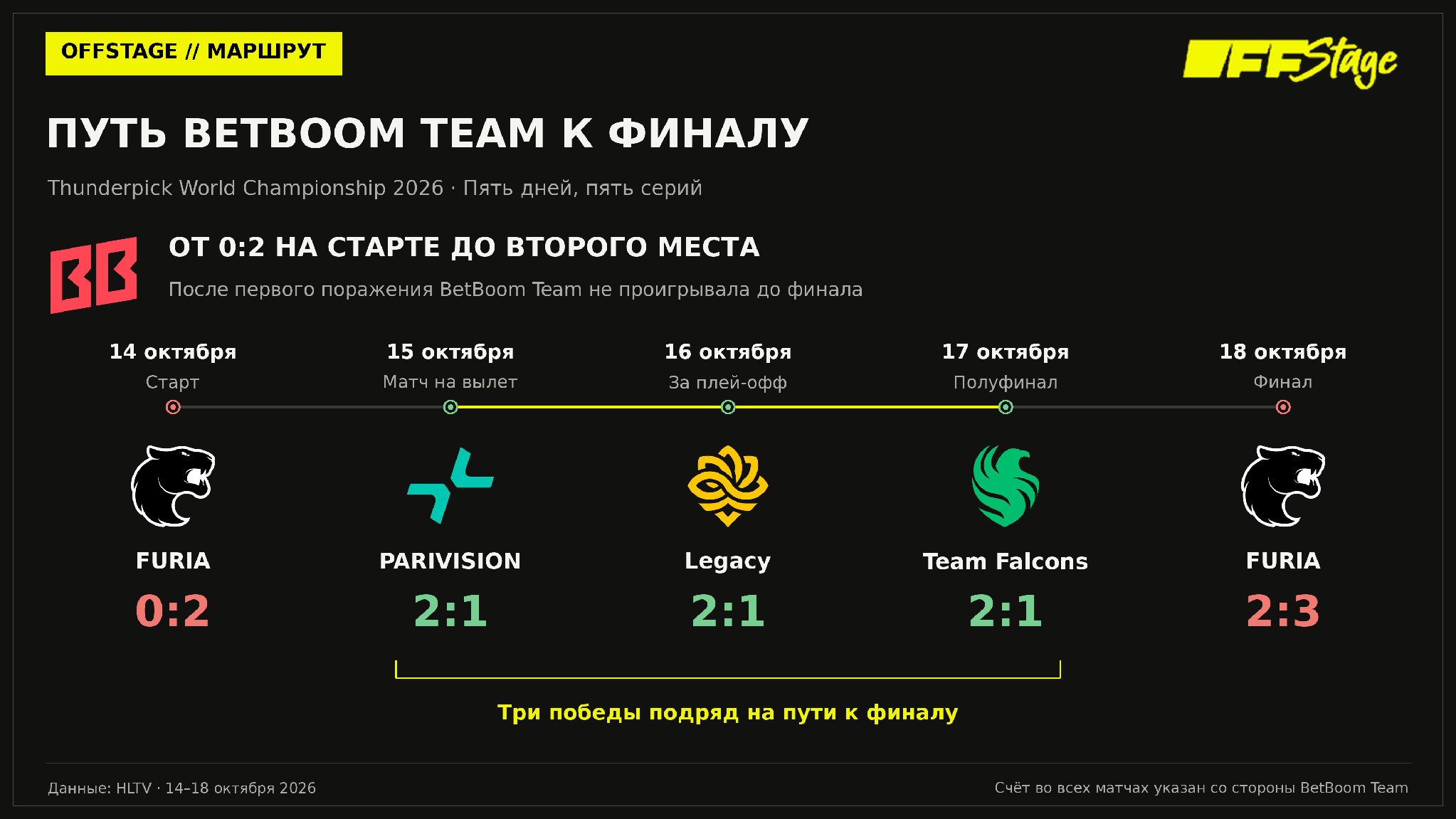
BetBoom Team’s run forces us to reassess our evaluation more than the performance of any other participant. After an opening 0-2 loss to FURIA, BetBoom defeated PARIVISION, Legacy, and Team Falcons—all three series ended with a 2-1 score. In each subsequent match, a loss would have ended their title hopes, so there was no room to hide behind a lucky start or a single easy opponent. To reach the final, they had to pass three different tests and then win two maps against the eventual champion.
It’s particularly telling that BetBoom didn’t need a perfect start to the match. Against PARIVISION and the Falcons, they had to come back from a 0-1 deficit in maps, and on Nuke against Legacy, they managed to rally from a 4-10 deficit to win in overtime. Rifler Kirill “Magnojez” Rodnov finished the semifinals with an HLTV rating of 1.39 and posted a 1.23 in the final—the best result among all ten players. The final series didn’t result in a title, but it also didn’t turn into a formality after an unexpected team made it to the finals.
For captain Kirill “Boombl4” Mikhailov, this is his first tournament final with an HLTV MVP award since the PGL Major Antwerp 2022. However, the significance of this performance lies not only in his personal comeback story. BetBoom showed that it can win long series against various opponents and stay in contention even after losing maps. And yet, on the decisive map, Cache, BetBoom won only six rounds. Now it will be interesting to see if they can replicate this level of play once teams start preparing for BetBoom with their Malta result in mind.
Team Falcons Missed Another Golden Opportunity
Team Falcons’ fourth-place finish looks even worse when you look at their win list. At the tournament, the Falcons only beat Ninjas in Pyjamas and 9z Team, while losing both of their playoff matches. At the same time, Team Vitality, MOUZ, and Team Spirit did not compete in Malta, so the field of participants offered a real opportunity to contend for the title. Advancing past the group stage alone is not enough given such high expectations.
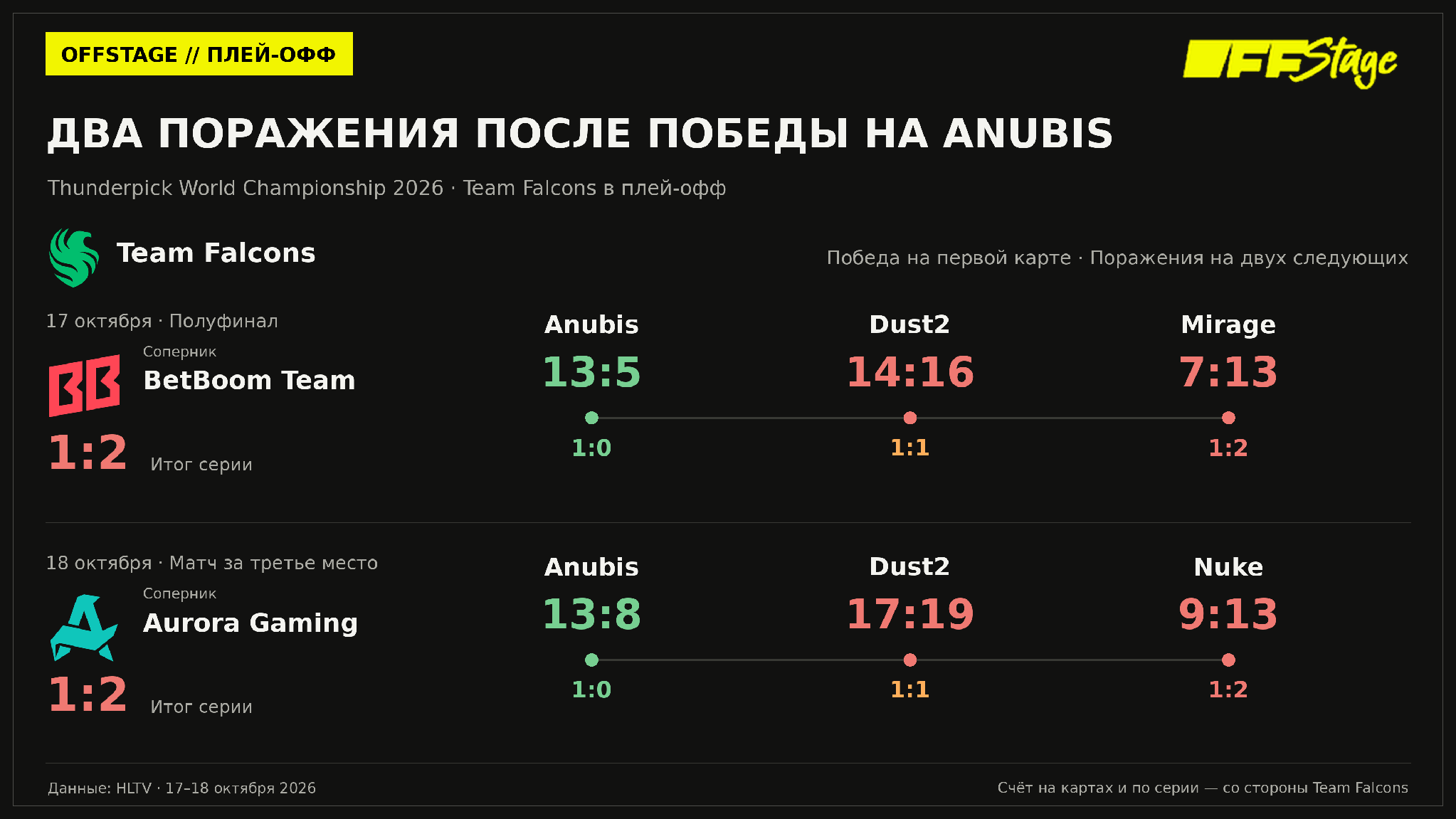
In the semifinal against BetBoom, things started off convincingly: a 13-5 win on Anubis and a 5-1 lead on Dust2. But the second map ended in a 14–16 loss, and on Mirage, neither winning both pistol rounds nor a 4–1 lead helped. The Falcons lost 7–13, giving up the last seven rounds in a row. The problem is clear without any grand talk about the players’ character: strong starts didn’t translate into victories, and after the opponent’s counterattacks, they were unable to maintain control of the match.
Individual statistics highlight this gap. In the semifinals, only sniper Ilya “m0NESY” Osipov finished the series with a rating above 1.0—1.14—while rifler Maxim “kyousuke” Lukin had a rating of 0.84. However, it would also be incorrect to attribute the semifinal loss to a single poor performance: in the third-place match, the Falcons again won on Anubis and again lost on the next two maps. Two losses after taking a 1–0 lead provide sufficient grounds to analyze the course of the series and recurring mistakes. One tournament isn’t enough to call for immediate roster changes, but there’s enough data here for a rigorous assessment of the results.
Aurora Gaming’s bronze medal masks inconsistent play
Aurora Gaming’s third-place finish continued a strong run of results: prior to Malta, they had placed second at StarLadder StarSeries Fall 2026 and won bronze at ESL Pro League Season 24. Three consecutive top-three finishes show that Aurora regularly makes it to the decisive matches. But within their most recent performance, the disparity between matches remains significant. Their opening 0-2 loss to 9z, including a 1-13 defeat on Nuke, doesn’t live up to expectations for a perennial title contender.
In the rematch, Aurora opted for Cache over Nuke and won the series 2-0. However, the semifinal against FURIA ended in a 0-2 loss, and once again, they fell short of reaching the championship match. They’ve already shown they can bounce back from a rough start and make it to the playoffs, but they still lack consistent performance throughout the entire tournament.
Aurora defeated the Falcons 2–1, and rifler Jimmy “Jimpphat” Salo finished the series with 69 kills, 44 deaths, and an HLTV rating of 1.37. The victory over one of the favorites makes their overall performance more convincing and adds weight to another top-three finish. The next step for Aurora is to narrow the gap between their best and worst matches: with such frequent appearances in the decisive stage, it is precisely this inconsistency that makes it difficult to assess their chances of winning the title with greater confidence.
PARIVISION Failed to Build on Its Success in Katowice
After victories over G2 Esports and Natus Vincere at ESL Pro League Season 24, one might have expected PARIVISION to build on that momentum. Instead, in Malta, they suffered losses to Legacy (0–2) and BetBoom (1–2), finishing the tournament in 7th–8th place. The only map they won was Ancient in the second match. After that, PARIVISION took just 11 rounds on Anubis and Mirage, losing 4–13 and 7–13, so they were unable to turn their successful first map into even a tied series.
Their recent victories in Katowice aren’t a fluke, but it’s now harder to view them as proof of sustained growth. PARIVISION has already demonstrated the ability to beat strong opponents, yet at the next tournament, they were unable to replicate that performance—not even to the extent of advancing past the group stage. This distinction between a single success and its repetition is crucial for evaluating the roster. Finishing last in Malta doesn’t negate the entire previous tournament, but it does raise the question of how long they can maintain the level of play they demonstrated there.
Legacy’s early elimination has a different context. Captain Andrei Felipe “arT” Piovezan Machado returned after an illness and, in an interview with HLTV, spoke about his prolonged break from full-fledged training. After defeating PARIVISION, Legacy lost 1-2 to both future finalists, FURIA and BetBoom. This is still a result below previous expectations, but two losses in best-of-three series following the captain’s return provide less grounds for harsh conclusions than a dry streak resulting in a 5th–6th-place finish.
Ninjas in Pyjamas’s early exit didn’t prevent a new title
Ninjas in Pyjamas had the most unusual story of an early exit. In Malta, NIP lost all four maps, falling to the Falcons and Aurora, but on October 17, they won Stake Pulse Beat III in Stockholm. In the final, NIP defeated MIBR 2–1 and claimed their third trophy in three weeks. Thus, a disappointing result at a single tournament turned out to be part of a thoroughly successful stretch when viewed in the context of the entire schedule.
This contrast is more insightful than simply dividing teams into “successful” and “failing” groups. Wins at tournaments with a different caliber of competition help teams grow and gain experience, but they do not, in and of themselves, guarantee that a team can hold its own against stronger opponents. NIP has already shown it can turn such performances into titles, but in matches against the Falcons and Aurora, they failed to win even a single map. The next step forward should be sought precisely in these matches: a fourth trophy alone won’t answer the question of whether they’ve managed to close the gap in skill level.