The Baltic indie scene and the role of the interpreter in interviews — highlights from the Reflections podcast with Heccu

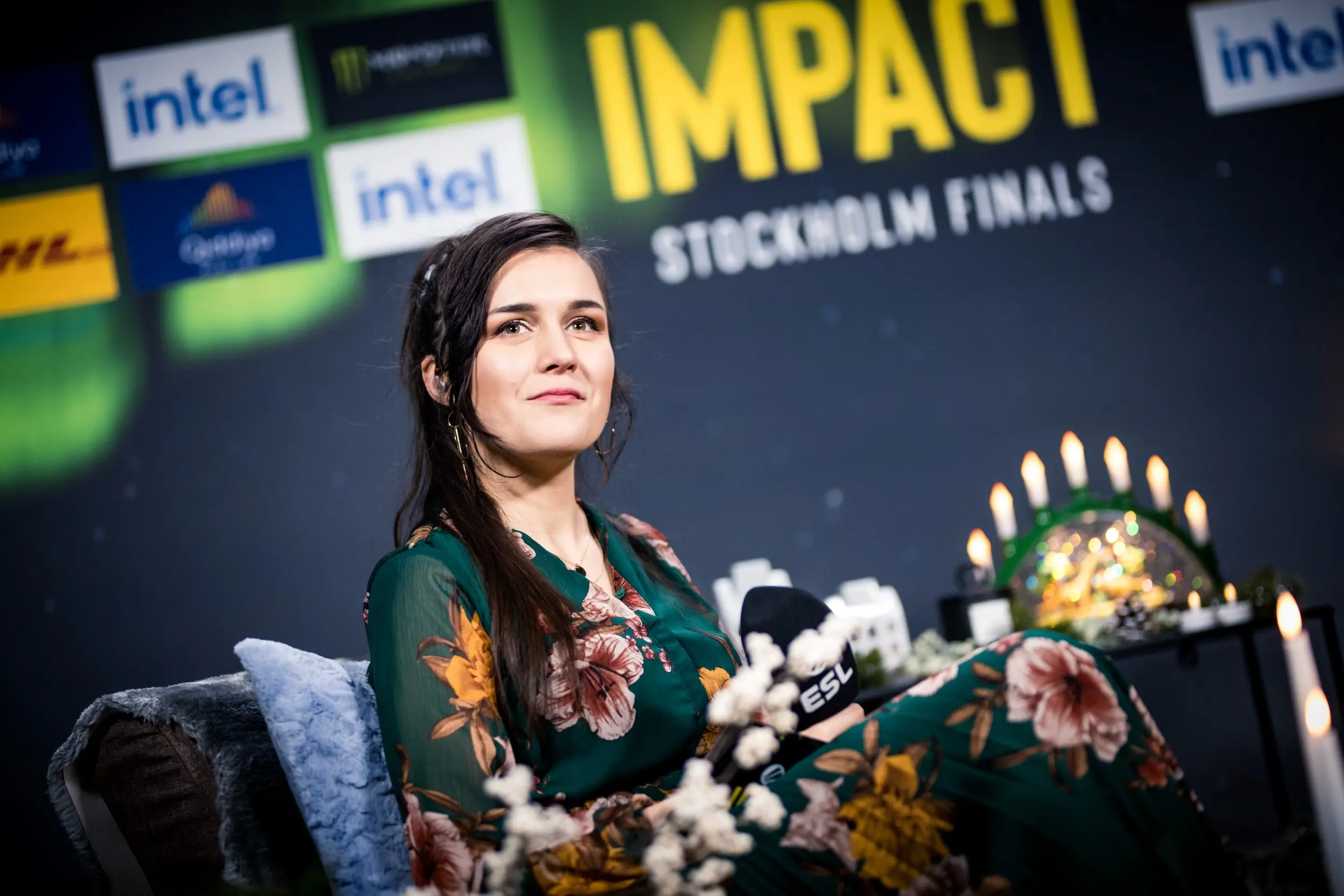
Host and interviewer Anastasia “Heccu” Tolmacheva appeared on the Reflections podcast. Here’s a quick rundown of the highlights in our article.
On her path to esports, working with young players, and the development of the Baltic scene
Heccu shared that her interest in esports began with League of Legends. A turning point came during a trip to the ESL LAN tournament in Cologne in 2013—after that, she decided to pursue a career in the industry and started with local LAN events, where she worked as a photographer. In CS:GO, she focused on interviewing players from academies and the semi-pro scene, noting that this niche had long been overlooked. According to her, young players are eager to engage, and such interviews often become their first media experience, which they later recall even at the Tier 1 level.
Heccu explained that she did not aspire to become a professional player. Instead, she decided to focus on analytics and media work, where, in her opinion, she could fulfill her potential much better. She also highlighted the growth of the Baltic scene: previously, players didn’t believe they could reach the top level, but the emergence of figures like ropz changed that perception.
On broky’s personality, YEKINDAR’s changes, and first impressions of xertioN
Heccu explained that at the start of his career, broky might have simply been nervous and taciturn, and then perhaps consciously cemented that image, which became part of his public persona. She noted that such interviews are difficult to conduct, but over time you get used to it and even start to take it in stride with a sense of humor.
Speaking of YEKINDAR, she emphasized that over time he has become noticeably calmer. While he used to be more aggressive in his behavior, he now appears much more composed. In her opinion, this was influenced by both his experience on the Tier 1 scene and his martial arts training, which helped him better control himself and develop a competitive mindset.
Separately, Heccu recalled xertioN even before his move to MOUZ. According to her, he stood out for his positive energy and ease of communication, as well as a sense of having the “right set of qualities” for growth. Even then, he gave the impression of a player who could progress quickly.
On her approach to interviews, jL’s personality, and working with players from the CIS
Heccu explained that there is no particular secret to her interviews—the key remains a genuine interest in people and their answers. According to her, curiosity and the habit of constantly learning help her ask questions that truly stem from the game and the situation on the server.
Speaking about jL, she noted that she considers him a very intelligent and open person in private conversations. At the same time, in her opinion, the language barrier prevents him from opening up comfortably in public interviews: the player may understand the idea but struggle with phrasing, which makes the conversation stressful for him. In an informal setting, on the other hand, he is very approachable.
Heccu also pointed out the specifics of communicating with esports players from the CIS. According to her, their directness and honesty greatly influence communication: in the absence of trust, they may simply refuse an interview, but once a relationship is established, they become as open as possible.
On the role of an interpreter in interviews, conversations with dastan, and the limits of competence
Heccu explained that during interviews, she often acts not only as a host but also as a sort of support for the players. She said she can provide a full translation or help with phrasing if an esports player has trouble expressing a thought in English.
Recalling the interview with dastan, she noted that the conversation flowed particularly smoothly thanks to constant simultaneous translation. When the coach forgot the right words, he would simply say them in Russian, and Heccu would immediately translate them without interrupting the flow of thought. According to her, this allowed them to maintain the natural rhythm of the conversation and avoid the pauses that often cause an interview to lose its momentum.
Separately, the host emphasized that she tries to honestly acknowledge the limits of her expertise. She admits that she cannot understand every topic with the same depth and prefers to speak openly about this rather than feign understanding. In her opinion, this approach makes the conversation more sincere and helps her learn more from her interviewees.
Read also:
- Heccu: “For many years, gamers in the Baltics lived with the thought: ‘We live in a bad country; nothing can be achieved here’” (first part of the podcast).
- Heccu on YEKINDAR: “Over the years, he’s definitely become calmer” (second part of the podcast).
- Heccu on jL: “He’s really very smart” (third part of the podcast).
- Heccu: “To a certain extent, I really need to be prepared for the topic we’re going to discuss” (fourth part of the podcast).
In early May, Heccu recorded a video message in which she shared the difficulties she was facing in finding new contracts and admitted that she might switch disciplines. She also confessed that she doesn’t fully understand why tournament operators are refusing to work with her.
Photo — Helena Kristiansson, ESL.