We didn’t click — let’s sum up TORONTOTOKYO’s performance for OG

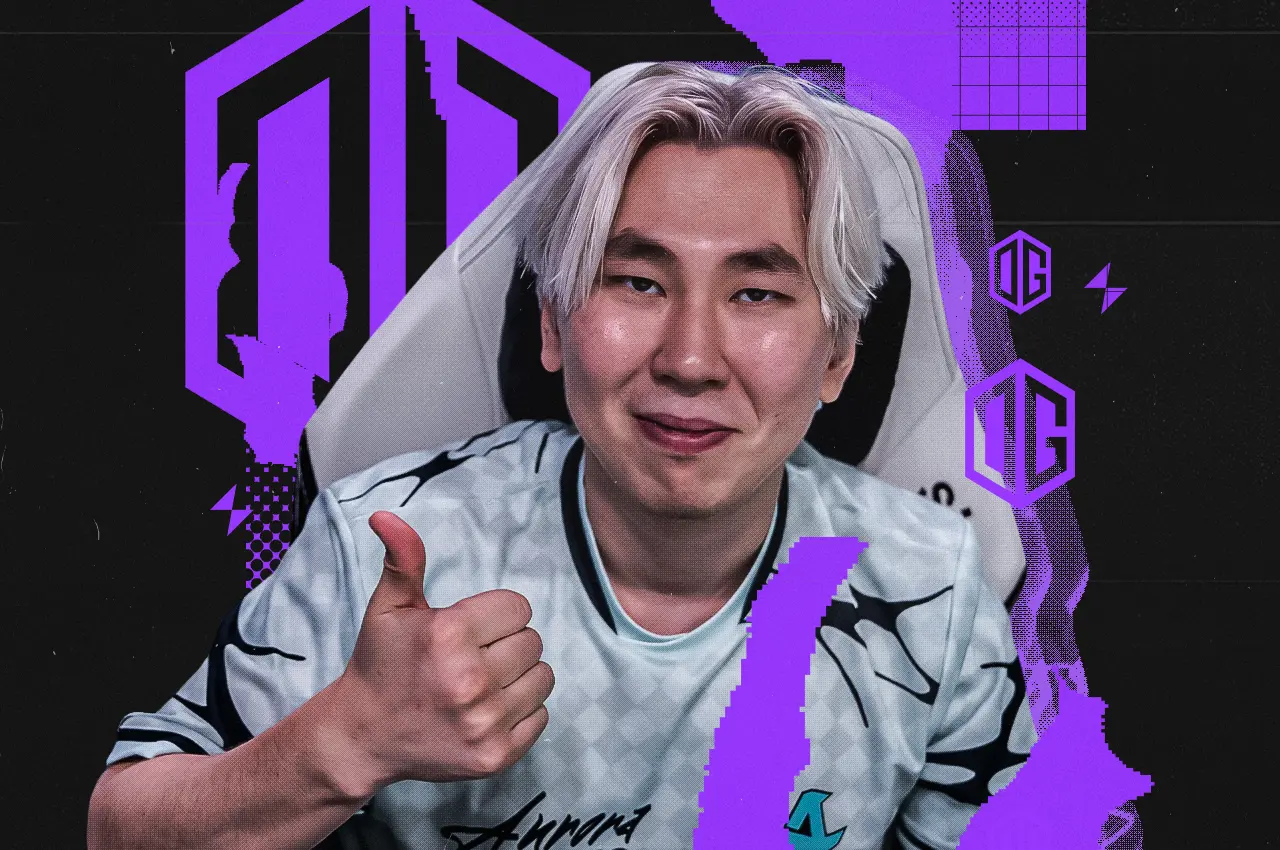
The story has come to an end—OG decided not to renew TORONTOTOKYO’s contract, which, in fact, was quite obvious. Alexander spent two months under the banner of the once-legendary tag—let’s take a look at the results of his performance.
Tournament Results
2026 turned out to be a pretty good year overall for OG. The team competed in four Tier 1 events and was the best representative of its region in the world:
- BLAST SLAM VI — 3rd–4th place;
- DreamLeague Season 28 — 9th–10th place;
- PGL Wallachia Season 7 — 12th–14th place;
- ESL One Birmingham 2026 — 13th–14th place.
After the event in Birmingham, OG kicked Nikko and signed TORONTOTOKYO on loan. The results? A failure in the crucial DreamLeague qualifier and a last-place finish at BLAST SLAM VII. Who did OG lose to, for example, in the qualifiers? REKONIX, whom they had previously beaten, and Ivory—a Tier 3 squad from Southeast Asia with zero experience in major competitions.
Yes, the downward trend was visible even before the transfer, but with Nikko, the team competed in Tier 1 tournaments and LAN events, whereas with the newcomer, they didn’t even make it past the regional qualifiers.
Heroes and Meta
Style
Let’s look at the deeper metrics of OG’s two lineups to understand why their results have dropped so sharply. First—playstyle. The Filipino roster played with energy and aggression, finishing winning games in about 36 minutes on average. With Hertak, match times increased to ~38 minutes.
Added to this is the team’s overall aggression. Before the offlaner change, OG averaged 24 kills per match; after, 17. Average GMP and XPM dropped by ~100 points each, and Roshan was killed by the team nearly half as often—the team slowed down, which didn’t benefit their style.
Heroes
Second—the heroes. In recent tournaments, Nikko has most often played Dark Seer, Mars, Underlord, and Primal Beast. The first two are “signature picks” for both the team and the player himself; over 60% win rate, in the top 3 for OG’s most effective picks on the difficult lane, and the Mars + Snapfire and Primal Beast + Chen combinations were the team’s best strategies overall.
What did TORONTOTOKYO play? Lycan, Doom, Timbersaw, Beastmaster—and this is a very strange hero pool for the team. Timbersaw, for example, is among OG’s least effective heroes with a win rate of just 18% for the season—literally a “hidden” pick. With Beastmaster, the guys have a 35% win rate (200 games didn’t help), with Doom — 33%, and with Lycan — 20%.
Draft Logic
The third interesting metric is the logic behind draft composition. Let’s compare how often both players on the difficult lane received a hero in the first, second, or third pick phase, and how this affected the win rate:
| — | First tier | Win rate | Second stage | Win Rate | Third stage | Win % |
| TORONTO TOKYO | 9 times | 11% | 5 times | 60% | 5 times | 20% |
| Nikko | 41 times | 34% | 51 times | 64% | 17 times | 35% |
The table shows that the difference is simply enormous. Nikko got first-pick heroes more often and won from less-than-ideal situations three times more often than his replacement. The situation is almost the same with closing picks, except there are one and a half times as many wins. This means that Hertek performed significantly worse in both favorable and unfavorable drafts.
In summary, Sasha simply didn’t fit into the team’s strategy. This was evident even from his teammates’ interviews, who said they needed to find a new identity rather than adapt exclusively to TORONTOTOKYO’s ideas—it just didn’t work.
Personal stats
I love personal stats, so let’s take a look at those too—to get the full picture. Here’s a comparison of two hard laners (Nikko in OG and TORONTOTOKYO before OG):
| — | K/D/A | Hero pool | Flexibility | GPM | XPM | Stuns | Roshan | Lane Wins | Gold difference |
| Nikko | 2.9 | 7 | 26.51% | 488 | 628 | 42.2 | 1.3 | 35.9% | -322.5 |
| TORONTO-TOKYO | 5.1 | 5 | 13% | 554 | 728 | 44.5 | 1.1 | 38.3% | -202.2 |
In my previous article, I already mentioned that the players are evenly matched in terms of individual skill, so I won’t go into detail here. But here’s what Alexander demonstrated during his time with OG:
| — | K/D/A | Hero Pool | Flexibility | GPM | XPM | Stuns | Roshan | Lane Wins | Gold difference |
| TORONTOTOKYO | 2.3 | 6.5 | 38.4% | 539 | 653 | 15 | 0.8 | 34.3% | -191.4 |
And once again, there’s a noticeable sharp drop. All metrics, except for the hero pool and flexibility, have declined; some critically, sometimes by half.
Conclusions
While writing this, I wanted to wrap things up with the conclusion that TORONTOTOKYO isn’t to blame. But the player’s personal stats have also deteriorated significantly, so both sides are at fault for the poor result.
Still, OG made a major mistake—it was clear from the very beginning that this transfer wouldn’t lead to anything good. Not even because Sasha isn’t a “carry” in the “top lane” and can’t win matches just by being there, but because the Filipinos took a player from another country—with a different language and culture—into a roster of five guys from the same country. As it turned out, the team’s playstyle and the offlaner’s are also strikingly different.
- Read also: Raven joined OG
In the end, TORONTOTOKYO simply ended up in the wrong place. It would probably have been foolish of him to turn down the chance to play for OG, but the organization’s management clearly rushed into this. After all, the club has now signed the Filipino player as a replacement for Nikko (I suggested Tino and still think he’s better, but Raven fits the bill in every way), and it’s completely baffling why this transfer couldn’t have been completed two months ago to give them time to gel before the season’s major tournaments.