Avo+ on HEROIC’s departure: “We may be blowing a fairly minor piece of news out of proportion.”

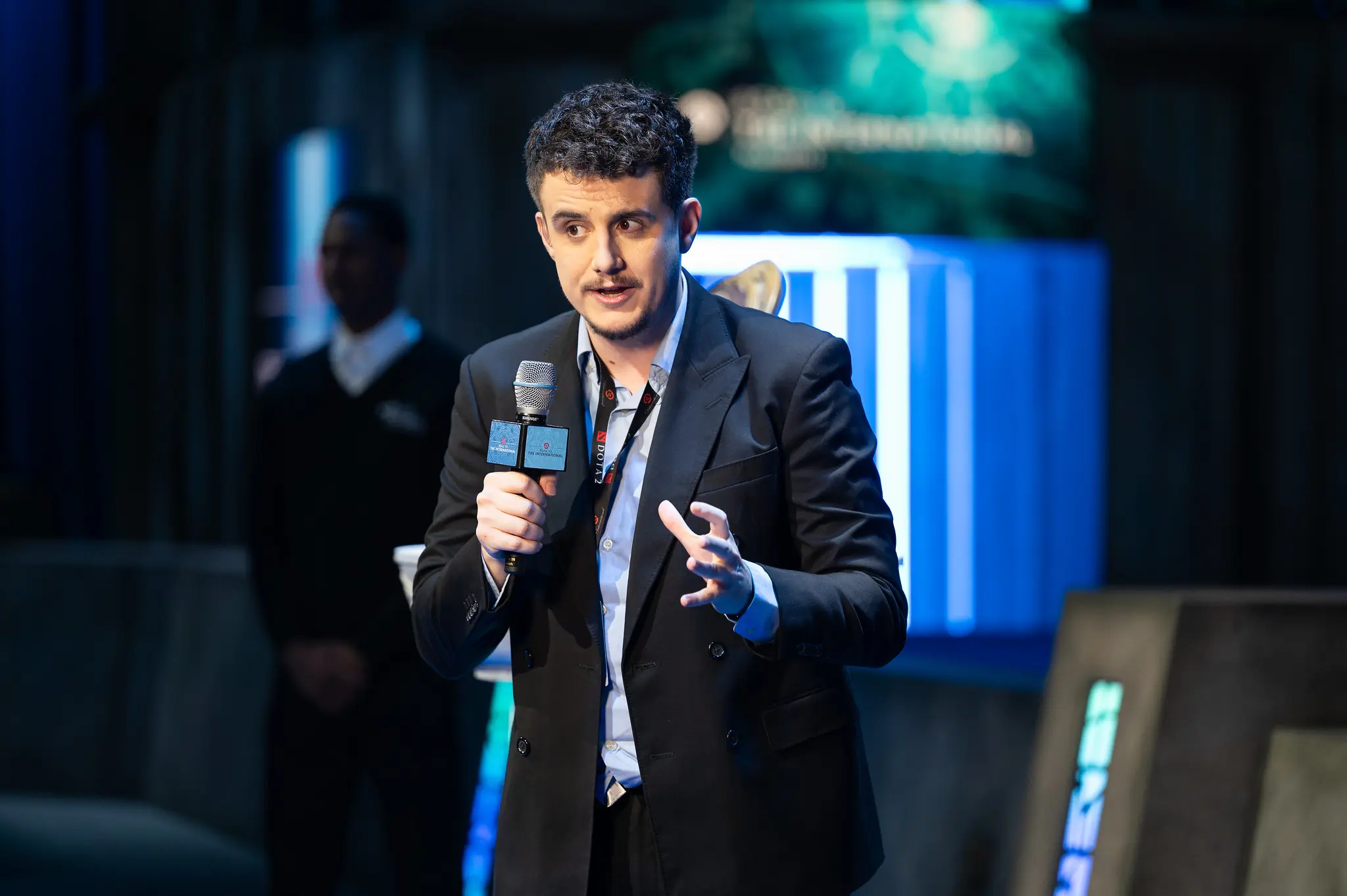
ESL FACEIT Group Product Manager Álvaro “Avo+” Sánchez Velasco commented on HEROIC’s departure from Dota 2 and discussed the structure of the game’s professional scene on the Not For Broadcast podcast.
On HEROIC’s departure from Dota 2
Avo+: For me, when HEROIC’s announcement came out and I saw the post, it didn’t read to me as “Dota isn’t viable,” but rather as “We couldn’t make Dota work.”
I don’t want this to sound like a criticism of them specifically—it’s not that they couldn’t do it, but that others will be able to. Dota is a really difficult game to make profitable and sustainable. But to me, the post itself meant more like: we don’t want to keep doing this. It wasn’t entirely their choice in the sense that they didn’t want to leave—they liked the team, they had good relationships, and so on—but circumstances forced them to do it. And it doesn’t look like a strategic decision, but rather a forced move.
I understand this overall and have great respect for HEROIC as an organization. I think it’s one of the few organizations that operates in a more traditional way, not like teams built around players or influencers, and yet they’re doing quite well with their business model and structure. That’s why I understand why a blow from such an organization is perceived more seriously than, say, from some team associated with a Russian rapper—we’ve seen that happen in the past, too.
Cap: But overall, there are fundamental aspects of esports from the organizations’ perspective. If Team Liquid, for example, were to leave Dota 2, it would be a huge shock because they’re present in all disciplines—and then the question arises: what’s actually going on, why are they leaving Dota specifically?
Avo+: And I just think that Avery’s opinion, where he said “there’s nothing new,” was generally correct—there really wasn’t anything new there. I wouldn’t have phrased it that way myself, because for me, when someone says “This is nothing new,” but tournaments are still happening—it’s more of a sign that we might be blowing a fairly minor piece of news out of proportion. Not that “Yeah, the game has been dead for three years, we just didn’t realize it.” That’s the mood—it’s as if everyone is living in a “dead” game.
Cap: It seems to me that this small news item just sparked a conversation that we could have had a year ago or six months ago—but we just had it now.
On the community’s reaction to organizations leaving
Avo+: And I feel like a lot of people within the scene right now are kind of holding their breath during these discussions. And when news like this comes out—they just vent their negativity because they’re afraid. I get that too. And I probably have a more objective perspective, or, let’s say, a privileged position as an observer in this case. If Dota dies—I won’t lose my livelihood because of it right now, as I would have, for example, when I was working as a caster.
I’m in a good position right now, and I’m glad about that, because I already have skills that can be transferred to a regular job outside of esports. I have experience working in a company, skills that aren’t strictly tied to a single discipline.
Cap: There’s even a piece of paper called a resume.
Avo+: Yes. And because of that, my position is both privileged and, perhaps, makes my words more honest: because I’m staying in Dota not out of desperation. Maybe I’m an idiot, but this isn’t a choice born of hopelessness. I think most of the negativity stems from fear. And this fear isn’t about “What will happen in a year”—most people understand that in a year, everything will be fine. But “What will happen in five years?”—that’s a different question. When you discuss this with other people in the same situation, the negativity arises because there’s no clear plan or path, and it feels like you’re dependent on external forces you can’t control. And that’s unpleasant; I understand that.
Because it’s true: neither Avery, nor I, nor anyone else individually decides what will happen with Dota. It’s a collective process. And because of that, we often can’t see the forest for the trees—we focus on the negative details and miss the bigger picture, which, in my opinion, could offer a more positive perspective on the situation in Dota 2.
On the Structure of the Dota 2 Pro Scene
Avo+: I would say that the key elements of what makes Dota an esports are not currently under threat. And here’s what I want to explain when I talk about the role organizations play in esports in general. If you compare it to traditional sports, the role of an organization or club in esports is similar to that of soccer clubs. I’m constantly thinking about soccer, so if you’re not from Europe—sorry, this is the only reference I can relate to as a Spaniard.
If you imagine a soccer club, it performs several functions at once: it owns the players, sells merchandise, has a stadium, and partially organizes the event itself. I’d say that organizations like UEFA aren’t as powerful or important in soccer as, for example, tournament operators are in esports. And in that sense, teams in esports have more power and influence. But at the same time, their obligations to the scene don’t necessarily have to be as constant or deep as those of players or tournament organizers.
And the best example here is MOUZ. I don’t mean this as criticism; I just want to explain. This is an organization that can be considered one of the strongest in esports, on par with Team Liquid or HEROIC. But in Dota 2, for a long time, MOUZ came and went as it pleased.
Cap: Every time before The International, it would assemble a promising roster, bring it under its banner to TI, and then simply disband or let the team go after the tournament. <...>
Avo+: Basically, if you look at MOUZ’s trajectory, it’s a good example of how, in my opinion, team relationships in esports work: they can enter and exit the scene quite flexibly, because that’s the beauty of esports—you can participate in different disciplines at once.
And their departure or return to the scene is more a reflection of the balance between the players and the organization than an indicator of the health of the scene itself.
Cap: So you’re saying she’d be here all the time if maintaining a Dota 2 team were cheaper, right?
Avo+: And so the question of team costs isn’t really an indicator of whether the scene is healthy or not. It’s one factor, but not the main one. Because if everything gets too expensive, organizations are forced to cut salaries. If no one is willing to pay those salaries—teams will simply disappear and survive solely on prize money, and that’s it.
This isn’t a situation where “We have to pay these salaries, or else the teams will go on strike,” like in the NBA. There’s no such pressure here. They can refuse to play at PGL, BLAST, or ESL—but then they’ll just be left without tournaments, because those are the three biggest Dota operators right now. And that’s it; it’s not exactly a strong position for a strike. The teams don’t have that kind of power. Their influence lies elsewhere—they have to find a balance between player salaries and prize money. In an open ecosystem like Dota, that’s the key factor.
Earlier, commentators and analysts Avery “SVG” Silverman and Austin “Cap” Walsh discussed organizations leaving Dota 2, high player salaries, the overloaded tournament schedule, and structural issues in the modern pro scene.
Photo — Valve.