so bad explained how his perception of the role of a coach in Dota 2 teams has changed

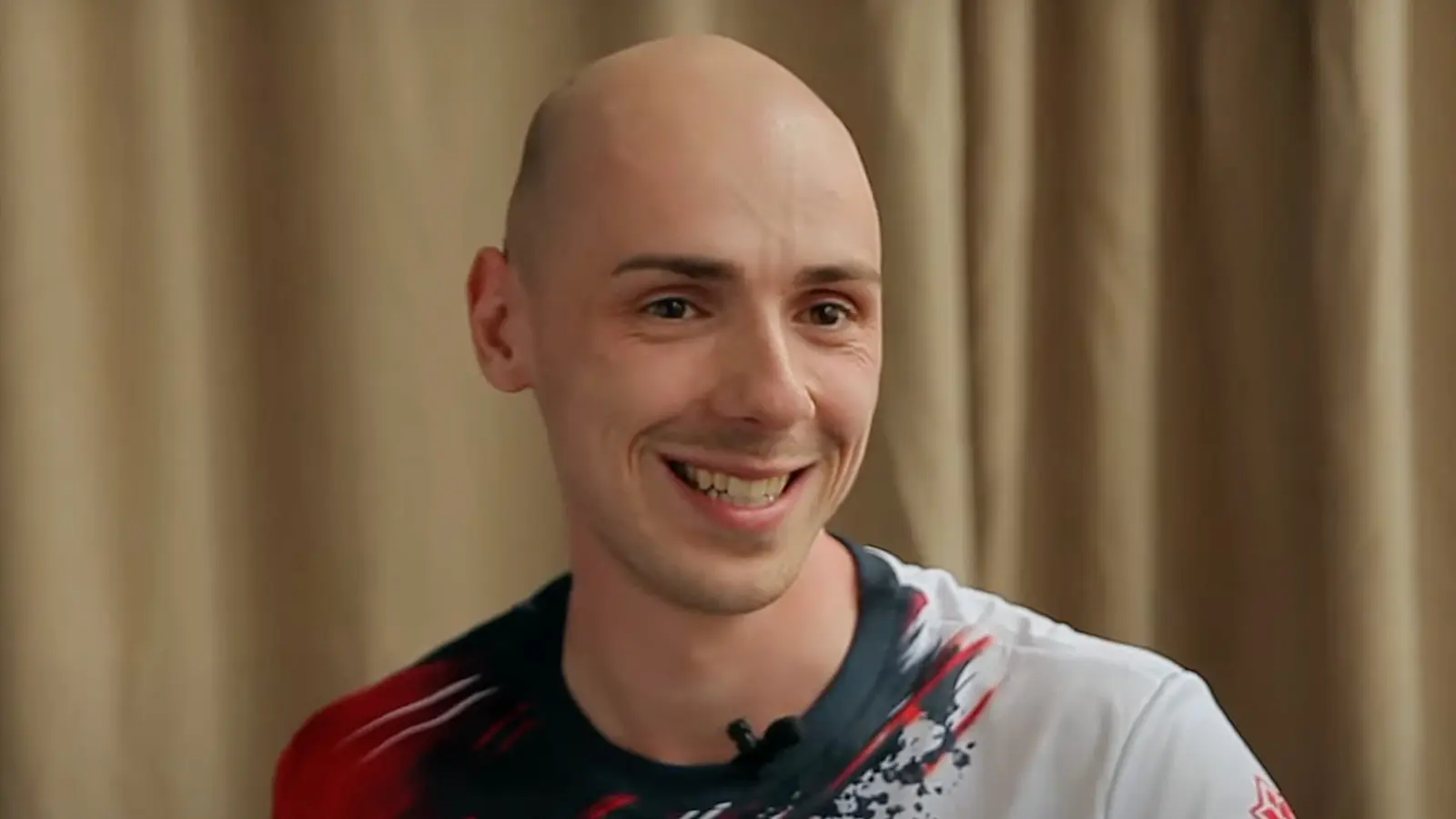
Vitaly “so bad” Oshmankevich, a coach for professional Dota 2 teams, shared his thoughts on the role of coaches in this discipline via Telegram.
Quotes are presented with the source’s original spelling and punctuation
On the decision to become a coach
A year and a half ago, I got tired of playing yet another thousandth public game in Dota and decided I wanted to try something new. I wasn’t a coach yet, but I decided to first create an opportunity for myself to become one.
I started reaching out to teams and organizations to let the “market” know that I was now a coach and wanted to work with teams. Obviously, at that point, all the “spots” were already taken, and getting anywhere was practically impossible. But thanks to that, I started to get my name out there among managers and players: “Hey, there’s this guy.”
On Putting Together an Academy Roster and My First Coaching Experience
Five months later, I got lucky and was given the opportunity to assemble a roster for the academy. I am very grateful to the people who gave me that opportunity.
I had to adapt right away and get used to the role of a “scout.” Although the list of requirements for selecting young players was impressive, in the end I managed to fully fill 3 out of 5 positions. The other two were shaky, and for various reasons, I just couldn’t seem to finalize them.
And that’s where my first coaching experience began. Let me make this clear right away: at that time, as I understood it, the role of a coach was to show the guys how to win at Dota.
About the Challenges I Faced
And this is where I began to encounter problems such as:
1. The guys’ low level of execution and understanding of the game.
2. Poor communication.
3. Emotional immaturity.
Subsequently, I began working on these issues and looking for suitable tools to address them. I tried to do this through one-on-one sessions, game reviews, conversations, and the training process. But I gradually realized that some of these problems couldn’t be solved solely through game coaching. Eventually, all of this starts to turn into a routine that lacks any “carrot.” There’s no real opportunity to see the results of working together, to put your ideas into practice, or to feel like you’ve made progress. Sometimes it takes players several years to reach the “next level.” And it’s quite difficult for the academy to show results at a tournament where the teams are far from the weakest. Against this backdrop, over the course of half a year, the routine slowly eats away at you and the kids.
And in moments like these, the question arises: Am I doing what I want to do? And along with that, my established understanding of the role of a coach begins to crumble.
On Working as an Assistant Coach
But then there was a minor “shuffle,” and I was offered the chance to try my hand as an assistant coach—this time with a Tier 2 team. And I agreed. This team was already established—with its own vibe, habits, and problems. At the academy, my job was largely to develop the players. In Tier 2, for the first time, I had to work not so much with individual players as with an already established system. And that’s when I realized just how important the period is when a coach gets to know the team. How well you get to know the guys and how quickly you identify their “true” unresolved team issues greatly influences the plan moving forward. To say that the head coach and I figured out the team’s problems—no. In the end, we didn’t understand the team’s real problem well enough. Instead of first getting to the bottom of the fundamentals, we tried to address what was most obvious. As a result, we didn’t get the outcome we expected. This subsequently led to periodic changes within the roster. The head coach left for another team, and I was “promoted.”
On Changing My Perspective on Coaching
Subsequently, my view of coaching underwent a radical transformation. I began to realize that my main task wasn’t to teach the team how to play, but to get the people on the team to start working for one another. Essentially, this involves working on trust, communication, the players’ relationships with one another, self-esteem, conflicts, intrinsic motivation, and so on. This builds what is known as the team’s foundation, against which athletic results then emerge. And to make all of this happen, I need to have a good “feel” for the players and learn to understand them.
But against the backdrop of past failures and periodic roster changes, faith in the team’s success kept dwindling. Ultimately, this led to a lack of time to fully implement the idea.
Now I no longer view a coach as someone who has to know more than anyone else and teach five players how to play Dota correctly. For me, a coach is someone responsible for turning five different people into a team capable of working together.
That said, I’m still learning this myself. And perhaps the most interesting thing about being a coach for me right now is that I’m still not sure I know what the ideal coach should be like. It seems there simply isn’t a one-size-fits-all answer to that question.
Earlier, Nemiga Gaming support player Dmitry “Fishman” Polishchuk named Filipe “Astini” Astini Ribeiro the best coach of his career. “He’s a good coach; I really like him. I have fond memories of Astini,” the player shared.
Photo: Nemiga Gaming.