“I’m convinced that our potential is higher than that of the top Asian teams”: an interview with Team Spirit coach Coldstar

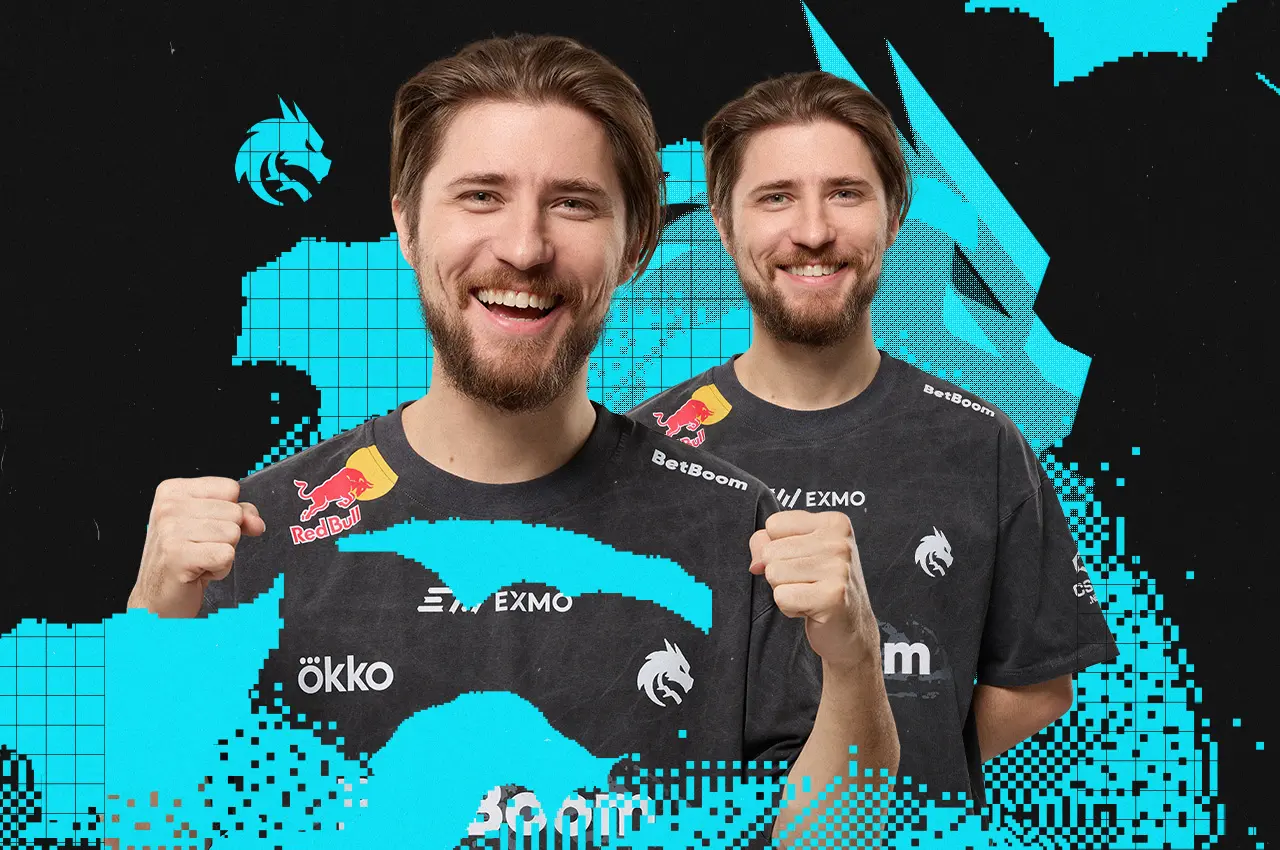
The MCC Season 7 Regional League concluded with a decisive victory for Team Spirit—the “Dragons” once again confirmed their status as the region’s best team and advanced to the main stage of the 2026 Mid-Season Cup. Ahead of the start of the summer’s major international tournament, we spoke with the team’s coach, Nikita “Coldstar” Morozov: he discussed the spring season, the state of the game, and Team Spirit’s future plans.
Congratulations on your victory at the MCC—and my first question is actually about the league. Looking back on the tournament: did everything go according to plan? How does the team assess the result and its own performance?
Thanks for the congratulations! If we look at the MCC as a whole, there were a few minor slip-ups: we lost a few maps, and we weren’t able to go undefeated for the entire season. But that wasn’t our goal this time—I think it makes sense to set that as a goal for next season so we can play more cleanly.
As for the decisive matches—we went 3–0 in the upper bracket and 4–0 in the grand final. We prepared well, our mindset was as competitive as possible, and in the end, we performed admirably. In certain moments, we could have done even better—drafting a little better here, executing a little better there. But for the most part, we showed everything we’d prepared. There was even a bit of improvisation to adapt to the changing meta.
zaur egoist was named MVP of the finals. Would you say that Zaur has fully integrated into the team’s gameplay?
Yes, Zaur has fully integrated into the team. He has a very good rapport with the entire team. He’s outgoing, just like Mateos, and they hit it off right away. He’s also managed to build a strong rapport with the rest of the players and the coaching staff. A lot of work was done “behind the scenes” to bring everyone on the same page, but Zaur also naturally adapted very well to the team’s style and fit right in.
After the 4-0 victory in the grand final, there was renewed discussion about the level of competition in the region. In your opinion, are the matches at the MCC enough for Team Spirit to prepare for an international tournament—or do they need to look for something else?
The matches at the MCC definitely aren’t enough for preparation—and not just at the MCC, because in many practice matches we simply didn’t face any serious resistance. Because of this, we often get the feeling that we’re not making any progress or developing as a team.
Even maintaining discipline becomes a challenge—simply because our opponents turn every game into a marathon of killing sprees and chaos. Generally speaking, if we play a few maps with discipline and don’t fall for it, then when we have eight games a day, it becomes very difficult in the heat of the moment not to start punishing opponents for dirty and sloppy play.
At times like these, I remember when I used to play and faced similar situations. I understand that it’s hard to control in the heat of the moment, but we need to strive for better gameplay. In the league I came from, we had the opportunity to play not only against CIS teams but also to scrimmage with teams from Turkey and Europe—including European Chinese teams, who played quite well—and we got plenty of practice.
But here we’re stuck in our own region, where there are very few competitive teams. That’s why I’d like to have more opportunities to play against other regions—ideally Asia.
Speaking of the tournament’s meta, how well does it suit you? Were you able to try out everything you wanted to (and that might help at the Mid-Season Invitational)?
The meta suited us well. Belerik got stronger, and for Stas, who was already playing him, that’s a breath of fresh air. We started pushing Belerik hard in the early pick phase, and some teams just banned him for us because he complicated the gameplay. For example, for Team Yandex and their catch setup, Belerik is an extremely annoying pick.
As for the Mid-Season, you have to understand that a new patch has just been released that has revamped the game again, and we’ll be arriving at the tournament to play a completely new version of MLBB. But I like these changes, and I hope that the experience from my previous games will help us find some tactical tricks that can give us an edge.
Do you feel like there aren’t enough bans for all the unbalanced picks in the meta? You were given Baksia, and on the first map of the Grand Final—both Zhuxin and Marcel. What does the start of the draft look like for you? Are there any priorities or general ideas?
Yes and no. As you’ve seen, the tournament’s meta has evolved, and our priorities have shifted slightly. An important skill for a drafter is to track these changes, take them into account, and adapt.
In the MCC playoffs, we had to quickly realize that Fredrin was an anti-pick, even though in the Philippines he was a top-pick candidate for the Grand Final. In our region, this hero doesn’t perform as effectively—people don’t play as well with him. Harley, on the other hand, is a go-to pick for many teams. For some, Marcel is no longer a top priority. Aside from Stas, no one in the EECA region really knows how to play him.
We’re open to any trade-offs the teams are willing to make. We’ve been practicing this all season, so we have roughly equal priority for all scenarios.
Does Team Spirit have any expectations regarding the game’s balance updates?
We expect to adapt quickly to the changes and use them to win the Mid-Season Cup. As with any major patch, we need to look at the numbers, examine the specific changes, and start building our strategy around them.
There’s just over a month left until the start of the 2026 Mid-Season Cup. What’s the team’s plan: a mini-break, a boot camp in Asia, or something else?
Right now, we’re on a mini-break until the BetBoom Rise of Legends Season 10 playoffs. We’ll start preparing on June 19, play the tournament on the 21st, and fly to Asia a few days after that. After that, we have two major tournaments right away: first, the Mid-Season Cup in Paris, then the “Games of the Future” in Kazakhstan.
If you don’t mind me asking, why did you decide to skip the AFK Masters tournament in Moscow in favor of boot camp?
The dates didn’t work out. I think CyberHero deliberately scheduled the tournament so that we wouldn’t participate. Imagine: we’re at boot camp, and right after the MCC Grand Final, we’d have to go play another “regular” tournament for two weeks, then postpone our boot camp by a week and head to Asia without any rest. That would definitely lower our productivity.
First and foremost, our goal is to win the EWC. To do that, we need to be fresh, and a week of rest after the MCC is absolutely essential for us. The guys need to take care of their real-life matters: some are graduating, others are moving—we need time to catch our breath. If we’d been given a direct invite to the LAN, we would have gone—we’d have had time to rest, prepare for a week, and play. But the organizers didn’t want to invite us.
Overall, how much of a boost can a week or two in the Philippines give a Western team? Is there a specific amount of experience (practice matches against top teams, ranked games, and so on) that you’d like to gain—and how can you make the most of it?
A week isn’t enough; there will be a boost, but it’ll be small. Two weeks is better, and the boost will be noticeable. Ideally, three weeks—that way you can spread out the workload more evenly and get used to the Asian pace and time zone. The first week will be all about adapting; active progress starts in the second week.
In matches against the strongest Asian teams, you’ll be fighting for every inch of the map in every game. They’ll always punish you for losing your position, for a mistake on the line, or for being cocky—to win, you need to play cleanly and with discipline. What you might get away with in the EECA, they’ll try to crush you for in Asia. In terms of workload… I want to get the most out of it and make this time as productive as possible.
You joined the team a little over a year ago, also right before Mid-Season. In your opinion, has anything changed dramatically at Team Spirit over the course of this full season? Would you say the team is developing successfully, and what aspects would you like to highlight?
I feel like a whole range of things have changed. We’ve added structure, which was lacking when I first joined. We’re actively working on discipline, and we’ve made significant progress in that area. Victories in major competitions aren’t achieved in chaos: you need discipline and structure; everyone needs to know their roles and what they need to do. That leads to more confidence and less anxiety.
We’re actively working with data and have started preparing for matches more thoroughly and in greater detail; this also boosts confidence and improves our mindset. With the arrival of Nazar, our analyst, we’ve largely moved away from Excel spreadsheets and switched to specialized software, which makes it much easier to gather information and work with data. The feedback process has improved so that everyone can better express their thoughts and listen to one another—this is very important for teamwork. Communication has improved.
Perhaps our progress isn’t as fast as we’d like, but everything is happening gradually. In a way, this is even for the best—it gives us time to adjust so that, in the end, everyone feels and understands how to move toward our common goal as effectively as possible. I think we’re on the right track, and I feel that the team is growing: each player is building on their strengths and working on their weaknesses, and the guys’ performance has become more consistent.
There’s still more to strive for, and we clearly haven’t reached our full potential yet—I’m convinced that our potential is greater than that of the top Asian teams. Ultimately, we’ll be able to beat them. It’s just a matter of time.
What are Team Spirit’s goals and objectives for the 2026 Mid-Season Cup? In your opinion, how realistic is it to compete for the trophy under the current circumstances?
Our task is to continue strengthening the aspects we’re already good at and to work on those where we still lack confidence. The main goal is to prevail over every team that stands in our way. Our most important rivals are the Philippines, Indonesia, and SRG—because if you beat them, you’ll be lifting the cup. And we’ll do everything in our power to make that happen.
Thank you very much for the interview! To wrap up, please say a few words to the fans and send your regards!
Thank you for your questions and for your interest in us! I’d like to thank all the viewers and fans who follow our matches and support us. Keep cheering for us—we always see and hear your support, and your kind words and enthusiasm really energize us. We’ll keep working hard to bring you more victories.