The Heart of the Open Scene: Why CS2 Needs Tier 1.5 Tournaments


In the second half of September, teams will play four LAN tournaments in Barcelona, Warsaw, Stockholm, and Belgrade with almost no break in between. These events will bring together the world’s elite teams and those still striving to reach the top tier—it is at tournaments like these that it becomes clear which teams are ready to make the leap to Tier 1. We’ll try to break down the importance of these new “Tier 1.5” tournaments for the professional scene.
Four tournaments in twelve days
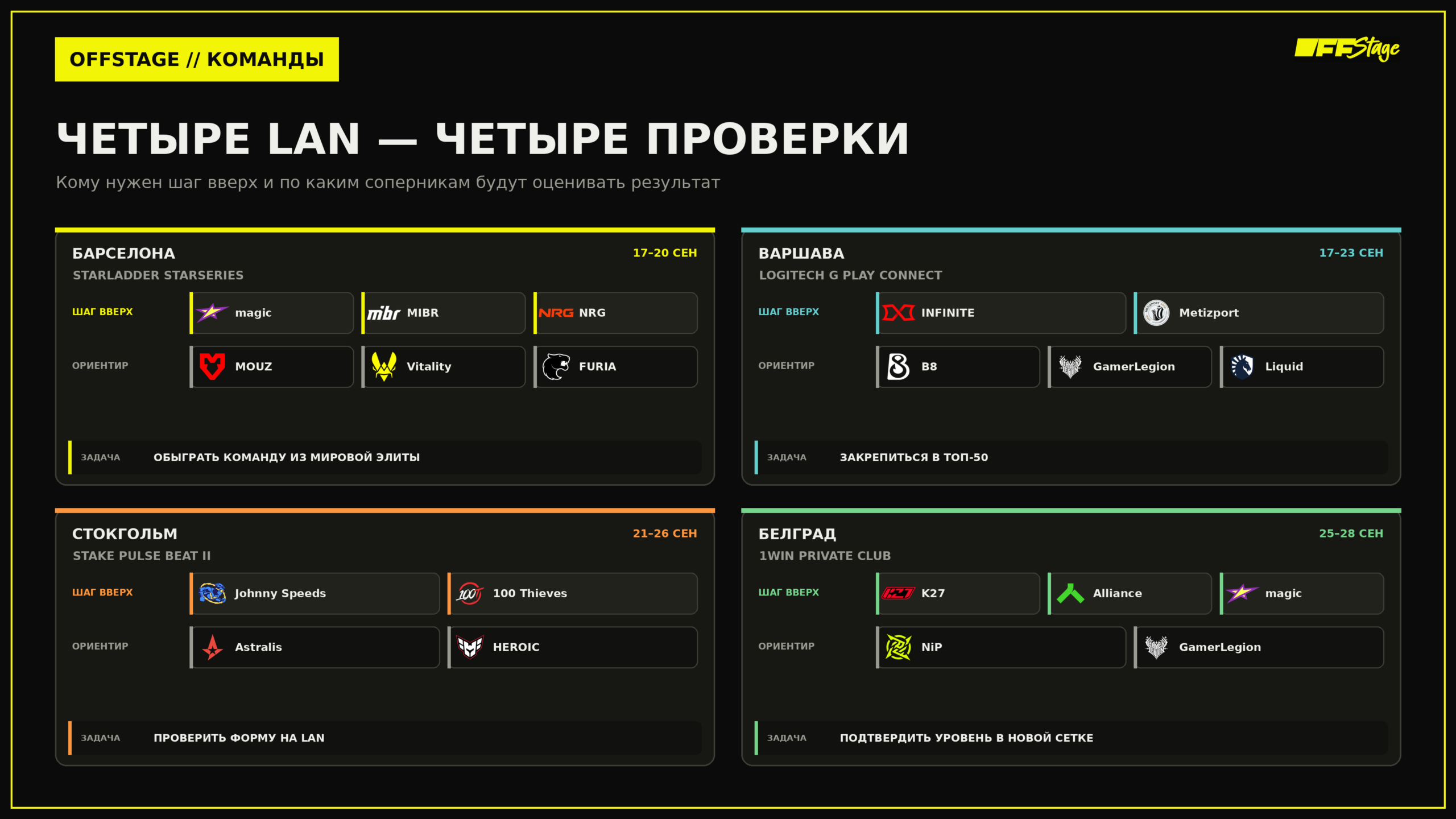
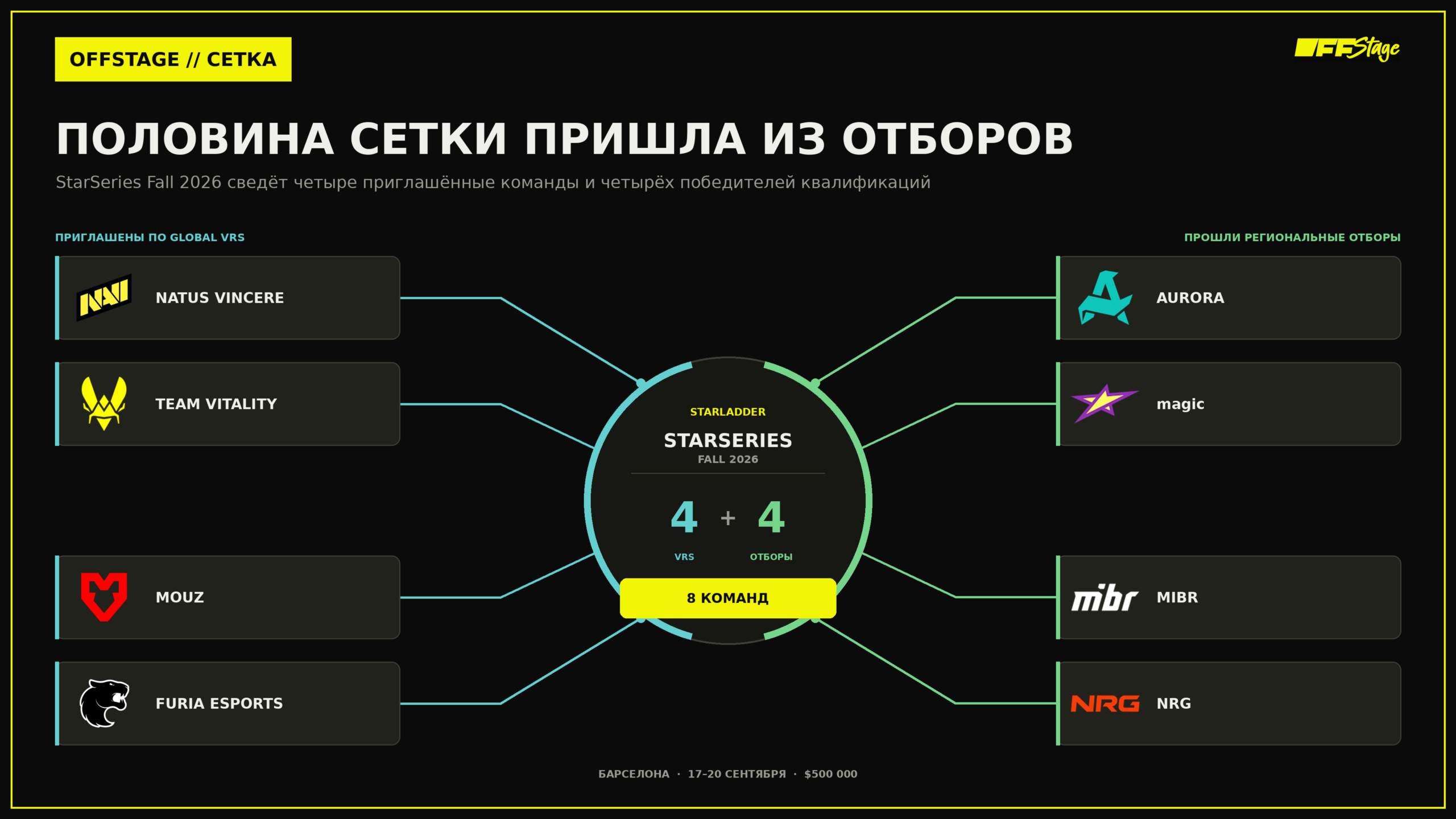
The StarLadder StarSeries Fall 2026 will take place in Barcelona from September 17–20. The roster includes MOUZ, Team Vitality, and FURIA Esports, alongside magic, MIBR, and NRG. With a $500,000 prize pool and eight participants, StarSeries appears larger than a typical Tier 2 tournament; however, the lineup does not allow it to be placed on the same level as a Major or IEM Cologne.
On the same day, Logitech G Play Connect 2026 will kick off in Warsaw. Twelve teams will compete there, ranging from B8 and GamerLegion to INFINITE and Metizport. Four days later, Stake Pulse Beat II will kick off, where Astralis and HEROIC will face off against teams from the lower half of the top 100. The series will conclude with 1win Private Club Season 1 in Belgrade. Its bracket will feature eight teams, including magic, Ninjas in Pyjamas, K27, SINNERS, and Alliance.
All four tournaments are part of the Valve ranking, but differ in prize pools, format, and the caliber of participants. The favorites include well-known names, while most of the field cannot yet count on regular invitations to the biggest championships. Such competitions are usually referred to as Tier 1.5: they fall between the usual online events and the main stage.
Why do top teams play against lower-tier teams?
For a strong team, such a tournament rarely becomes the main goal of the season, but that doesn’t make the trip a waste of time. Eight or ten official maps at a LAN provide more insight than a week of practice. In practice matches, you can replay a bad round or hide a play you’ve prepared, whereas in a tournament match, a mistake immediately affects the bracket, prize money, and ranking.
Such tournaments are especially useful after a player substitution. A new roster needs to test out maps, communication, and decision-making under pressure, and there’s no time for that at a major tournament. StarSeries gives MOUZ, Vitality, and FURIA the opportunity to face different opponents before the more crucial part of the season. A win is expected from them, so the main goal of the trip for the coaches is to understand where the team is losing rounds and what needs to be fixed.
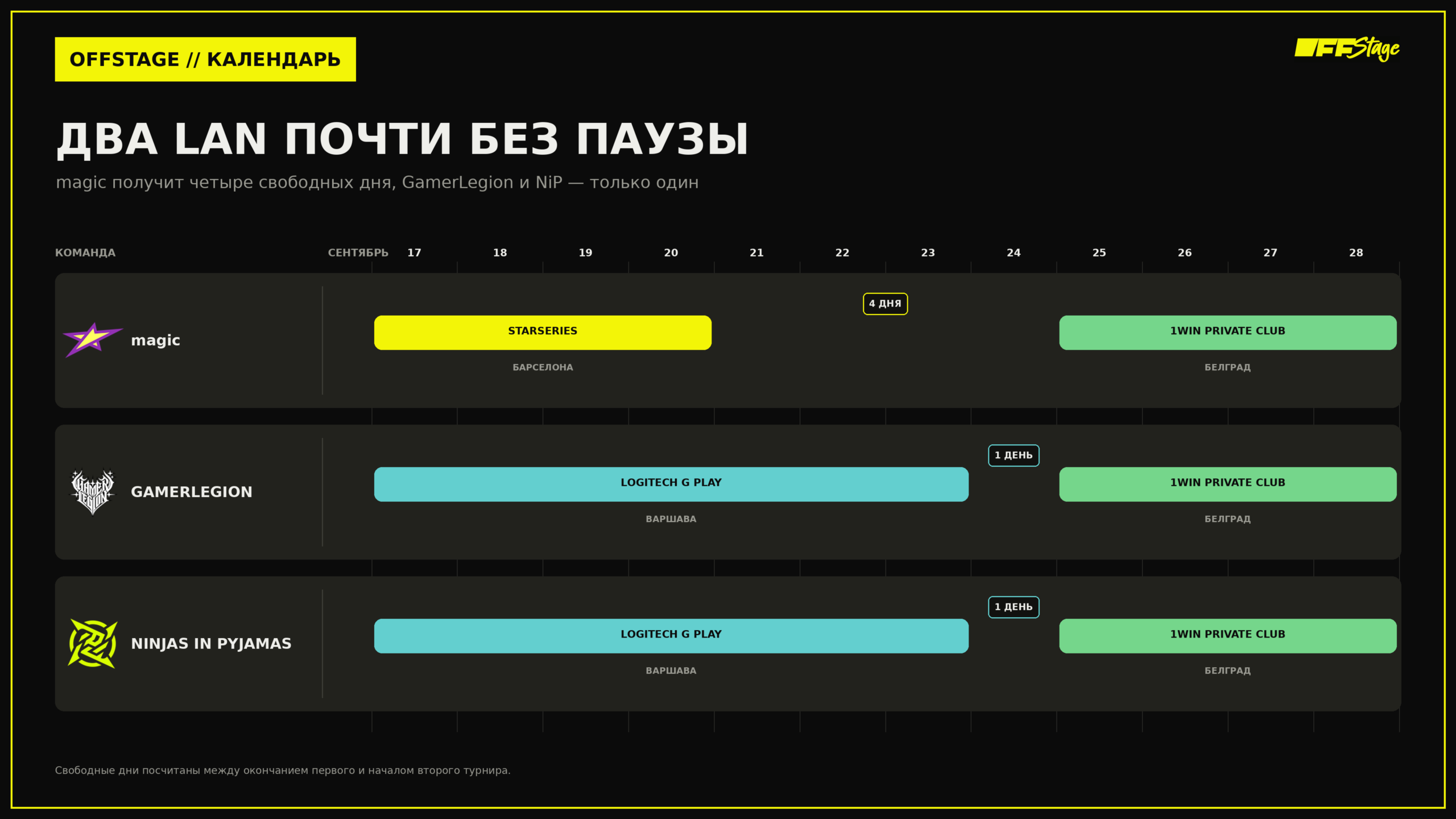
There’s also a risk. A loss to a top-50 team will draw more attention than yet another victory by a favorite, and the packed schedule leaves little time for preparation. magic will first compete in StarSeries in Barcelona, and a few days later is scheduled to play in Belgrade. GamerLegion and Ninjas in Pyjamas will head there after a week-long tournament in Warsaw, so they may arrive tired and with almost no time to work on their mistakes.
Where New Names Emerge
For a second-tier team, a LAN tournament like this is more important than it is for the favorite. Online, they face the same opponents month after month, play from home, and get used to a consistent schedule. At an offline tournament, they have to travel to another city, get their bearings in an unfamiliar place, and figure out an opponent they’ve only seen before in matches involving top teams.
This is also where scouts and managers are at work. A single strong match doesn’t guarantee a contract, but several series against opponents from the top 20 reveal much more than statistics from regional online play. You can see how a player communicates after making a mistake, endures a long day of competition, and adapts their strategy when their usual plan stops working. For a young esports athlete, this is the first test of the challenges they’ll face in Tier 1.
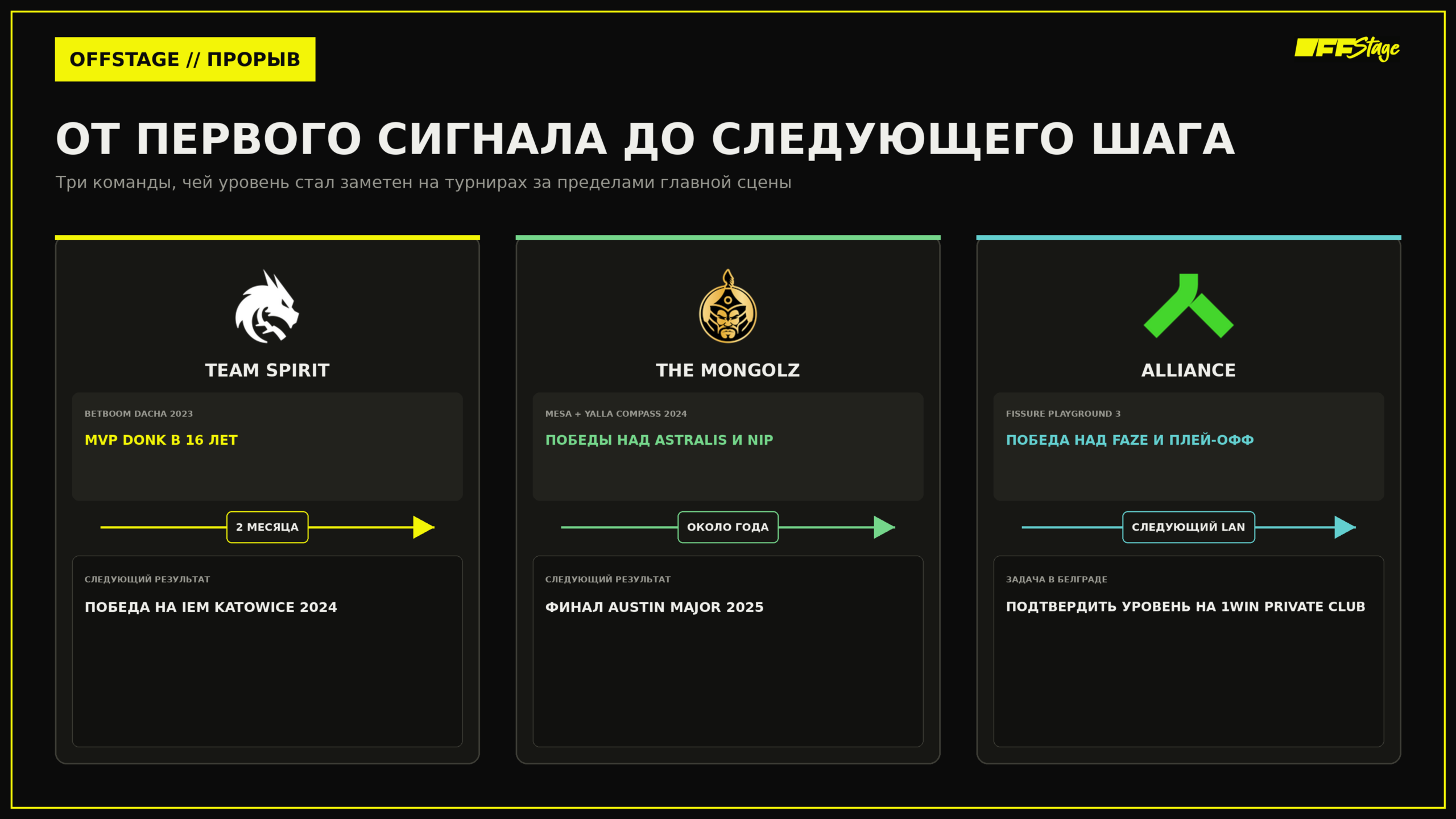
FISSURE PLAYGROUND 3 CS has already provided two recent examples. Alliance defeated FaZe Clan and advanced to the playoffs, while Mongolia’s 5star defeated both The MongolZ and Astralis in succession. These matches don’t yet make these teams the new favorites of the season, but now their skill level can be assessed based on their performances against well-known opponents, rather than just on the results of regional tournaments.
Where Did the Tier 1 Top Teams Come From?
The story of Danil “donk” Kryshkovets clearly illustrates the value of a mid-season tournament. In December 2023, the 16-year-old Team Spirit player earned his first-ever MVP award at BetBoom Dacha 2023 in Dubai. Not all of the world’s top teams were present there, but Spirit faced off against FURIA, MIBR, Virtus.pro, and Team Liquid—and two months later, they won IEM Katowice 2024. Already in Dubai, donk showed that he was ready to take on strong opponents.
The MongolZ followed a similar path. In the spring of 2024, the team won the MESA Nomadic Masters, then defeated Astralis and Ninjas in Pyjamas at YaLLa Compass 2024, and a year later reached the finals of the BLAST.tv Austin Major 2025. Victories at mid-tier tournaments couldn’t replace a Major, but without them, the roster would have had fewer matches against strong opponents and less reason to expect a breakthrough from it.
Why one online tournament isn’t enough
The Champion of Champions Tour remains an important part of the scene—for its third season, organizers announced 40 tournaments across four regions with a total prize pool of $1.278 million. These matches are part of the VRS and allow teams to play regularly, earn their first prize money, and avoid waiting several months for the next qualifier. Twenty-four teams are participating in September’s CCT Europe 2026 Series #8, and the entire tournament is being held online with a $25,000 prize pool.
This format is convenient and relatively inexpensive. Teams don’t have to pay for flights and hotels, and the organizer can host more matches. The CCT provides a consistent schedule for those who are rarely invited to LAN events and helps them build up results for their rankings.
But online play doesn’t test everything else. At a LAN event, a team doesn’t go home after every series and often faces a new opponent the very next day. They have to stay focused in the same venue, deal with defeat alongside their teammates, and immediately prepare for the next match. In terms of gameplay, it’s still the same Counter-Strike, but the demands on the team become more like those of major tournaments.
Online series and Tier 1.5 LANs serve different purposes. The former provide plenty of matches and the chance to make the rankings, while the latter allow a team to test itself in unfamiliar conditions against stronger opponents. Without the CCT, new rosters will have nowhere to earn invitations, but without intermediate LAN events, they won’t gain the necessary experience.
How the scene has already turned into a closed club
A few years ago, the path to the top was already quite clear. Under the Louvre Agreement, the ESL Pro League could include up to 16 partner teams, which received permanent spots in the league. Up to four teams advanced through the MDL, while the remaining invitations depended on rankings. A partner team would lose its guaranteed spot only after finishing last in its group in three out of four seasons.
This system gave clubs a share of the revenue and helped them plan for the season, but competitive performance was no longer the sole criterion for participation. A team without partner status could perform well for months in second-tier tournaments and still compete for one of the few available spots. At the same time, a team with partner status retained its place in the league even after one or two poor seasons.
The BLAST operated a similar model with partner teams. Clubs were granted a spot in the groups, while the rest qualified through the Showdown and regional qualifiers. Therefore, the phrase “bought a spot in the tournament” requires clarification: organizations paid for a partnership, not for a single trip; however, this partnership granted access that could not be achieved through a single strong result.
Starting in 2025, Valve required that invitations be based on rankings or open qualifiers. The new system didn’t solve all the problems, but it restored a clear connection between lower-tier matches and invitations to higher-tier events. Now, winning a small ranked tournament can bring a team closer to a major LAN event, and a strong performance there can lead to a top-tier championship.
The open scene can also fall apart
A large number of tournaments in and of itself guarantees nothing. In September, several LAN events overlap, and teams move from one bracket to the next with almost no preparation. Organizers have to divide up the same pool of participants and, after last-minute withdrawals, look for replacements.
There’s also the financial aspect. The winner of Stake Pulse Beat II will receive $20,000, but there are no prize money awards for the bottom four teams. For a team with salaries, airfare, and a support staff, such a trip doesn’t always pay off. If the prize money doesn’t cover at least part of the expenses, teams won’t be able to regularly travel to such tournaments.
Finally, a weak format can ruin a good idea. In Warsaw, teams will play the group stage in a best-of-1 format, so a single poor start will carry too much weight. Open qualifiers are also only useful when the winner receives a decent seed and a real chance to play several series, rather than being eliminated after a single match against a favorite.
What Tier 1.5 tournaments should offer
A team should qualify for an intermediate LAN event after the CCT, a regional league, or a qualifier; play several full-fledged series against stronger opponents; and achieve a result that influences future invitations. The prize pool should cover at least part of the expenses, and the schedule shouldn’t force participants to choose between two tournaments on the same dates.
The September championships will show how well this format works. StarSeries will put magic, MIBR, and NRG to the test against teams from the top of the rankings. In Warsaw, B8, Liquid, and GamerLegion will face off against teams looking to secure a spot in the top 50. In Stockholm, even teams from the open qualifiers secured spots, while in Belgrade, K27 and SINNERS will face off against teams that, until recently, were competing in larger arenas.
Majors determine the best team of the season, while online series provide regular matches for the rest. In between, a LAN event is needed where a team can play several series against strong opponents and achieve a notable result. As long as such tournaments influence the VRS, the path to Tier 1 remains open not only to partners and well-known clubs.