“The offer from WW was just a joke, nothing more”: an interview with shopper about WW Team, coaching, and streams

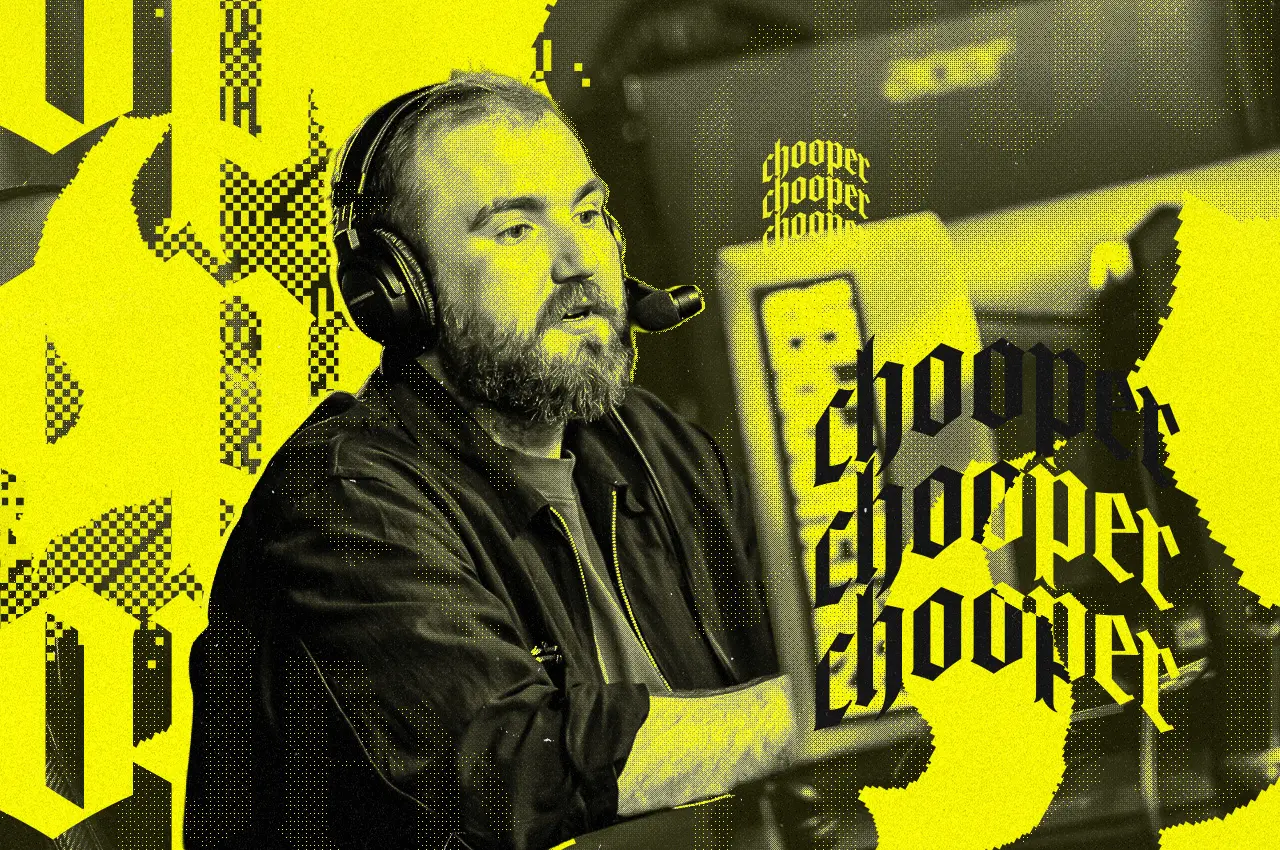
Between the major tournaments in August, we managed to catch up with Leonid “chopper” Vishnyakov. In an interview with OFFSTAGE, the former Team Spirit captain talked about his experience coaching WW Team, assessed the potential of the team’s players, and reflected on life as a streamer.
Hi! You’ve been taking a break from pro competition for quite some time now, but you recently served as coach for WW Team. Can you share your impressions of that experience?
Hi! My impressions are incredibly positive. Standing behind a group of guys who are passionate about the game (not all of them [laughs]) was incredibly exciting. Plus, I got to test myself a bit in a new role—what it’s like to watch the game from the sidelines.
What can you say overall about the guys you coached? Do you think they could play for a Tier 1 team without falling behind the rest of the field?
The guys are great—they reminded me of when I was 13 or 14, back when we’d travel to tournaments with mostly mixed teams and play with all our hearts.
I believe that anyone can play at the Tier 1 level—it’s a matter of priorities, time, and commitment to the process. Speaking specifically, I’ve mentioned deko and ct0m in many places: I’m confident they could easily compete on the Tier 1 scene.
Right now, the community is actively discussing the phenomenon of teams like WW Team, where guys who play “just for fun” climb high in the VRS rankings and beat real pro teams. Why do you think this is happening? Is it a result of the current VRS format, are players who play “for fun” more motivated, or has the level of the pro scene simply dropped?
First, it’s always harder for pro teams to play against a mixed team. You’re playing and don’t even realize what you’re up against.
Second, I don’t know of a single Tier 2—let alone a Tier 3—team that has such a strong sniper, racking up 30–40 [kills] in most games on the Tier 2/Tier 3 scene. It’s very hard to play against deko (I tested this in the Media League recently).
Third, I think this has to do with CS2. Micro plays a huge role. You can know and understand a lot, but right now, whoever presses the buttons better and lands headshots on the enemy (especially at this level) tends to win more often.
And one last thing. Essentially, even though WW Team is a mixed squad, they’ve been playing together for a long time; the guys have gelled, know each other’s strengths and weaknesses, what to play off of, and so on. If we take the [WINLINE MPKBK CIS LAN Season 6] tournament as an example—Ed.—TDK and VP, in my opinion, haven’t been playing together for very long and still have a long way to go. CS is a long-term game; we’ll see what happens next.
In the CIS LAN final, you beat a well-established club with a rich history, Virtus.pro. What are your thoughts on the final? The matches were tough overall—did VP put up a decent fight?
My very first thought was, “Way to go, guys!” They’d been playing official matches for most of the day, and some of them had been streaming the Team Spirit match, but the guys managed to stay strong after Cache and closed out the game on Anubis.
Overall, the games weren’t that difficult; the scenario was pretty straightforward—either they took us down quickly and we went into the break, or we took them down. A lot depended on the first few rounds; it was important to secure the economy.
You mentioned that you received an interesting offer from WW Team for further collaboration. If it’s not a secret, how are things going in that regard? Can we expect you to join them as the team’s permanent coach?
The offer from WW was just a joke, nothing more. I don’t have any plans to work with WW on a permanent basis, but let’s not rule anything out!
By the way, speaking of coaching in general. Did you ever consider helping the Spirit players at the Major in Cologne—were you invited? Would you have liked to be behind the players’ backs at such a major tournament?
Unfortunately, Major rules wouldn’t have allowed me to become a temporary coach for Spirit: rosters are submitted in advance, and you can’t change them. Of course, I’d love to be right behind them, and in a tough moment, hit pause, slow down the pace of the game, offer advice, and so on. I’ve played in tournaments without a coach myself—it’s very difficult.
But most of the time now, you’re a streamer. What parts of your old routine have disappeared since you moved to the bench? Is there anything from that time that you unexpectedly miss?
Almost my entire old routine is gone—watching demos, regular DMs, and early-morning analysis sessions with Seryoga [hally.—Ed.]. Now I’m on my own, and I’m looking for something new to do. Do I miss those days? Of course!
Without the pro scene, do you more often feel relief from the lack of tournament pressure, or do you miss that pressure?
Yes, definitely relief. I have a lot of free time now, and I’m focusing a lot on my health. After constant tournaments, flights, stress, and everything else, there are now plenty of things I need to take care of.
How hard is it not to judge every day by asking, “Did I become a better player today?” Is there anything right now that motivates you on a consistent basis?
Essentially, everything is the same now—just with different goals and priorities, which I’m trying to work toward. As always, my main motivation is the well-being of myself and my loved ones.
Have you developed any interests that you never had enough time or attention for during your active career? Maybe some new hobbies?
The first thing I focused on was my health—if you can call that an “interest.” As for the rest, my main interest right now is my streams and other media activities. It’s something new; I’m learning everything almost from scratch.
I’ve also started biking a lot lately; I try to set challenges for myself. We’ll see—maybe it’ll turn into a full-fledged hobby.
On top of everything else, you have to fly out to tournaments—specifically LAN events—as a caster. In your opinion, how much does covering a tournament from home differ from covering it live from the arena in terms of the emotions and the final experience for the viewer? Do you find it easier to work when you’re at the LAN event yourself, seeing all the players and feeling the energy of the crowd?
In my opinion, it should be much more interesting for viewers to watch a broadcast coming directly from the arena: more excitement, the sounds of the arena, and so on, and so on... Being in the arena is an indescribable experience—the emotions are off the charts. But when it comes to the quality of the cast, personally, I prefer working from home; I have better focus, pay more attention to detail, have greater expertise, and feel more comfortable.
And looking at the bigger picture, how much has your understanding of pro matches changed since you started watching them from the sidelines rather than from the captain’s chair?
My understanding of pro matches hasn’t changed at all—CS works the same way it always has. It all depends on the teams’ execution and form.
Do you think explaining the game to a casual viewer turned out to be harder than making decisions right in the heat of the match and explaining them to your teammates?
Absolutely not! Playing and trying to win every round, every match, making tough decisions, constantly communicating my thoughts to the team, and trying to keep the team focused every second of the game is way harder than doing cast commentary.
In casts and streams, the only challenge is the sheer volume of information and thoughts you need to articulate and convey to the audience. And overall, being the center of attention isn’t exactly a comfortable role for me.
When you watch matches, Spirit’s games come up very often. Recently, you analyzed the BLAST final and talked about the “Dragons’” poor individual decisions. How freely can you criticize your former teammates in public? After all, you’re still part of the organization.
I can say whatever I think; I don’t have any restrictions or other obstacles. Although I understand how the roster works, know all the guys personally, and generally understand how a CS team is structured, I don’t always feel like sitting there and acting like a know-it-all on stream, being overly critical, and so on.
It’s always easier to see things from the outside, but as a pro player with a lot of experience, I understand that in the heat of the moment, any little detail can have a huge impact—and we won’t even know it, but we’ll end up spouting a bunch of nonsense.
When you analyze Spirit’s games, do you evaluate the team like a regular analyst, or do you still compare their decisions to how you would’ve played?
I just watch how the guys make decisions. I like to see how their play has changed and pick up on those changes. I don’t think about what decision I would have made myself. To make those kinds of comparisons, you’d have to be in their shoes, in the exact same situation. But when you’re watching a replay, you’re sitting there calmly, with a clear head. The comparison isn’t valid.
Are there things you notice in Spirit’s gameplay but consciously avoid discussing on stream because you know the reasons and the behind-the-scenes details, and it’s not worth bringing them into the public sphere?
Yes, of course, there have been moments like that. Not everything needs to be made public!
And a few slightly more philosophical questions. What do you think viewers most often misunderstand about the role of a pro team captain?
Viewers most often don’t understand just how much work and mental effort falls on the captain. The role of each player and their primary responsibility to the team is rarely taken into account. Many people judge a player unfairly by going to a website and looking at their K-D stats.
What aspect of a professional player’s life do fans tend to romanticize the most?
I think people over-romanticize the constant travel and touring. When it becomes your profession, it’s no longer about fun—it’s about routine and a regular experience.
Finally, how do you like your new look without a beard? Will you keep it, or go back to your old look?
I like it—I feel fresher and more energetic! That’s what matters most to me right now! I haven’t decided yet whether I’ll grow my beard back.