“I’m still better than most pro players when I’m in shape”: An interview with Quinn about life after retirement

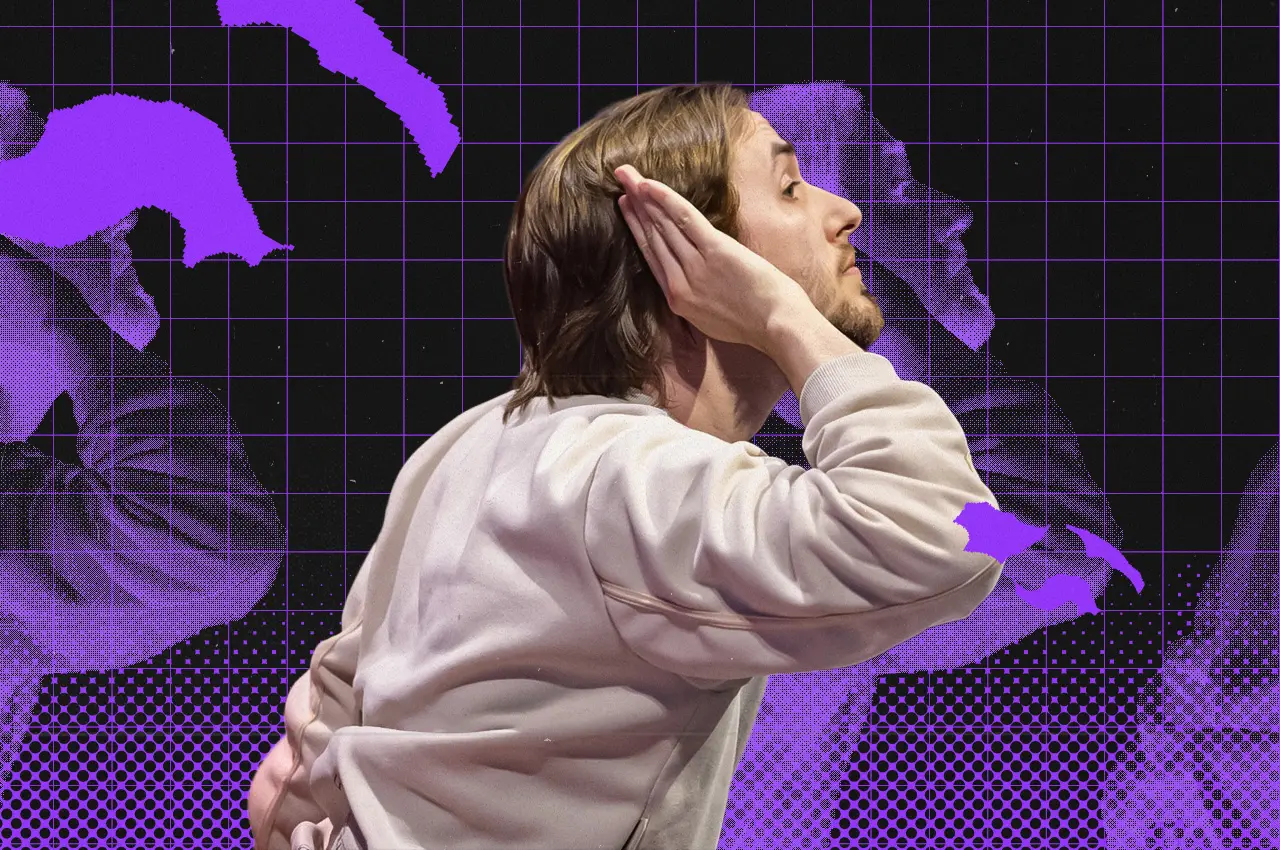
Analyst and former pro player Quinn “Quinn” Callahan shared his thoughts on his new role in an interview with OFFSTAGE during BLAST SLAM VI, offered advice on overcoming nerves during official matches, and confirmed that he still considers himself stronger than most active esports players — provided he’s in top form.
Hi! This isn’t your first time in Copenhagen. You’ve been here as a player, and now as a broadcast analyst. How do you like the city?
Copenhagen is a great city. We had a few days off, so I went for some bike rides. I also have friends living here, so I visited them. I found the city very pleasant—Scandinavia in general is pleasant. It’s clear why it’s so expensive: it’s a great place, and people want to live here.
Has your perspective on countries changed now that you’re no longer a professional player and your whole life doesn’t revolve solely around training and matches?
I’m not sure I’ve started looking at countries differently. “A rising tide lifts all boats”—I’ve started enjoying them all more, rather than just individual countries.
You’ve retired and no longer compete. How are you feeling overall right now? Do you like life after your career?
Yes, it’s gotten much better. I was unhappy the whole time I was playing professionally, but working in the studio is really enjoyable: you sit with friends, you discuss games. It’s basically impossible to complain. It’s great, I’m enjoying it. I also like working at other events.
Let’s talk about something other than work. How do you spend your free time now?
When I have days off during tournaments, I mostly hang out with the other guys from the studio—we play board games or go out for a walk. Outside of events, I’m mostly with my family, and I might go live depending on the situation.
Have you found any new hobbies?
Not really. I prefer spending time with people, so I’m not interested in picking up a hobby and sitting alone. Unless it were some kind of shared hobby with other people, but otherwise—I don’t think I have enough free time that I’d want to fill. So right now, I don’t really need that.
No desire to try anything?
Maybe, but I don’t know what it could be. I don’t have a desire for anything specific.
As a player, you were constantly flying, but now that’s not part of your routine. Do you still have a desire to travel?
I like to travel. I want to go to Korea; I’ve never been there. I wanted to go to Italy and Greece, but it’s really hot there, which is a bit unpleasant, and I need to save up my Schengen visa days. I like traveling. Some people don’t like flying, but that’s not me—I handle it just fine. There are a few countries I’d like to visit, but I’d rather go where my friends are; it doesn’t really matter where exactly.
Have you thought about returning to the pro scene? Perhaps as a coach or in another role on the team staff, such as sports director.
I don’t think I’ll return as a player; I just know how unhappy I was, and going back to that would be foolish. I’ve thought about coaching, but the problem is that it takes about the same amount of time. Sure, less than players, and it’s easier, but you’d still have to play a lot of ranked matches, grind, and travel to all the tournaments. It’s the same in terms of time commitment. Yeah, there’s less stress, but I wouldn’t want to deal with all that right now. Maybe there’ll come a time in the future if I get tired of working in the studio or something like that.
I saw that you’re planning to play in the qualifiers for The International. Is that just for fun, or do you still want to compete?
It’s just a meme squad; Reya invited me. We’re all terrible players and have no interest in winning. It’s totally for the memes; I don’t plan on qualifying.
What will you do if you make it to the group stage of TI?
We won’t make it. I’d like to work in the TI broadcast booth; that would be really interesting. We definitely won’t beat GamerLegion—I guarantee it.
Topson also thinks the chances are zero, but on paper you have a pretty strong roster...
Yeah, we don’t stand a chance.
But on paper, you look strong!
No, no, no.
Let’s change the subject a bit and talk about your current job. To start with—how did you end up in esports broadcasting in the first place? Were you invited, or did you ask to try it out yourself?
I reached out to people and said I’d be interested in that in the future. I’ve always been friends with the casters; I enjoyed hanging out with them. Plus, I’d already worked in that role at TI and a couple of BTS qualifiers. It was a natural transition for me. I love to chat, so being on camera and talking is right up my alley. I’m grateful that they hired me and that it’s still going on. It was my Plan B in case my playing career ended.
How did you fit into the team? How did your colleagues take to you?
Pretty easily. Mostly because I already knew many of them, so everything went smoothly. After being eliminated from tournaments, I often spent time with the studio staff. It wasn’t so much that I was fitting into the team as I was going through a learning process for my new responsibilities, and that process is still ongoing. It’s more of an art than a science, and there’s definitely room to grow. Fitting into the team wasn’t a problem.
You didn’t have any formal training in commentary—what do you think was the biggest challenge for you in your new role?
I don’t think I’ve changed much as a person. It requires more preparation than you’d expect: gathering clips, data, and the like. It’s unusual. Since there are several people on air and time is limited, you have to strike a balance between following one narrative and several, when people have something to say. It’s hard to assess objectively; there can be different opinions on this. You have to be mindful of your feelings and the criticism you receive so that you understand and naturally strive to do what you do best.
Professional players always get nervous in official matches. Do you get nervous on air? Aren’t you afraid that so many people are watching you, and you have to say the right things?
I don’t think I’ve ever been nervous on air. Maybe just while commentating on DreamLeague, because I hadn’t done that in a long time. I was only nervous for the first 30 seconds, and then I calmed down. It’s a very natural thing for me to do; it’s the last thing I worry about.
Since you feel confident on air, what advice would you give to those who get nervous?
It’s a nightmare; I understand them. There are many books and studies on this topic by professional athletes. Sticking to a certain routine before a match helps. You can listen to music, sit in a certain spot, think about something. Meditation works for some people. You have to do it for a while to see results, but many smart people say it works.
It’s also important to understand what causes your anxiety and why. You need to take the time to figure out exactly what makes you nervous. Not just “I’m playing a game!” but why specifically this is happening. You need to ask yourself questions. This, combined with a better understanding of yourself, is the key. Perhaps there’s something else involved as well.
Commentators and analysts often form pairs with whom they feel most comfortable working. How about you—which of your colleagues do you feel most comfortable with? With whom do you have complete mutual understanding?
I’m lucky; I enjoy working with all my colleagues. I don’t think there’s anyone I feel most comfortable with. Everything is pretty relaxed. Each person brings their own dynamic, which is good—that way the broadcasts don’t all look the same. Otherwise, it would get stale quickly. The mix-up is beneficial. I really don’t think there’s a single person who’s the best fit. Variety adds spice to life.
Now that you’re a regular guest in the analytics studio—do you plan to do this on a permanent basis? Or is this a temporary gig until you find something that suits you better?
“Forever” is too strong a word, especially in an industry like esports, but I don’t want to leave this job. It’s pretty interesting and I really like it; I’m happy to have this opportunity. Maybe someday that will change, but I’m no fortune-teller, so I don’t know when or why that might happen. For now, I’m just enjoying what I have, and if something changes, it’s no big deal—life goes on.
Besides your job, you’re also involved in teaching. I remember you mentioned in one of your podcasts that you’d like to share your knowledge with others, and now you’re doing that through YouTube. How’s it going in that area? Do you like it?
It’s interesting. By the way, it turned out to be way harder than I expected. To get people to watch, you have to fill everything out, add a cover, and do all the YouTube stuff, and that’s a bit annoying, considering you’re just reading a monologue in front of a screen, which isn’t really that interesting to most of the Dota audience.
Plus, you’re addressing players at different skill levels. If you’re talking about something more complex, you have to explain a lot of things, which takes time. And if you speak off the cuff, it’ll be chaos. So I write scripts; I have to think about what to show on screen at that moment, how to illustrate it, and find suitable clips from games. All in all, one video takes many hours, which is a bit annoying. I wish it were easier. But it’s interesting, so I’ll keep making them.
Do you enjoy doing this?
I like some parts of it, while others feel like a chore. But I like the idea of creating something that will be, at least to some extent, timeless.
Have you thought about expanding this area? Like, say, a coaching platform or training services?
I’ve thought about it, but I don’t really prioritize it that highly. Maybe in the future, but the thing is, I’m a bit lazy. I’m fine with the current situation; I’m not really trying to change anything right now.
You also need to help Arteezy get stronger—how’s that going?
I haven’t talked to Arthur that much about Dota, though it’s fun to discuss it with him. He’s busy; it’s hard to get a hold of him. I don’t know how many coaching sessions we’ll be able to have in the future—we’ll see. But it’s fun.
Is Arthur showing any progress?
Not really since our last conversation—he’s still at the same level.
Have other players asked you for advice or to coach them?
Yes, I’ve talked to a lot of them. These aren’t Tier 1 players, but Tier 2 players, as well as those who want to play professionally.
Thank you so much for the interview! One last question. At the end of last year, you said you considered yourself better than most active professional players. Now, almost six months later, has your perspective changed?
I haven’t played ranked matches in three weeks, so right now I don’t think so. But I was playing before I went to DreamLeague and BLAST, and at one point I was ranked 19th on the ladder. I’m still better than most pro players when I’m in form.