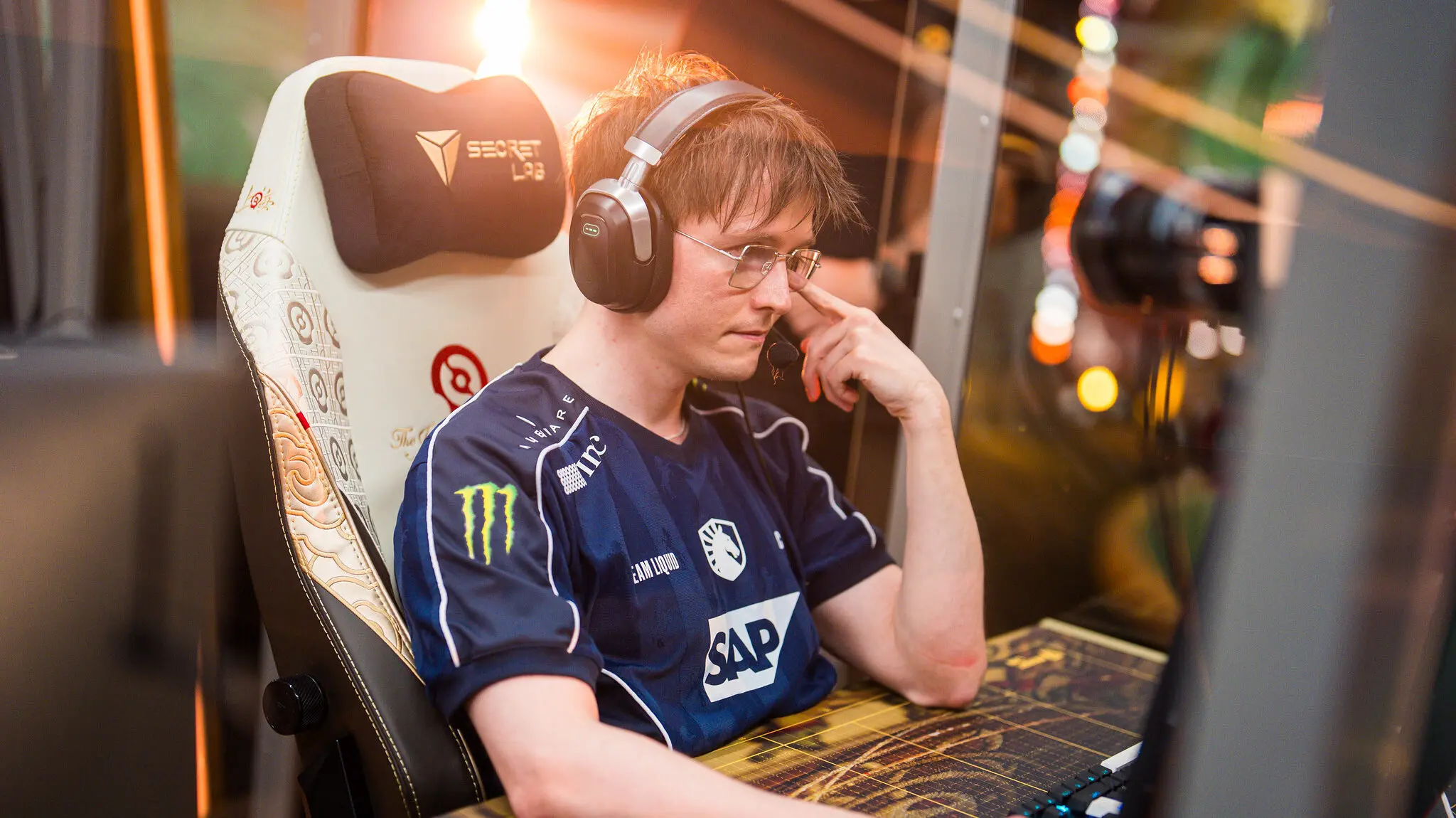
Ace explained how to play Undying in Dota 2 Patch 7.41e


Former Team Liquid offlaner Markus Folke “Ace” Helgard Christensen broke down how to play Undying in the third position in a video on his YouTube channel. As an example, he cited Magomed “Collapse” Khalilov’s performance on the first map of The International 2026 Grand Final against PARIVISION.
On the lane and starting items
Undying and Dark Willow versus Ember Spirit and Mirana—this lane was over before it even began. Undying almost never loses the lane to a melee core. Every Decay makes them weaker and you stronger. And a hero like Ember Spirit, who needs to get close to creeps to do anything at all, has no answer to this.
He’s countered by ranged heroes. Shadow Fiend can stand back and chip away at you bit by bit. Ember can’t do that. Starting items: two Gauntlets of Strength, a Sage’s Mask, and two Mangoes. Buy a Tango with gold from the Wealth rune. This Sage’s Mask is more important than it seems, because mana is the only thing that truly slows this hero down. If you can’t use Decay, you’re just a slow melee creep.
On Leveling and Using Decay
Here’s the rule: usually, take Tombstone at level two, and Soul Rip only if there’s a hero you can actually kill with it.
One habit worth taking away from this—and this is the main thing that distinguishes good Undying players from bad ones—is to always try to hit both heroes with Decay, not just the one that’s easier to reach. Both of them. Twice as much stolen power, twice as big an advantage for you. That’s exactly what separates a won lane from a drawn one.
About the Early Octarine Core
At TI, Octarine Core was the first major item picked, and the reason lies in one of its components. Octarine is built from the Tiara of Selemene, which provides six units of mana regeneration. And as I’ve already mentioned, mana is the only thing that stops this hero.
A Soul Ring isn’t enough, because you want to use Decay constantly—every time it’s off cooldown, throughout the entire game. That’s why the Octarine Core solves both problems at once: it provides mana so you can keep casting abilities, and it reduces all your cooldowns.
On Choosing Your First Item
So how do you choose? If enemies are coming at you, if they’re jumping on you, if you need to survive and fight—get Octarine first. If you’re ahead and want to jump on enemies yourself—get Blink first. Both options are correct. They’re just suited for different types of games. Lotus Orb is another option for your first item. The logic is the same, because it also provides mana regeneration. Pick it if you really need dispel.
On the Basic Rules of Playing Undying
Five things to keep in mind when playing. First: the hero’s strength lies in Decay, not Tombstone or his ultimate. Buy mana regeneration early so you can use Decay constantly, and always try to hit both enemy heroes.
Second: Build Octarine as quickly as possible when you’re under pressure. Build Blink as quickly as possible when you’re ahead. Both builds work. Just understand what kind of game you’re in, and don’t leave Octarine for last just because someone told you to.
Third: You can beat melee heroes in lane. If you’re up against a melee hero, the lane is yours. Be careful against ranged heroes.
Fourth: Place Tombstone on Roshan. The number of attacks, not the damage, is what matters when destroying her, so Roshan takes five to eight hits to kill her.
Fifth: Stop thinking of the enemy’s numerical superiority as a bad thing. Every additional hero next to you means more power for Decay. When three heroes jump on you, this hero shines the brightest.
Earlier, Dmitry “Fishman” Polishchuk named the best “fives” in Dota 2 Patch 7.41e—the list included Treant Protector, Bane, Mirana, Undying, and Winter Wyvern. According to the Nemiga Gaming support player, the rest are “either just trash, work better as ‘quads,’ or are Clockwerk.”
Photo: Valve.