johnxfire on the duration of Dota 2 matches: “We’ve been moving toward longer games ever since the map was expanded.”

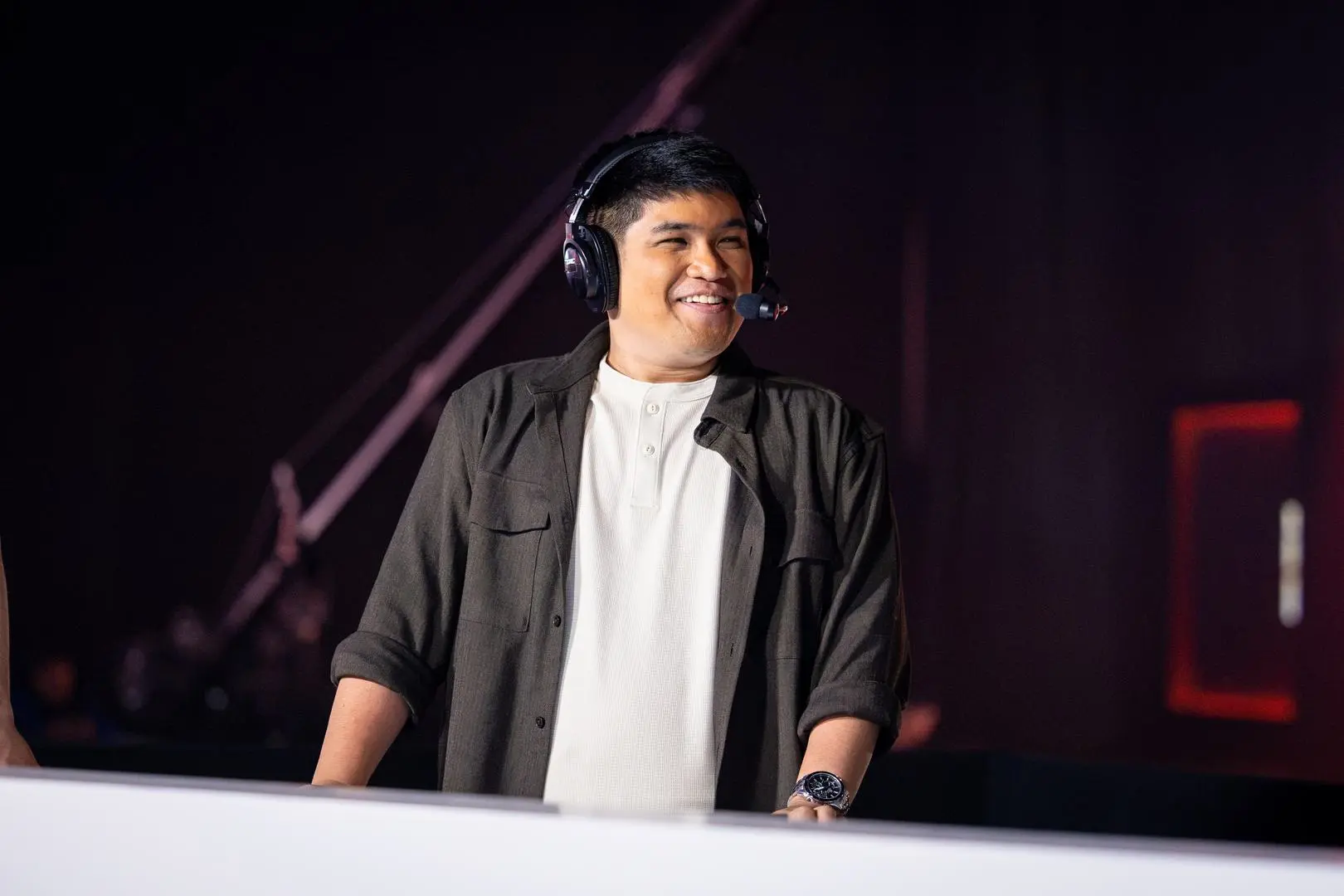
Commentator John “johnxfire” Fernandez spoke to hotspawn about his experience covering The International 2026 group stage and shared his thoughts on the state of the Asian regions in the professional Dota 2 scene.
On commentating the group stage
The group stage was pretty interesting; I had a lot of fun commentating on the matches. I’m a little disappointed that the Chinese teams didn’t go as far as I expected, because I know what the audience would have wanted. Although the fans were really great, the venues were packed compared to my experience at other tournaments. It was pretty crowded, and that’s a good thing.
In the group stage, perhaps the highlight for me was how well GamerLegion played. RCY really proved himself. I gave him a nickname that doesn’t seem to have caught on yet—“The Filipino Boulder.” I think it’ll stick eventually. He looked great in the mid lane.
The biggest disappointment was probably OG, but they’ve been inconsistent all year. The team just fell apart at this tournament—what can you do?
On the Chinese region
I think there’s always a way to bounce back, right? It seems to me that China’s story at this TI was a bit complicated, mainly due to rumors of behind-the-scenes issues at some organizations.
It was also tough finding matches; many are now forced to play on the Southeast Asia server. But I believe there’s still hope. There are still talented players in China, and in Southeast Asia, too. The thing is, the region is still recovering.
It’s strange to say this, but it’s been four years since COVID-19, and we’re still feeling the effects of the lockdown. People didn’t play Dota as much—or rather, new players didn’t. Although the player base grew during that period, it was mostly veterans returning. We’re still lacking that fresh blood you see in Eastern and Western Europe. There are still a lot of young players there, especially in South America. That’s what’s missing in the Asian regions.
On the trend toward long matches
It’s hard to say. Based on the games I’ve been commentating on, I’m not sure how to feel about it, because they’ve been getting longer for quite some time now. It seems to me that at this TI we’re seeing an interesting trade-off: the early game is extremely important for how the late game will play out, because the late game will happen either way; the only question is how solid a foundation you lay in the early and mid-game—then the late game will be easier, and after that, the draft decides everything. So I’m not entirely sure how I feel about this compared to the meta of recent years. The meta isn’t the same, but overall, let’s just say that the macroeconomics of a Dota 2 match remain the same. So I don’t think I’m too bothered by games dragging on. That’s to be expected now. We’ve been moving toward longer games ever since the map was expanded.
The economy hasn’t changed enough, and that’s something Mike [MLPDotA] and I have been complaining about for so long that we don’t even mention it anymore. It’s just… still there. I think the economy should reward the early game more and ensure that if you have a really good laning phase and mid-game, you should be able to close out the game. The problem is that you can’t close it out. You need a second Roshan, which always takes about 10 minutes, pushing the game to at least 40 minutes. That’s just how the objectives in the game are designed.
Read also: Seleri noted Chen’s lack of popularity and the length of matches at The International 2026
The average duration of a single map at The International 2026 was 46 minutes and 47 seconds; the longest was the third map between Team Falcons and PARIVISION (TEAM VISION), which lasted 94 minutes. The tournament concluded on August 23, and its prize pool now exceeds $3.6 million.
Photo: Esports Foundation.