10 Years in the Game: The History of MLBB Esports in Our Region

These days, Mobile Legends: Bang Bang continues to celebrate its 10th anniversary. Over the years, the game and its esports scene have come a long way, evolving from a local project into one of the world’s most popular esports disciplines. Our region’s journey has been no less interesting: from amateur projects and first forays onto the big stage to Team Spirit’s championship victory at the 2026 Mid-Season Cup in Paris.
Throughout MCC Season 8, we’ve been looking back at the key moments in the history of our esports scene—and now we’re ready to do it again, piecing together fragments from different time periods into a complete picture. A brief history of the region in MLBB from OFFSTAGE—in the article below.
2016–2019: The Birth of the Pro Scene
Mobile Legends: Bang Bang was released in the fall of 2016, but its esports history—and especially the esports history of our region—began a little later. The first major tournament for the new game took place in Jakarta, and it wasn’t the M, but the MLBB Southeast Asia Cup 2017: the World Championship wouldn’t appear until two seasons later.
Qualifiers for the inaugural event were held in five Asian countries, and Jakarta hosted the finals in September 2017. The prize pool totaled $100,000, and IDONOTSLEEP from Thailand claimed the historic victory. Incidentally, nearly 10 years later, most of the championship roster is still active: 30-year-old Chayakrit “Framezy” Buangent even competed in the 2026 Mid-Season Cup in Paris.
In 2018, the first regional leagues appeared in MLBB—the MPL in the Philippines, Indonesia, Malaysia, and Singapore—and the second Southeast Asia Cup took place that summer. In Russia and the CIS countries, esports was just getting started: we held our first leagues in an official VK group, and on YouTube we launched streams featuring matches between moderators and subscribers, international exhibition matches, and highlight reels from ranked games.
The first major event for our region was the M1 qualifier in August 2019. For the first time, the World Championship brought together teams not only from Asia but also from five other countries on a single stage. Russia, Brazil, the U.S., Turkey, and Japan—each held national qualifiers to give the event global status:
The organizers really went all out, although the event was a far cry from the modern standards of MCC or Rise of Legends. The LAN finals took place at Moscow’s “Riviere” in front of regular shopping mall visitors, with participants seated at simple wooden tables next to the spectators. The rock band “Timesquare” opened the event, and a studio called StarLadderTV was responsible for the broadcast and organization.
The team Deus Vult, featuring Stanislav “SAWO” Reshnyak and Kemiran “Sunset Lover” Kochkarov, won the ticket to M1 back then. Back then, hardly anyone could have imagined that this team would remain at the top of the regional pro scene by the game’s 10th anniversary. In the final, DeVu defeated Royal Blood, the team led by the well-known Danil “Wizer” Schneider.
M1 took place in November 2019 in Kuala Lumpur and became the first world championship in the history of Mobile Legends: Bang Bang. By that time, Asian teams already had extensive competitive experience: two Southeast Asia Cups, the first MPL, and several third-party LAN tournaments. The SEA representatives were considered the top favorites—and they lived up to that status. Only teams from Asia advanced to the playoffs at M1: seven from Southeast Asia and Japan’s 10s Gaming Plus.
Deus Vult traveled to Malaysia with high hopes and even held a boot camp in advance to prepare for their first world championship. But at M1 itself, the team was drawn into a group with the eventual champions EVOS Legends, ONIC Philippines, and 10s Gaming, and managed to win only one map across three matches, finishing their debut World Championship in 13th–16th place.
The players explained that they had only three days to adapt to the Asian meta, and their results were also affected by nerves from playing on the big stage and a lack of experience. In a post-tournament interview with Wizer, DeVu recalled how, during one of the games, they placed their phones on the table during a technical break—and didn’t notice that the game was ready to resume.
Nevertheless, M1 was just the beginning for our region: every year, it will continue to improve, and the EECA will see the emergence of its own major tournaments. No one could have predicted it back then, but true MLBB stars have emerged in the CIS: of all the M1 participants, only 9 players are still active today, and only three remain consistently on the world stage—in addition to Sunset Lover and SAWO, there’s Yappy Gonzalez “Jaypee” De La Cruz from Team Liquid.
2020–2021: The First Seasons
The COVID-19 pandemic, which swept the world in the spring of 2020, thwarted grand plans for the development of MLBB esports. On the other hand, millions of people began spending weeks and months online, so online events for the game became increasingly popular. The first streamers emerged: SAWO, Chillstream, and many others. Show tournaments, events like the “New Year’s Fireworks,” and stream parties featuring top-tier bloggers such as Vladimir “bratishkinoff” Semenyuk took place.
Esports returned to MLBB in the summer: the Exord MEC July 2020 online tournament brought together 16 European teams, including DeVu and the new Wizer roster under the tag uReign. The prize pool totaled just 500 euros and diamonds (and the MVP even received an epic skin), but the tournament was important for sustaining the pro scene. In the end,
the revamped DeVu, featuring Andrey “Defender” Martynenko and Alexander “OneShot” Sharkov, claimed the championship by defeating the Italian team Invictus G (3–2), while Wizer took third place
In September, the first major event for our region took place—the CIS Major 2020—where 6,000 euros and a spot at M2 were up for grabs. There were far more familiar faces among the participants in that event: for example, Nagib, Marl, and Maniak. But DeVu won again—4–1 over uReign in the final—and for the second year in a row, SAWO denied Wizer the world championship.
The regional champions headed to the world tournament under their new name, Unique DeVu—marking the first time an MLBB team in our region had received support from a well-known multi-game club. However, this didn’t help their results: Deus Vult lost all their matches again and failed to advance past the first stage. The Philippine team Bren Esports claimed victory at M2, taking home $140,000.
Two months later, another major event took place for our region: the launch of a full-fledged championship called the Mythic League. The league included a major tournament for top teams, as well as an amateur division and ranked competitions open to anyone. While the top teams battled for a spot at M3, aspiring esports players could look for teams and test their skills in upcoming tournaments.
The Mythic League: Pro format resembled the modern MCC, but was significantly stretched out over time: the qualifiers took place in April, then the teams played a regular season consisting of one match per week over 14 weeks, and the playoffs were held in September. Some teams didn’t make it to the end of the season—they were replaced by top players from the “amateur” division.
In the pro division, all the strongest teams faced off against each other: North Star with Eduard “Magistor” Rukosuev and Alexander “SMETANA” Lukovnikov,
Red Devils Stars with Wizer, as well as UNEXT with Q1let, OneShot, and Maniak. The latter made it to the finals, where they took second place, while Deus Vult won again—qualifying for the World Championship from our region for the third time in a row.
A month before the start of M3, the roster was once again signed by a well-known club: this time, MLBB caught the attention of Natus Vincere, one of the most famous multi-gaming organizations in the world. The organization invested significant resources in the team, and the roster repaid that investment with an excellent performance: already in the group stage, the SAWO team played exceptionally well, defeating See You Soon from Cambodia and giving Singapore’s EVOS a run for their money.
After entering the lower bracket of the playoffs, NAVI advanced to the third round, eliminating Malvinas Gaming from Peru and the formidable RSG Singapore. They knocked out the tournament hosts with a 2-0 victory, thanks to gold-medal-winning performances by Fovius and Granger from Sunset Lover. “Born to Win” could have gone even further, but they lost to TODAK—they were leading the series 2-0 and then lost three maps in a row.
That defeat is still considered the most heartbreaking in our region’s history. But a top-8 finish at the World Championship and the club’s global appeal proved that the Russian-speaking MLBB community has no intention of settling for the role of an underdog and is capable of further growth.
2023–2025: A New Chapter
Shortly after the conclusion of M3, our community faced yet another crisis caused by events far removed from esports. The launch of the second season of the Mythic League in the spring of 2022 was canceled, and NAVI, without an official announcement, dropped its Russian roster—by summer, DeVu was already competing in tournaments under its old name. Without a regional league, there was no invite to M4: so our teams missed the world championship for the first time.
In 2022, there were only a few mini-tournaments and commercial events. Major esports didn’t return until the spring of 2023, alongside the season of the new regional league, the MCC (MLBB Continental Championships). However, neither the name change nor the prolonged hiatus helped DeVu’s competitors—the Sunset Lover and SAWO team once again took first place. Although the team finished the regular season with a 9–5 record, they lost only one map in the playoffs and became champions of the new EECA (Eastern Europe and Central Asia) region.
By fall, Deus Vult’s roster had become international: the three Russians were joined by Norwegian goldner Karl “Carvi” Tinio and German explainer Mateos “Kid Bomba” Hatzilakos. The team wanted to strengthen its roster before returning to the international stage, and, as the M5 results showed, they succeeded.
The fifth MLBB World Championship was held in two countries for the first time: Malaysia and the Philippines. It was in Manila that Deus Vult confidently advanced from the group stage and then caused a sensation by securing two spectacular victories—first, our guys defeated the Turkish champions Fire Flux Esports, and then managed to come back from a 0-2 deficit against See You Soon. For the first time in history, a team from our region made it to the top 4 of the World Championship, losing only to the Philippine team Blacklist.
The team won $55,000 and attracted a lot of attention from esports fans in our region. DeVu became only the second non-Asian team to reach the top four at the World Championship—but, unlike BloodThirstyKings at M3, they later proved that this result was no fluke.
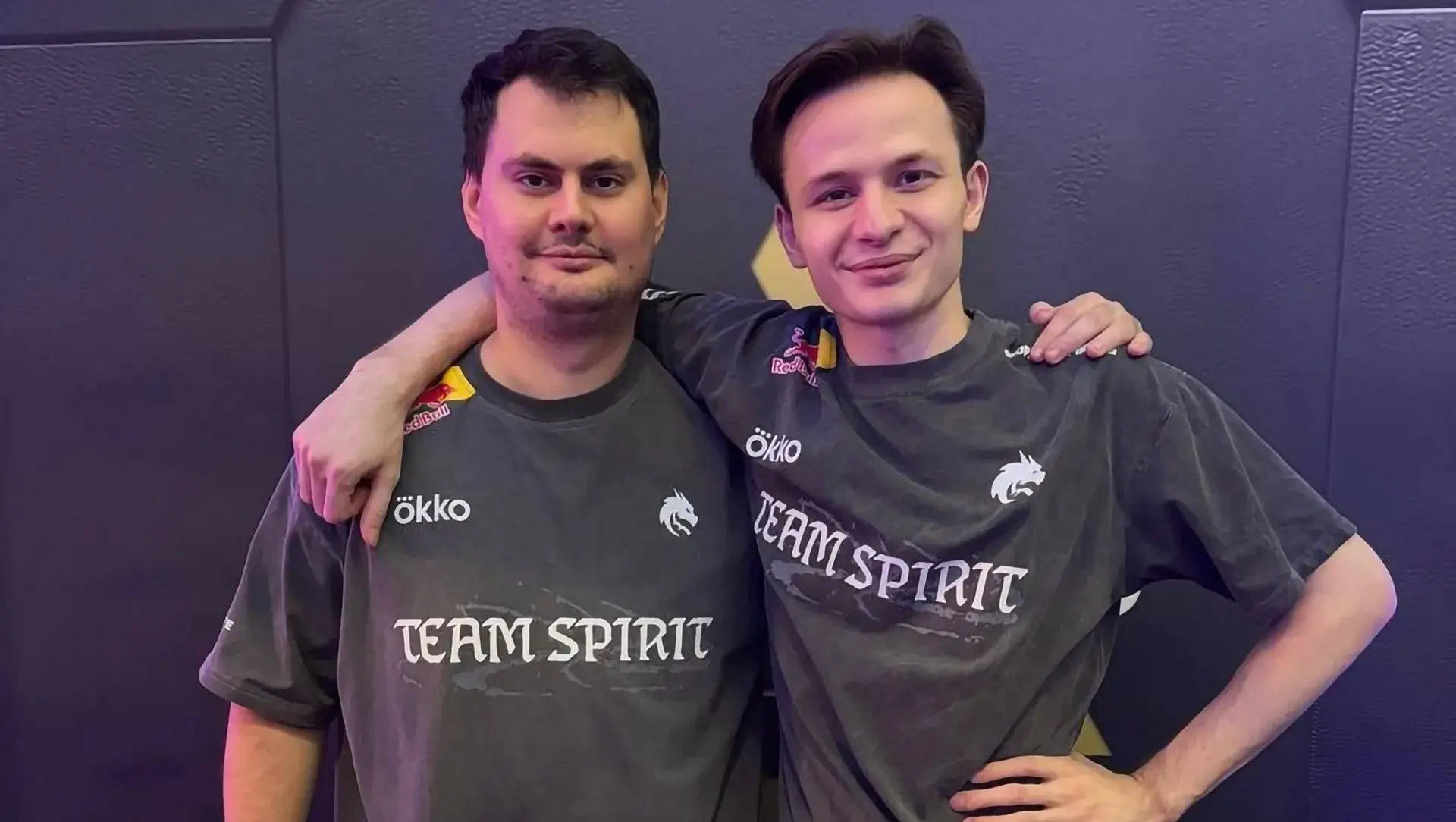
This sensational result created a buzz around the MLBB pro scene in our region. In early 2024, the mobile esports game drew the attention not only of new viewers but also of sponsors, tournament organizers, clubs, and promising foreign players. Deus Vult, meanwhile, signed with one of the world’s most successful multi-game organizations—Team Spirit—which the players still represent today.
Under their new name, the “Dragons” only solidified their leadership in the region: they won three online tournaments in a row and MCC Season 3, thereby securing a spot in the new international tournament—the Mid-Season Cup. The entire community grew alongside MLBB: two years ago, several major online events took place, and MLBB rosters were launched by Brute Force, MadBulls, Insilio, and FORZE.
As for Team Spirit, ahead of M6, young gold laner Anton “Hiko” Pak and coach Vren faced a fair amount of criticism—but the team proved through their play that their top-4 finish at the last World Championship was no fluke. In Malaysia, Team Spirit managed to knock out the local Team Vamos and Myanmar’s Falcon Esports from the tournament, once again finishing in fourth place and losing only to the MPL giants.
After this tournament, the “Dragons” firmly established themselves among the world’s esports elite, and the gameplay of SAWO and his teammates became a benchmark for newcomers even beyond the region. The following season, other top clubs from the region joined the MLBB: Virtus.pro and Aurora Gaming. BetBoom Team also attempted to join—but due to strict regulations regarding betting companies, it disbanded its roster.
In the spring of 2025, Team Spirit signed Nikita “Coldstar” Morozov as head coach, and with him, the team won the first international title in EECA history—the Super Cup Invitational in China. The “Dragons” lost only one map throughout the entire tournament and crushed DFYG 4–0 in the final.
Team Spirit also secured a direct slot for the 2025 Mid-Season Cup, while the young VP roster, featuring Zaur “zaur egoist” Magomadov, qualified through the wild-card. And although the jungler himself was unable to participate in the championship due to his age, his teammates proved that our region can be strong not only thanks to the “Dragons.” The team led by Super Egorka and Pluto managed to win the wild-card tournament, and for the first time, the EECA region was represented by two teams in the final stage of the global MLBB tournament.
Team Spirit finished the Mid-Season in 5th–8th place: after two impressive victories, the team faced ONIC Philippines, which remained a tough opponent. Virtus.pro secured a victory over Corinthians and also avoided elimination, despite a roster change and their status as a debutant. Thus, the EECA region was closing in on the Asian leaders—and soon learned how to beat them.
2026–... : The Present and the Future
The most recent M7 World Championship took place this past January in Indonesia. For the first time in a long while, the MCC Season 6 regional league offered viewers genuine suspense: Team Spirit and Virtus.pro finished the regular season separated by just one win, and in the upper bracket of the playoffs, the “Bears” proved stronger than the “Dragons” with a 3–1 score. However, there was no upset: in the grand final, Team Spirit won 4–0 and once again became the champion of our region.
Overall, the season surprised fans with a large number of interesting picks thanks to the Brave-Draft system, which prevented teams from selecting the same heroes repeatedly, and also delighted fans with the “1v1” exhibition tournament and the suspense in the standings: Even Verso Time, with foreign players Xeno and Boro, was in contention for first place until the very end, but ultimately missed out on M7, finishing only third at the MCC.
The main tournament of the year in Indonesia didn’t start off well for our region: Virtus.pro failed to advance past the wild-card stage, even though they were considered the top favorites. The match against Boostgate Esports from Turkey proved too tough a test for the young squad. Meanwhile, Team Spirit players were dealing with health issues, which prevented them from performing at their best in some of the Swiss Round matches.
Nevertheless, the “Dragons” delighted fans with a victory over the Philippine team ONIC in the first stage, and thanks to a strong series against CFU Gaming, they managed to advance to the top 8. In the M7 playoffs, the “Dragons” lost two matches and won only against Yangon Galacticos; the third map lasted a record 38 minutes. Team Spirit finished in 5th–6th place and put up a respectable performance, but dropped one spot compared to M5 and M6.
That summer, the 2026 Mid-Season Cup took place, becoming the most important international tournament in our region’s history. Team Spirit was the only EECA representative at the event: in January, the “Dragons” lost their jungler OneShot, but were able to strengthen their roster with the addition of zaur egoist from VP. Once again, there was no worthy opponent for Spirit in the region: Verso lost 0–4 in the final.
At the Mid-Season Invitational itself, things didn’t start off so smoothly. After an opening victory in the group stage, Team Spirit lost to Malaysia’s Vamos, and then narrowly defeated China’s Guangzhou Gaming, having lost the first map and causing some anxiety on the third. The meta shift following the bootcamp in Asia proved challenging for the “Dragons”: Ling and Valentina didn’t always perform as well as hoped.
However, by the start of the playoffs, the “Dragons” had come to understand the strength of Barts, Hirara, and Eidora—and then capitalized on them in their picks. While the MPL powerhouses were out of sync with the meta, Team Spirit managed to get revenge against Vamos (2–0), then secure a historic victory over ONIC (3–0), and finally win a fantastically tense grand final against Yangon Galacticos—4–3.
Team Spirit became the first non-Asian team to win a major international tournament, thereby etching both themselves and the EECA region into MLBB history.
As luck would have it, our region entered MLBB’s 10th anniversary as one of the best in the world, securing the third slot at M8 and a guaranteed spot in the 2027 Mid-Season Cup for Team Spirit.
The MCC has become the only league in the world to send three teams to the January World Championship. Team Spirit has shown that, in terms of skill level, it can compete on equal footing with the MPL giants, while other top EECA teams are gearing up to catch up to the “dragons.” It looks like the next 10 years in MLBB could be even more exciting for our region.