Chickens in CS2: a cute pet or a vibe killer?

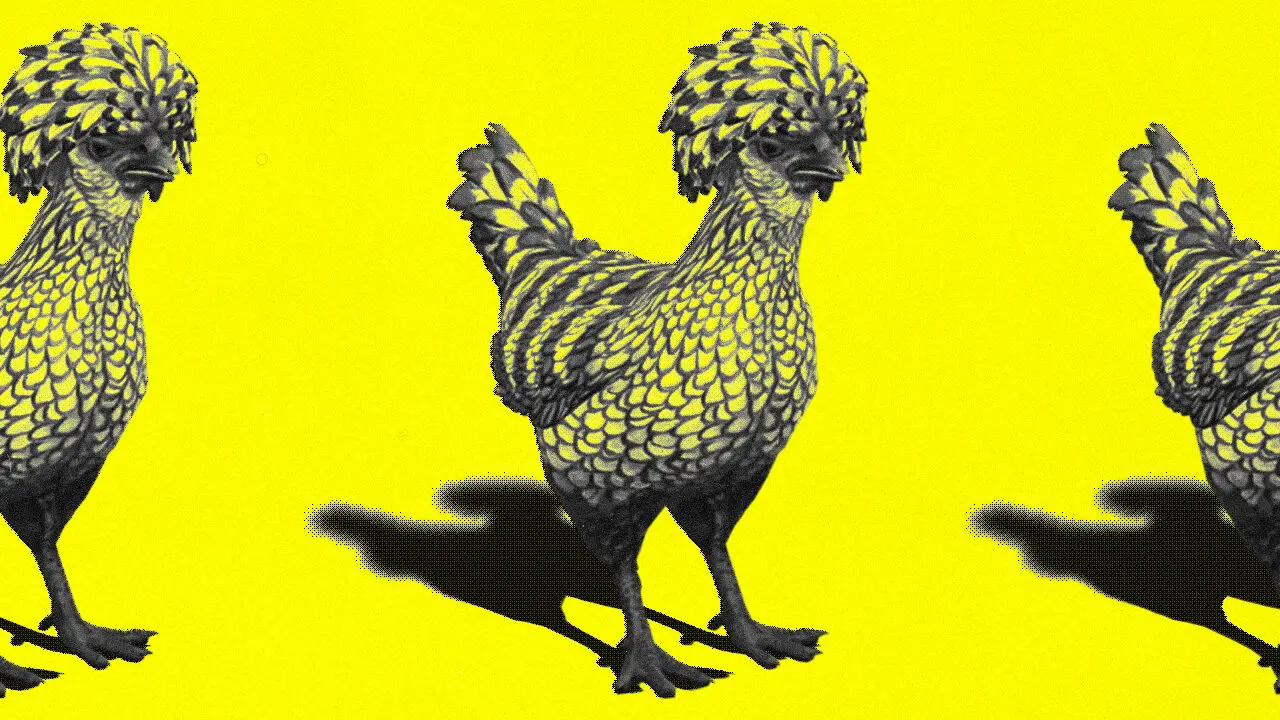
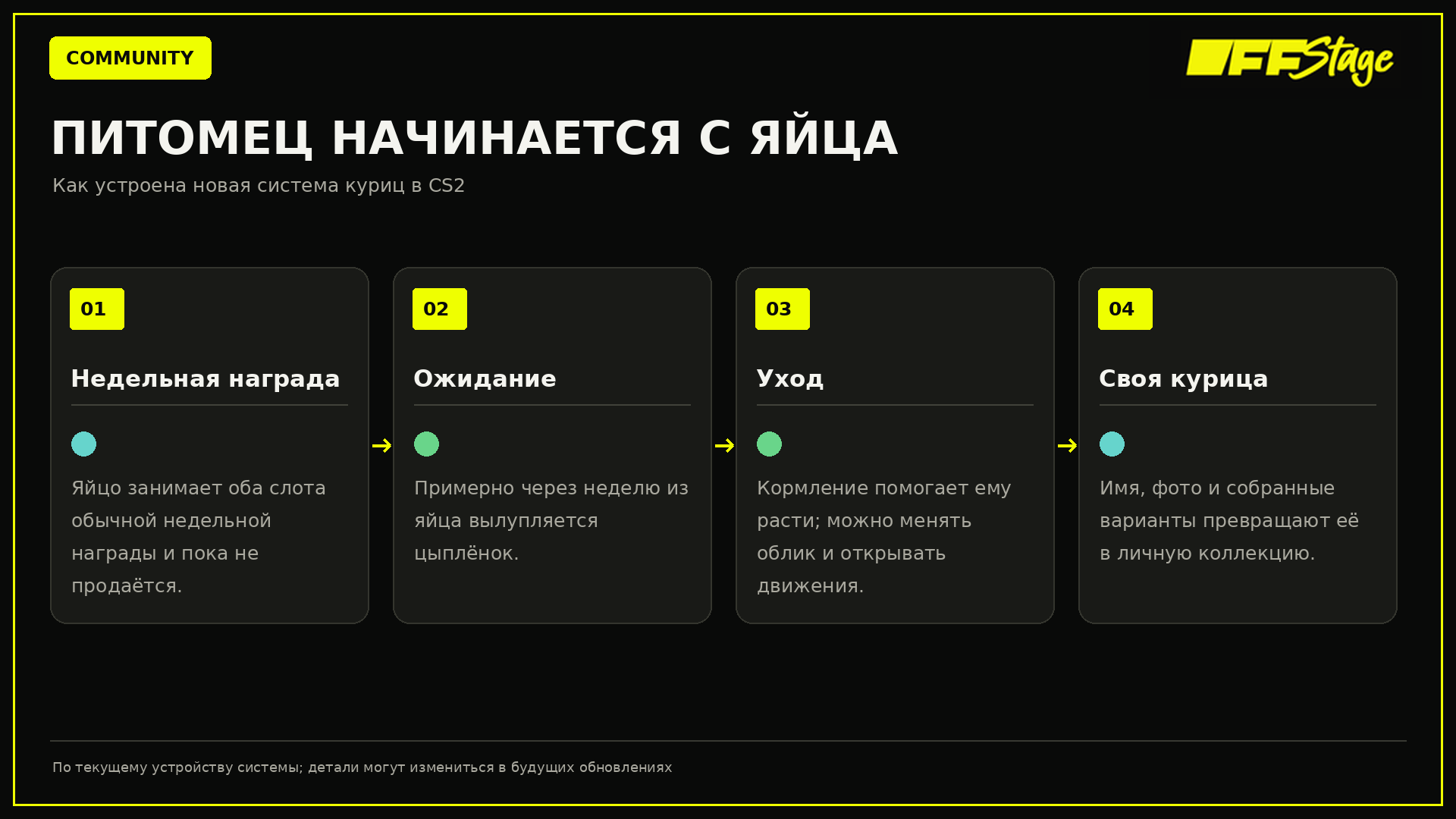
CS2 has introduced a pet system: the chicken, familiar from the maps, can now be hatched from an egg, raised, and customized for your profile. Even the sound or noticeable movement of a pet in a competitive shooter can affect a round. PUBG Mobile and Free Fire already use companions, but assign them different roles. In this article—here’s what I think about the new gameplay mechanic.
Chickens Have Always Been Part of CS
In Counter-Strike, a chicken never seemed out of place. It roamed the maps long before the new system, and players grew accustomed to it as a strange yet cozy and amusing detail of the game. When a bird runs past a firefight on a serious map, it works precisely because it doesn’t change anything and doesn’t demand attention.
A chicken on the map and a chicken in your profile work differently. The former is simply something a player comes across during a round, while the latter can be cared for and customized. It’s this transition from a background detail to a personal collection that changes how the chicken is perceived. In discussions, some choose their favorite color scheme, while others ask why pets are even needed in Counter-Strike. Both reactions are understandable, but the idea itself is good as long as caring for a pet remains part of the fun in the lobby.
A pet shouldn’t give away your position to opponents
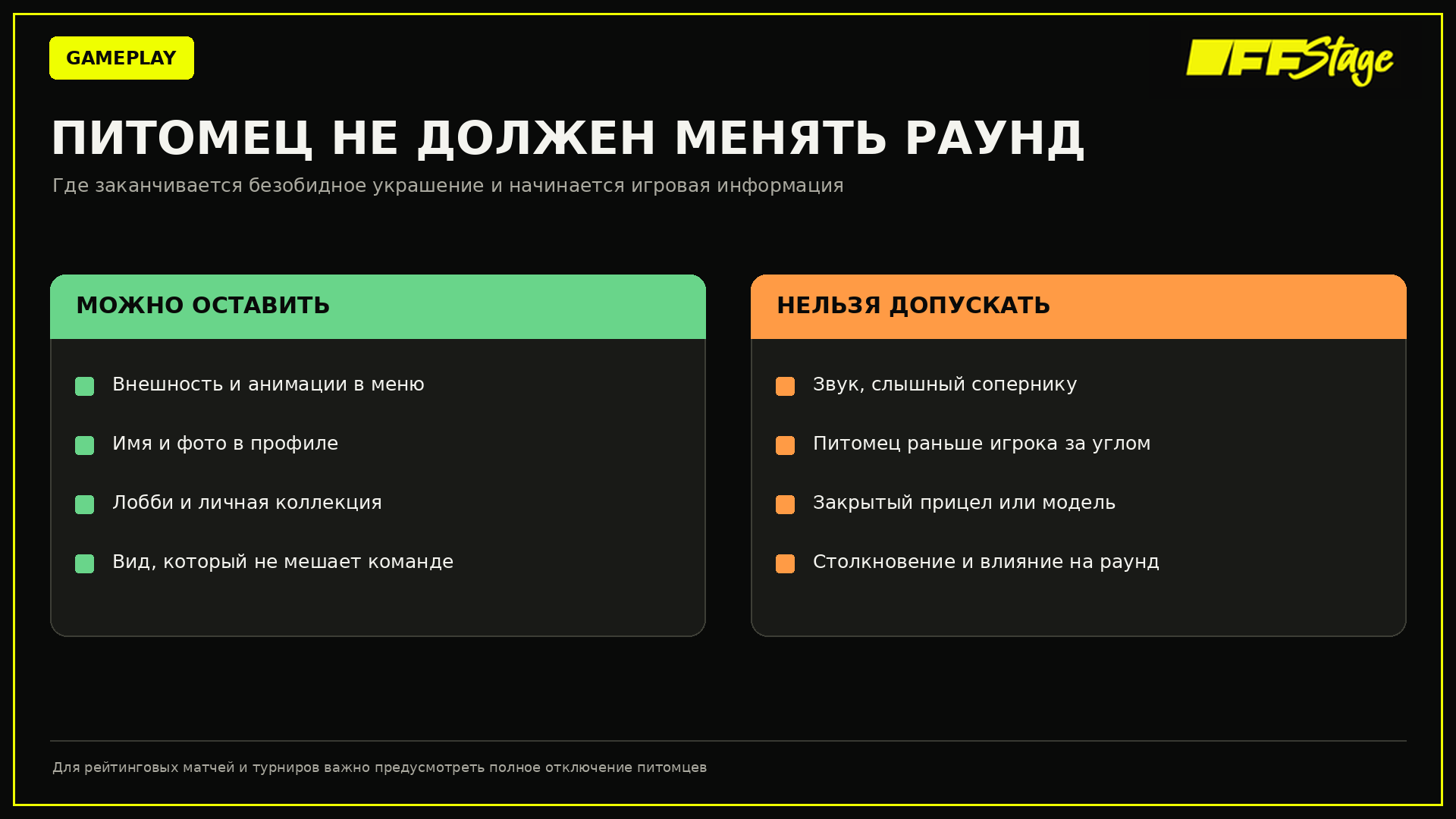
During matches, there’s a lot of important information: based on visuals, footsteps, reloading sounds, and grenade sounds, players can tell where an enemy is emerging from cover. Therefore, the sound of a pet or it running out from behind a wall could also give away its owner’s position—even if it was added solely for atmosphere. If a chicken appears on the map, silence alone won’t be enough: its contrasting color, sudden movements near cover, or animations from behind can draw attention and give away the owner’s location. In a competitive match, a pet should not give away any clues to either its owner or an opponent.
In the September update, this is evident in the reload mechanic: it can now be performed silently, but it takes longer. Since sound helps you understand your opponent’s actions, you must treat your pet’s sounds and behavior with the same caution. A chicken that runs around the corner before its owner does can reveal more to the opponent than it should.
A level playing field is also important here. If a pet can be disabled, the setting must change the visual display equally for all players. Otherwise, some will see the model while others won’t, and opponents will have different information about the round. All color and animation options can remain in the menu, profile, and lobby. If a pet appears in a match, it should not make noise, obstruct the view, or collide with players—and most importantly, it should not reveal its owner’s location. In ranked matches and tournaments, there must be an option to disable pets for all participants.
Other shooters have their own boundaries
In PUBG Mobile, players can choose a pet and bring it with them into a match. The companion follows the character, and other players can see it in the game as well. The Lion Buddy shown in the illustration is one such pet.

In Free Fire, pets also appear in matches and have abilities that help in combat. For this game, this choice makes sense: there are characters with different skills, and the companion becomes part of the strategy.
In the game, a new ability would disrupt the balance of weapons, grenades, and the economy—not just serve as a cosmetic addition to a player’s profile. Only a purely cosmetic pet is suitable for CS: it shouldn’t influence the round or reveal new information to opponents. If a chicken provides a gameplay advantage, it would have to be balanced as an ability, so it’s better to keep it in the profile and collection.
What Trading Chickens Would Change
Currently, eggs cannot be traded, and that’s the right call. If trading chickens is allowed, rare color variants will quickly become commodities, and the focus will shift from the bird itself to its price.
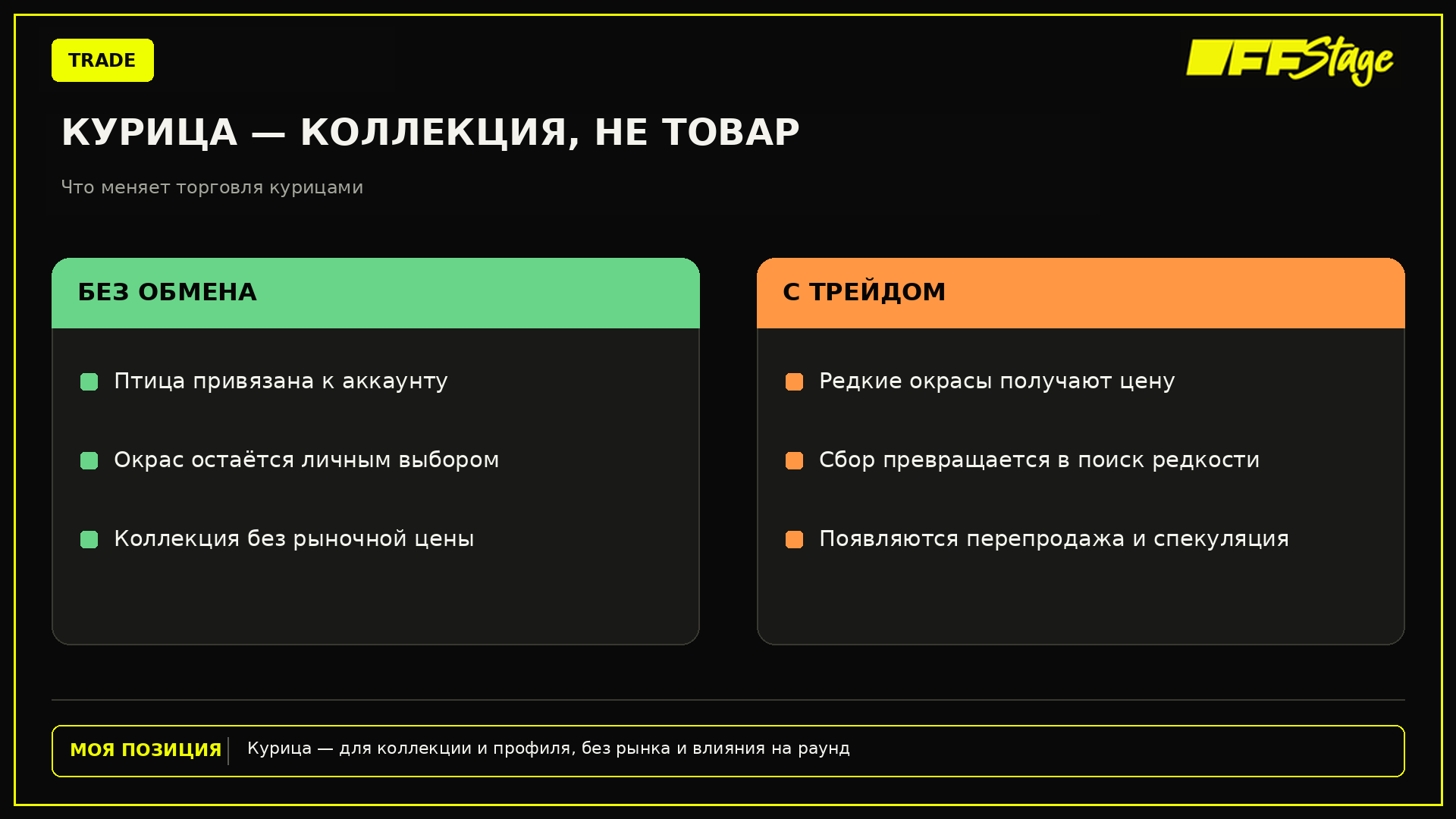
If chickens become tradable, players will seek out rare color variations for resale and focus more on price than on appearance. Rarity will gradually become the pet’s main appeal, while caring for it will take a back seat. This model is common in the skin market, but I hope that the chicken will remain something unique for each player.
A good solution might be to tie the chicken to the account and provide a clear process for unlocking new variants—for example, through care, quests, or time spent in the game. That way, players can choose for themselves how to acquire their pet and won’t feel the need to search the market for a ready-made rare variant. Then collecting will remain a hobby rather than a gamble aimed at resale. Those who aren’t interested in chickens won’t have to search for or buy anything.
Not everyone has to like the chicken
Counter-Strike already has skins, stickers, and keychains, and everyone decides for themselves whether to use them or not. It should be the same with the chicken: it can decorate a profile as long as it doesn’t alter the view, sound, or flow of the round. If a pet affects an opponent, it’s no longer just a cosmetic item. The idea of chickens will fit into the game if each player can decide for themselves whether they want such a collection, and as long as it doesn’t have even the slightest ability to influence the outcome of various situations, rounds, matches, or even entire tournaments.