Pets in CS2: Everything About Chickens, Eggs, and the Pet Book

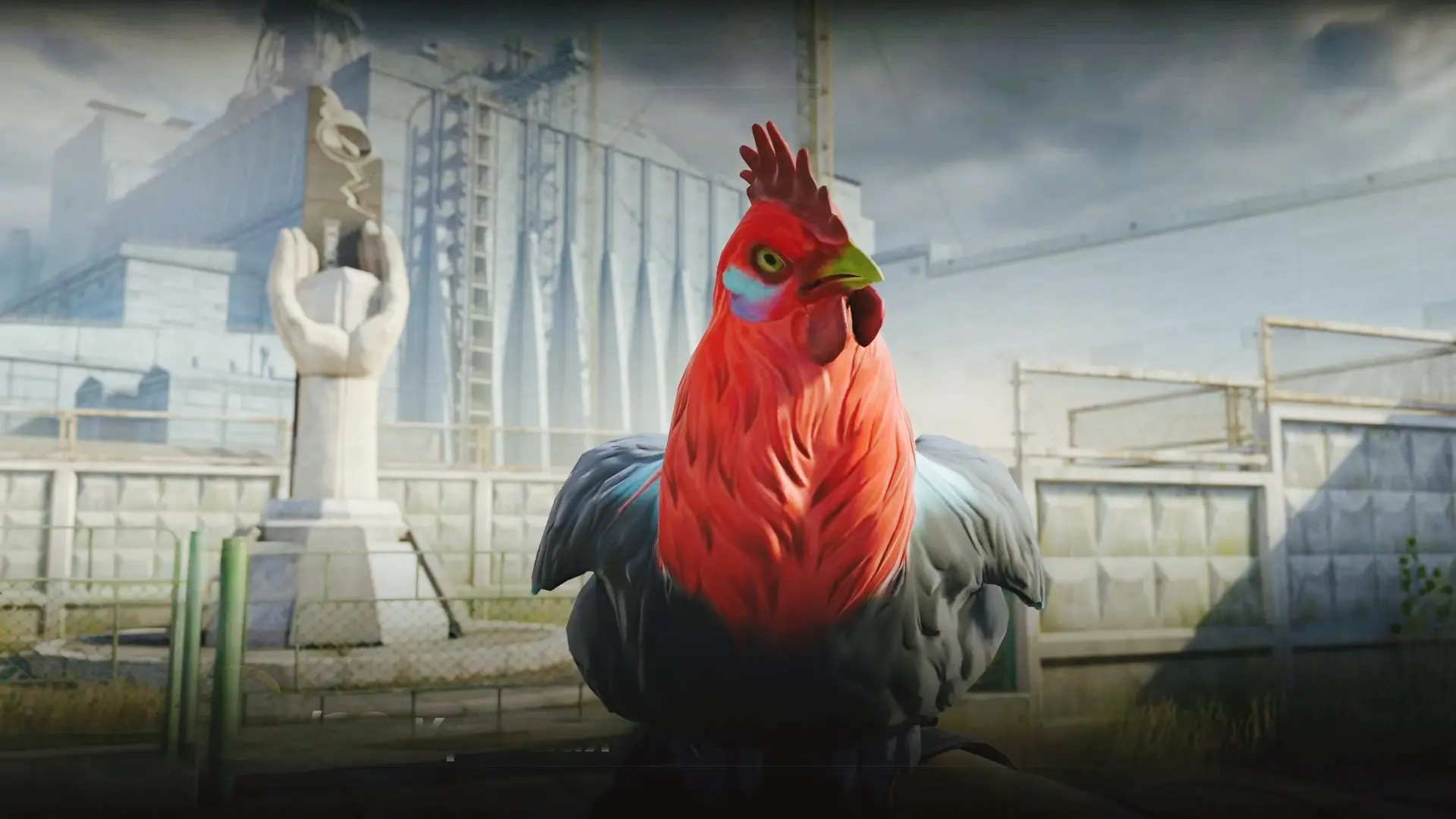
Valve added pets to CS2 without mentioning them in the patch notes—players discovered the system on their own. This has been confirmed by both Russian- and English-language sources. Let’s take a look at how to get a chicken egg, how long it takes to hatch, what breeds are available, why you need feed, and what the Pet Book is.
What Are Pets in CS2
With the release of the Rush Hour update, a pet system appeared in CS2 that Valve did not mention in the patch notes. Players discovered the mechanics themselves—first in the game files, then in the client. This isn’t the first time Valve has added content without an official announcement, but for Counter-Strike 2, the pet system stands out as a notable exception: usually, cosmetic updates are accompanied by at least a brief mention.
The pet is a chicken that appears next to the character in the main menu. It has no effect on gameplay, but it does have unique animations: it can kick its legs and even fly. The system functions purely as a cosmetic feature: you can look at, pet, and feed the pet.
Now for the main question: how do you get a pet in CS2? The only way right now is through an egg.
How to Get an Egg in CS2
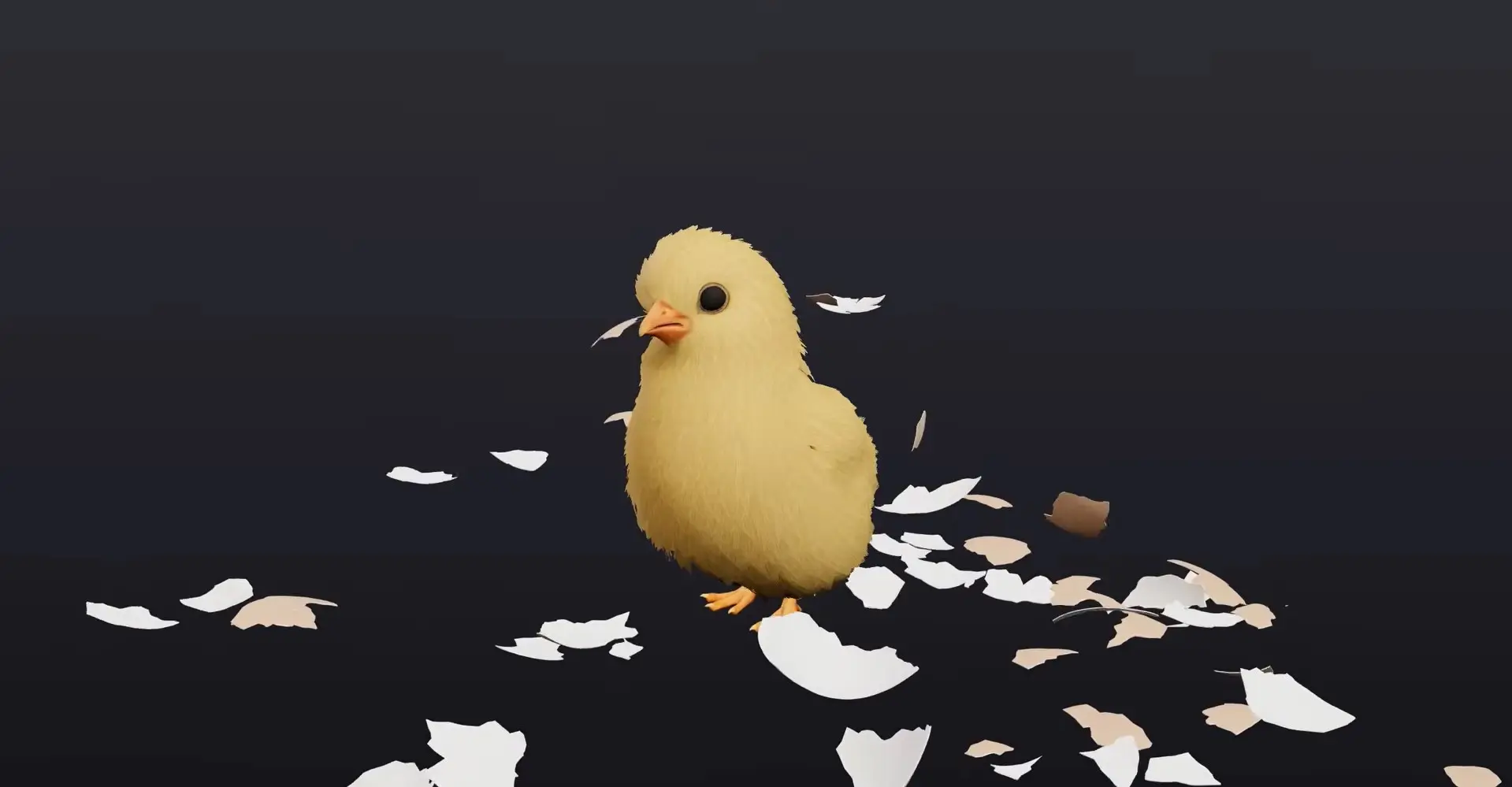
A chicken egg drops as a weekly reward for leveling up your profile. It takes up both reward slots—meaning you won’t receive a case or a skin that week. You can’t have it all at once; everyone will have to decide whether to forgo their usual reward for the pet or not. You can’t get a second chicken egg in CS2 if you already have an egg, a growing chick, or a fully grown chicken.
It’s worth noting that the egg does not appear in your Steam inventory. This means that standard methods of interacting with items—such as selling, trading, or transferring—do not apply to it. Whether this will change in the future remains to be seen.
Where Is the Pet?
Pets in CS2, just like eggs, do not appear in the character’s inventory, and they cannot yet be sold or traded. Each one appears next to the character in the main menu, “wiggling” beneath them, and the adult version appears during matches. Until the chicken hatches, the egg also sits next to the character, but on a miniature plate. You can rotate and examine the animal using the in-game item inspection feature—just like a skin.
Growth Stages
In addition, the eggs come in different colors and patterns, which are generated based on the specific account and make the pet unique. Therefore, each user will have their own moderately unique pet. The growth of a pet chicken in CS2 is divided into three stages:
| Stage | What It Looks Like | What You Can Do | How long it lasts |
| Egg | A small egg with a pattern | Examine, rotate, feed, rename | Unknown |
| Young Hen | Little yellow chick | Pet, examine, feed, rename | Unknown |
| Adult | Full-sized unique hen | Pet, examine, rotate, rename, take on quests and in matches | Growth stops |
If you take the chicken with you somewhere during the final stage, your nickname and its nickname will appear above it. According to preliminary data, hatching takes a week, but Valve has not officially disclosed the exact timing. There are no player reviews available at the time of publication, so it’s hard to say exactly how long it takes for an egg to hatch in CS2.
All Breeds and Colors
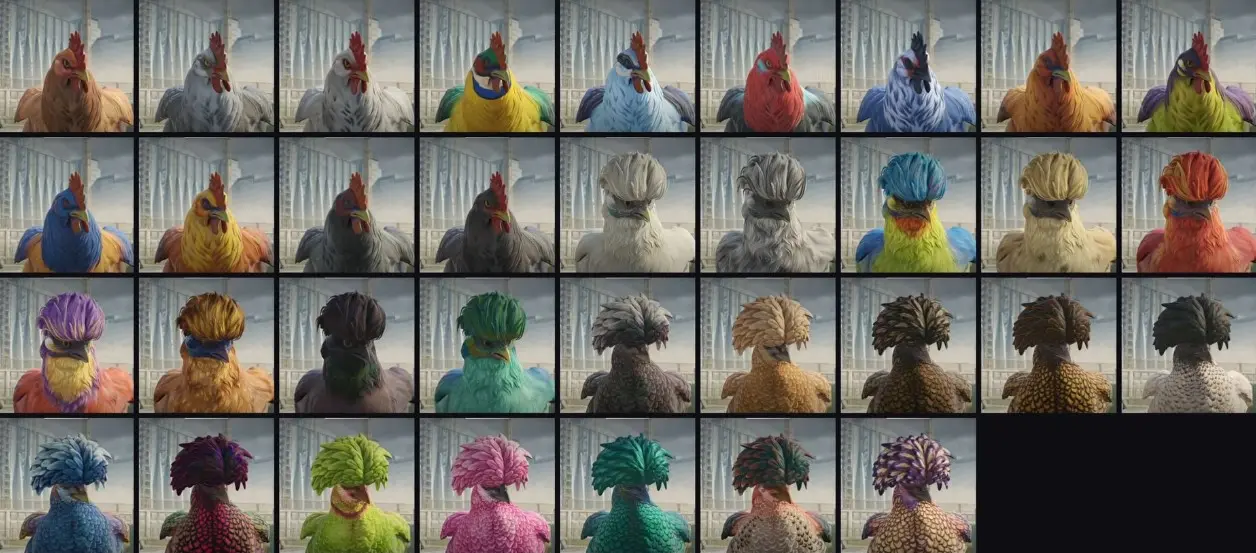
According to data miners, chickens will have a rarity system. However, Valve has not yet confirmed this system, so this information remains speculative.
Chicken Breeds in CS2 — List
All breeds are real. The Polish Crested is known for its lush crest, the Silkies for their fluffy, almost fur-like plumage, and the Catalan breed is virtually indistinguishable from ordinary chickens in real life. It appears that Valve based the game on real-life chickens. The in-game list, featuring the full range of styles, is as follows:
| Breed | Name in Files | Color Varieties |
| Catalan Chicken | Chicken Catalana | 13 |
| Polish Chicken | Polish Chicken | 12 |
| Silkie Chicken | Silkie Chicken | 9 |
Chicken Varieties in CS2 — List
Unlike breeds that exist outside of video games, some chicken colors in CS2 have practically nothing in common with reality:
All Color Varieties of the Catalan Chicken
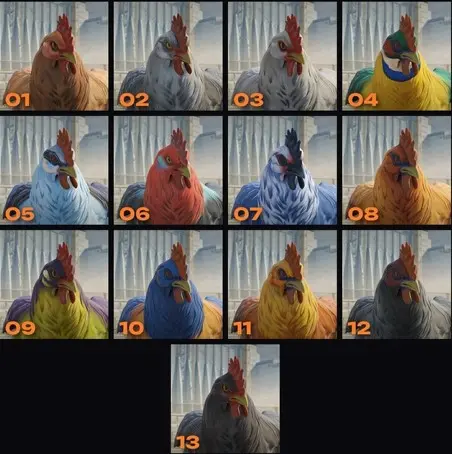
| Number | Name |
| 1 | Red |
| 2 | Silver |
| 3 | White |
| 4 | Parrot |
| 5 | Blue |
| 6 | Red |
| 7 | Blue variegated |
| 8 | Dark orange |
| 9 | Lime with purple |
| 10 | Blue with orange |
| 11 | Yellow and Red |
| 12 | Gray |
| 13 | Black |
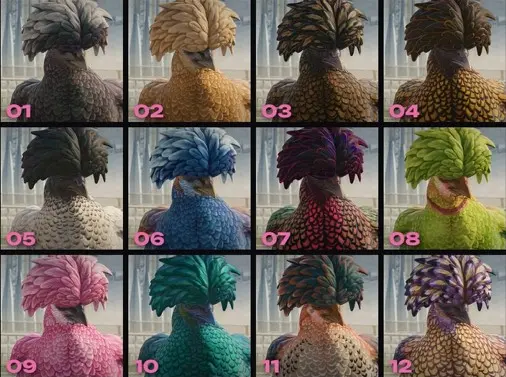
All Colors of the Polish Chicken
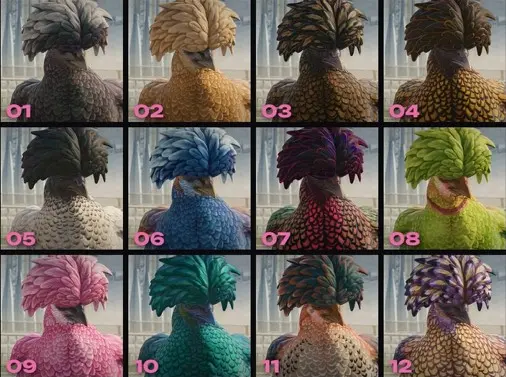
| Number | Name |
| 1 | Dark iridescent |
| 2 | Golden-brown |
| 3 | Dark brown |
| 4 | Golden with black |
| 5 | White with a black head |
| 6 | Blue |
| 7 | Burgundy |
| 8 | Light green |
| 9 | Pink |
| 10 | Turquoise |
| 11 | Peach |
| 12 | Purple and Gold |
All Colors of the Silk Chicken
| Number | Name |
| 1 | White |
| 2 | Gray with speckles |
| 3 | Blue with a red beard |
| 4 | Sand-colored |
| 5 | Red |
| 6 | Purple-red |
| 7 | Orange |
| 8 | Black-purple |
| 9 | Aqua |
Food and Care
Chicken feed in KS2 is obtained through a weekly drop—it’s a Sunnyside bag (available in three varieties). It’s important to understand this in advance: if the feed runs out before the chicken grows up (which the game will indicate in notifications), the animal will disappear. Notifications are divided into three types:
- “No one loved it. No one hatched it. These things are connected”—for the egg stage.
- “Accepted an offer elsewhere. They’re feeding her there”—for the young hen stage.
- “You raised her so well that she doesn’t need you anymore”—for the adult stage.
This is one of several questions Valve hasn’t answered yet: How long does feeding take before the pet disappears or reaches adulthood? As for how to feed pets in CS2, there’s no problem—just open the food you’ve received.
The Pet Book in CS2—a pet album
Chickens are only needed for one thing—photos. So even if they disappear, the memorable photos will remain. The menu includes a “Photo Album” featuring 11 poses (chickens on your shoulder, above your head, etc.), 10 hat options (such as a banana and a wizard’s hat), as well as nine unique effects (explosion, lightning, confetti). Filters and stickers are also available, and you can choose from the following maps as backgrounds: Dust2, Mirage, Inferno, Nuke, Ancient, Train, Cache, and Baggage.
The main requirement is that you must unlock the maps first. To do this, you need to finish a match on an official server alongside the chicken, which will take the pet slot in CS2. All photos are added to an album called Hatchbook, and each page of the photo album will feature its own joke.

The album also contains three secret pages in the form of field reports: “Molotov,” “Zeus,” and “C4.” They unlock if, during a match, your chicken is set on fire with a Molotov, struck by Zeus, or caught in a bomb explosion. In that case, you’ll unlock the aforementioned effects faster than if you’d unlocked them yourself, and your chicken can then become “Brave.”

How the pets were discovered three years before release
The update history shows that the pet system was in development for several years. At that time, it was not yet known that Valve planned to add 34 chickens to CS2, but the first mentions in the files appeared long before the release, and individual elements—such as petting animations and growth stages—were discovered nearly a year before the official launch:
- In May 2023, data miner Gabe Follower discovered lines of code in the Counter-Strike 2 files indicating the development of a PET (pets) equipment slot and pet capsules.
- In August 2025, Gabe Follower discovered a major code update in the Counter-Strike 2 files, revealing details about the future pet system, which was divided into three stages.
- In December 2025, data miner Thour published a post stating that Valve planned to add a pet system to Counter-Strike 2 in the first half of 2026 (between January and April). He discovered the string “cs_pet_placement” (“pet placement”) in the update (in the client.dll file).
What’s Still Unknown
- The rarity tiers of the chicks and all possible egg patterns.
- How many bags of food are needed to reach the adult stage.
- How long a pet can go without food.
- Will it be possible to sell an egg, a young chicken, or an adult chicken in CS2?
- The duration of growth stages in real time.
- New effects in the photo album and how to unlock them.
Frequently Asked Questions (FAQ)
Питомец — это курица, которую нужно выращивать со стадии яйца.
Его можно получить в еженедельном дропе, но необходимо выбрать что-то одно — кейс или будущего питомца.
Рядом с персонажем на экране (справа). Курица отображается там на любой стадии — даже на этапе яйца (лежит в тарелке).
Всего их три: яйцо, молодка и взрослая курица.
На данный момент в игре представлено три: обычная, польская и шелковая.
Всего существуют 34 варианта: у обычной — 13, у польской — 12, а у шелковой — 9.
Для этого необходимо иметь мешок с кормом, который также можно получить в дропе. Если он заканчивается, игра заранее сообщит об этом.
Он представляет собой фотоальбом, где можно хранить фото питомцев-куриц (даже тех, которые пропали).