Legacy’s costly mistake—who else has been suspended from CS tournaments?

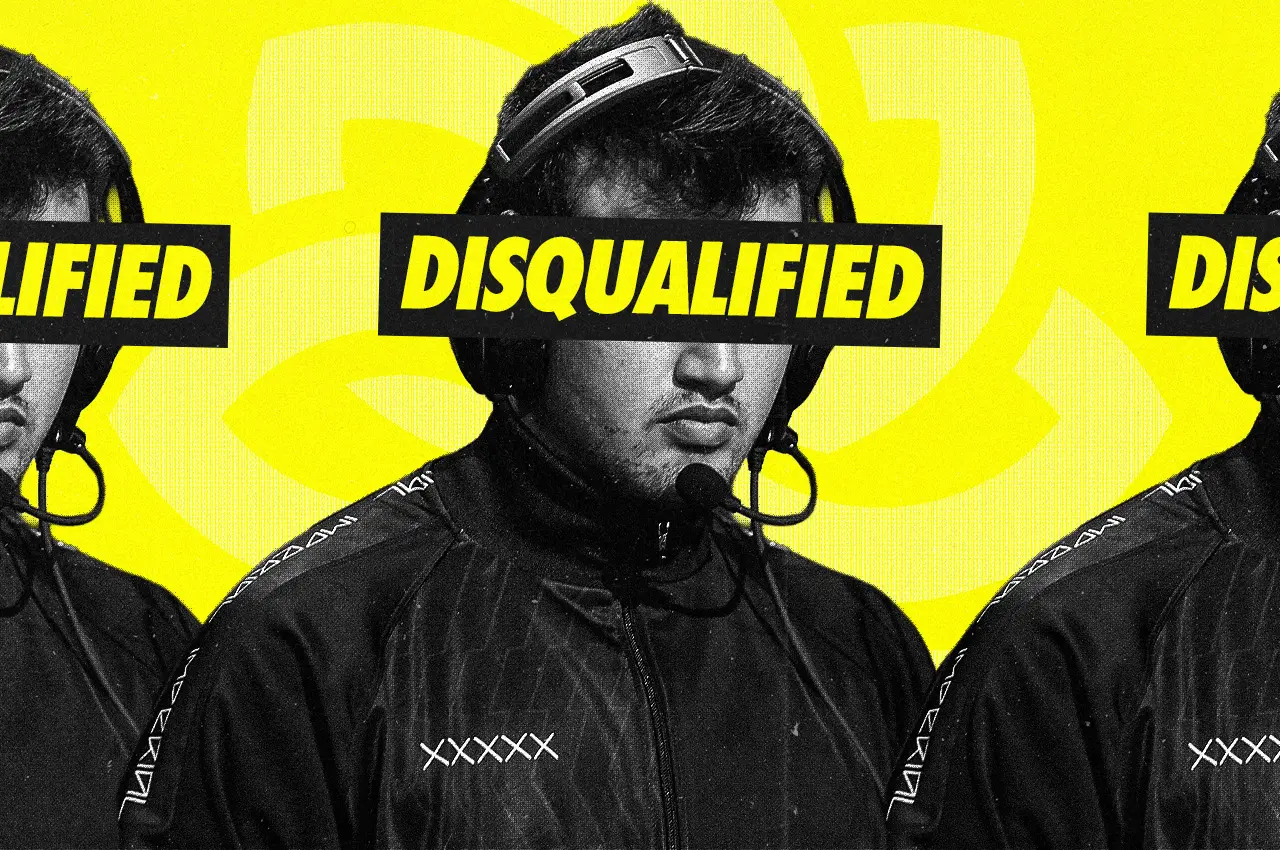
Disqualification from a tournament in the Counter-Strike esports scene is an extremely rare but often high-profile incident that continues to be actively discussed within the gaming community for a long time afterward. The reasons for this can vary: violations of established rules, false accusations, or even the use of cheats—not only in competitive play but also during LAN events. In this article, we’ve compiled several cases where participants were removed from tournaments or barred from participating altogether. Let’s take a closer look together at what “thumbs up” and bugs have to do with it—and, most importantly, how exactly they could have led to disqualifications.
Alan “adrrr” Riveros, IEM Cologne Major 2026
The most recent case of tournament suspension occurred at the IEM Cologne Major 2026. Legacy’s coach, Alan “adrrr” Riveros, was disqualified for violating communication rules with players. According to ESL, he had already received several warnings by that point, but the decisive factor was a gesture—a thumbs-up—he made toward a player after a tactical timeout. This happened during a match against PARIVISION.
The Brazilian team’s coach himself acknowledged the incident. However, the community’s collective opinion on this incident was mixed: some consider his suspension for the remainder of the event unfair given the minor nature of the violation, while others fully agree with ESL’s decision. But regardless of the discussions within the community, the Legacy story itself has joined the list of the most talked-about topics at the Cologne Major.
Sergey “hally” Shavaev, PGL Major Antwerp 2022
The suspension of Team Spirit’s coach came as a shock to both the club itself and the community. A couple of days before the Major, during the roster lock, ESIC banned Sergey “hally” Shavaev for exploiting a coaching bug.
Hally himself stated that he didn’t remember encountering the bug, but judging by the recording, he didn’t do anything wrong—he just “got stuck” on the camera for a moment and immediately logged back in. He strongly disagreed with the decision, calling it underhanded—ESIC had kept the recording for over a year, but the ban was issued right before the most important tournament of the season. The outcome turned out to be favorable after all: a few months later, Team Spirit’s appeal was reviewed, and the ban was lifted.
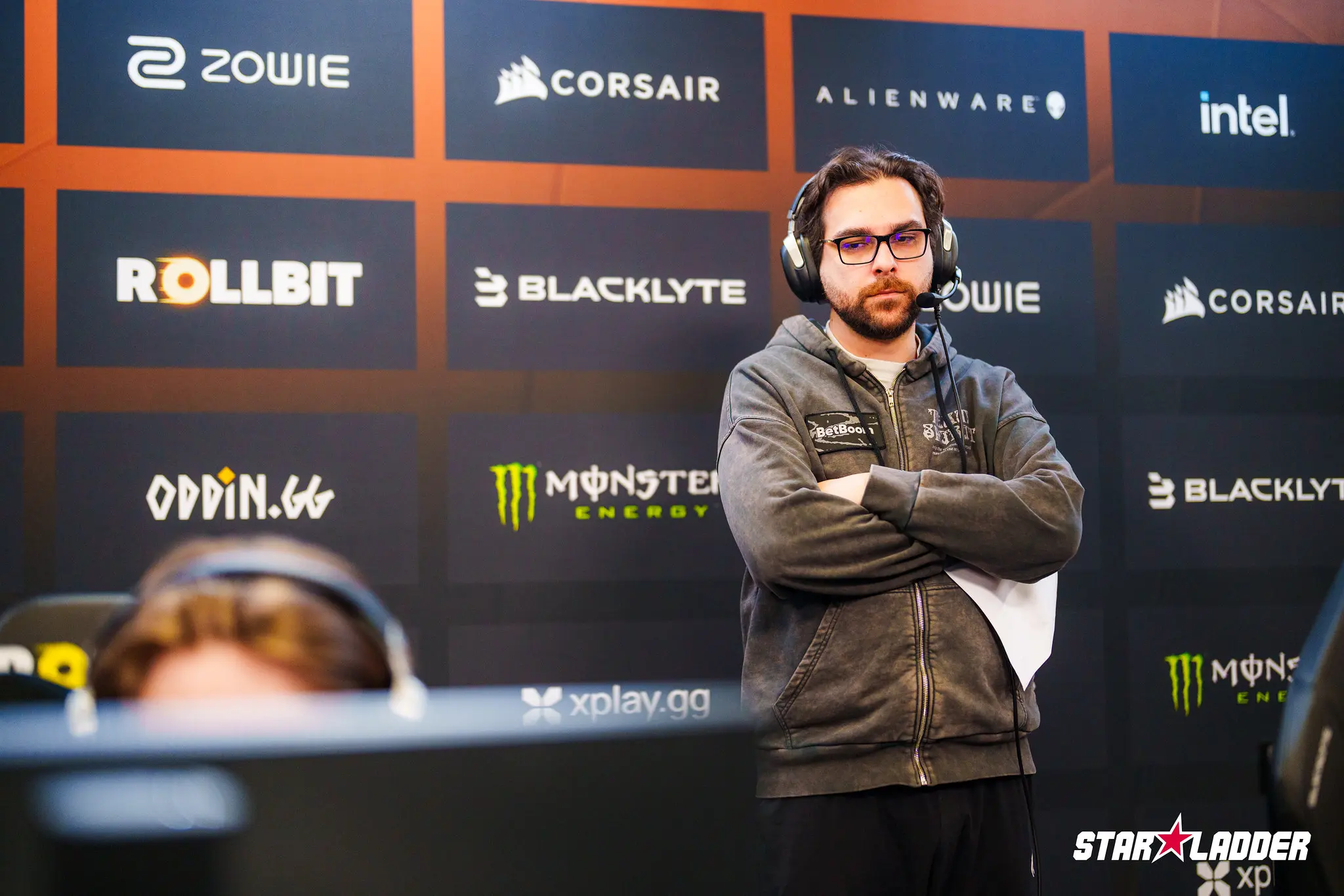
But it’s worth noting that at the current IEM Cologne Major 2026, there was no coach behind the “Dragons” either. Only this time, this situation is due to the circumstances: Sergey “hally” Shavaev has been hospitalized, and Dmitry “S0tF1k” Forostyanko is missing the tournament due to visa issues.
Ivan “F_1N” Kochugov, Perfect World Shanghai Major 2024 Europe RMR
The PARIVISION team was also disqualified during the European RMR stage leading up to the Shanghai Major. The reason for this was the presence of Ivan “F_1N” Kochugov near the players; at the time, he was considered suspended from Valve events due to the now-familiar “coach bug” incident. But the situation soon descended into organizational chaos as unexpected details began to surface.
It turned out that by the time the closed qualifiers were held, the appeal had already been reviewed and the charges dropped, but this crucial information had not been communicated to the relevant authorities in time. Once the confusion was resolved, the disqualification was reviewed, and PARIVISION returned to the RMR. Of course, there was no shortage of heated discussions about this organizational “mess,” which could have prevented the team from advancing further in the tournament.
Nihil “forsaken” Kumawat, eXTREMESLAND 2018 Asia Finals
This disqualification seems to have shaken the entire Counter-Strike gaming community the most, becoming something of a legend and firmly establishing itself as a meme. At the time, the eXTREMESLAND 2018 Asia Finals were underway, and Nihil “forsaken” Kumawat, playing for OpTic India, was caught using cheats right in the middle of a match against Revolution. Of course, the organizers’ reaction was immediate—the team was disqualified.
But the key player in this story is a file named “word.exe,” which the player used to try to hide the exploit. What’s particularly telling here is forsaken’s reaction: he tried to quickly delete the disguised cheat before the tournament administrator noticed the violation. The result is obvious: a ruined reputation and a stigma that not only took root in the eyes of the community but also became a source of ridicule.
Joel “joel” Holmlund, CCT Season 2 European Series #7
Unscrupulous player behavior and the use of third-party software are perennial issues that seem destined to remain a part of the game forever. In this context, the name of Joel “joel” Holmlund, who competed under the BC.Game Esports tag, has come up. During CCT Season 2 European Series #7, the Akros Anti-Cheat system detected a cheat on his computer that included ESP, aimbot, and triggerbot functions. This incident led to the team’s subsequent removal from the tournament and, later, to Joel’s expulsion from the roster.
The player denied any wrongdoing and claimed he had never used third-party software, but further investigations only reinforced ESIC’s position that the permanent ban was not a mistake. This sparked a wave of discussion: opinions ranged from those supporting the ban to calls for greater transparency in such investigations by governing bodies.
What’s most important?
Reputation in the esports community is often a decisive factor, and any damage to it can completely derail an entire future career. Most often, reputational risks are discussed specifically in the context of suspicions regarding the use of banned software. But, as practice shows, in the professional Counter-Strike arena, sometimes even an old, unnoticed mistake or a minor gesture can lead to elimination from a tournament, thereby dealing a blow to the coaching staff and leaving the players without support. And in such situations, the fairness of such an outcome is not always the primary factor.