Roster Changes at Natus Vincere: Are They Necessary After the Major?

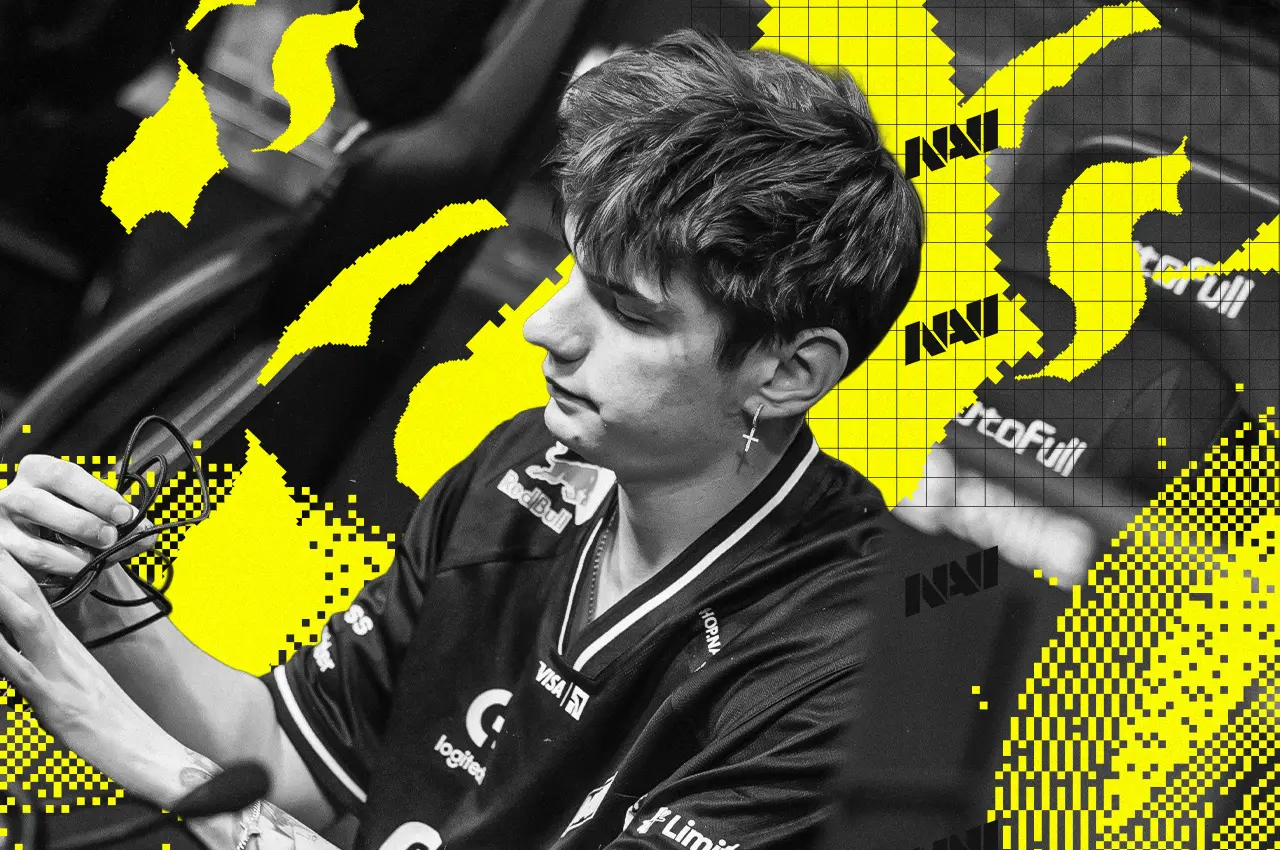
Natus Vincere ended the first half of 2026 on a mixed note. The team won ESL Pro League Season 23 and IEM Atlanta 2026, reached the finals twice, and secured a spot among the leaders in the VRS rankings, but failed to even make the playoffs at the season’s main tournament. Therefore, the question of whether NAVI needs roster changes arose not because of a complete failure of the project, but because of the disconnect between their successful season and their performance at the Major.
The IEM Cologne Major 2026 did not prove that this roster had run its course, but it once again exposed its main vulnerability. Andrey “B1ad3” Gorodensky’s lineup is capable of winning without a superstar of the caliber of Mathieu “ZywOo” Erbo or Danil “donk” Kryshkovets; however, for that to happen, nearly all players must be performing at or near their peak simultaneously. As soon as one of them drops off, NAVI has too little individual depth left to cover the problem with a single streak of standout rounds.
A system that relies on everyone performing at their best
At the IEM Cologne Major 2026, Drin “makazze” Shakiri proved to be the weak link. The young rifler failed to reach the level he had shown in the spring, and in the decisive matches against Team Falcons and G2 Esports, he didn’t provide NAVI with its usual aggression. That said, Valery “b1t” Vakhovsky had a strong tournament, and Mikhail “iM” Ivan and Igor “w0nderful” Zhdanov didn’t look like players who were completely out of the game. The team still finished the group stage with a 2-3 record and was eliminated early from the title race.
It’s easiest to attribute the result to makazze’s poor performance, but that explanation oversimplifies the problem. Back in March, he helped NAVI win the ESL Pro League, and in May, IEM Atlanta. If a single poor tournament by a rookie can lower the overall level of the five-man squad so significantly, the question must be directed not only at him but also at the roster’s composition itself. A Major contender must have a winning strategy even when one of its riflers is having a weak week.
NAVI came close to overcoming this slump. On the decisive map against Team Falcons, the team took Anubis to overtime, leading 11–6, but lost 16–19, after which they got another chance in the series against G2. A couple of clutch wins could have changed the perception of the tournament: instead of discussing roster changes, people would have been talking about another playoff run. However, it is precisely these kinds of matches that highlight the difference between a strong system and a roster with the resilience of a champion.
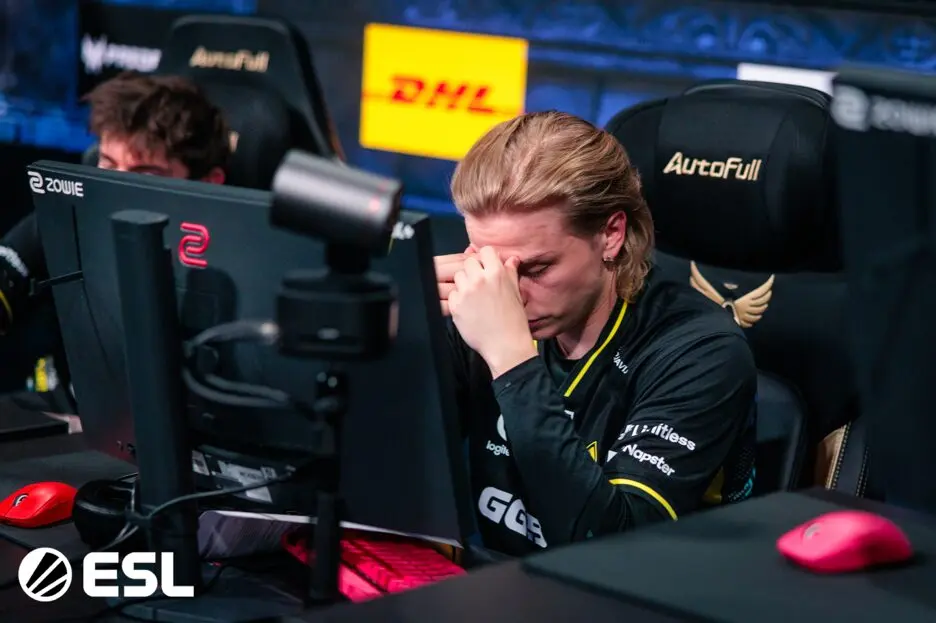
After their elimination, B1ad3 spoke about more than just shooting. The coach mentioned communication errors, poor decisions, and situations that the team had analyzed beforehand but still repeated on the server. This is an important detail: NAVI lost not because of their overall play, but because of individual player issues. Such lapses are especially dangerous for a roster whose strength is built on discipline and precise coordination.
A Core They Know All Too Well
Alexi “Aleksib” Virolainen and iM joined Natus Vincere in the summer of 2023, and w0nderful took over as the starting sniper in the fall. Together with b1t, they form a four-man core that has been together for about two and a half years. During this time, the team won the PGL Major Copenhagen 2024, went through a slump, and returned to winning trophies. In the world of modern Counter-Strike, that span of time is practically an era unto itself.
Most of the teams in the top ten of the VRS have undergone several roster changes since the start of 2024. NAVI made only one: Justinas “jL” Lekavičius left the starting lineup, and makazze took his place. This stability allowed them to refine the B1ad3 system, but at the same time made the team one of the most thoroughly analyzed on the Tier 1 scene. Opponents have accumulated hundreds of demos against a single captain, a single coach, and an almost unchanged roster of players.
The problem isn’t simply that old round strategies stop working. After two and a half years of playing together, it’s harder for the team to change the distribution of initiative, the pace, and the internal hierarchy, because familiar decisions have become second nature. A new player brings more than just stats: he reacts differently to chaos and forces his teammates to rethink their positions. makazze provided NAVI with some of that momentum, but a single roster change wasn’t enough to completely revamp the team’s approach.
That said, a long-standing core isn’t a problem in and of itself. Team Vitality and Team Spirit have shown that a stable foundation can remain competitive for years when combined with high individual skill. The difference is that these teams have players capable of single-handedly turning the tide of a series. NAVI more often has to win through the combined efforts of the entire five-man roster, so predictability hits them harder.
Where the ceiling ends
iM is inevitably named as the top candidate to replace them. At the BLAST.tv Paris Major 2023, the Romanian had the tournament of his life: he led GamerLegion to the final and finished the tournament with a rating of 1.35, second only to ZywOo in the stats. This peak proved that Mihai is capable of playing at a superstar level, but subsequent seasons have revealed his true limitations. On a strong NAVI roster, he can maintain a rating around 1.1 and decide individual matches, but he rarely remains the primary source of an advantage throughout an entire season.
This doesn’t make iM a bad player. He ranked in the HLTV top 20 for two consecutive years, placing 16th in 2024 and 19th in 2025, and his play has long been an integral part of Aleksib and B1ad3’s system. The problem lies in the comparison with NAVI’s direct competitors: the world’s best teams field riflers with a higher floor in positions of similar value. When iM is in good form—but not at his absolute peak—he tends to disappear in precisely those series where b1t needs a full-fledged second leader.
That’s why rumors of NAVI’s interest in David “frozen” Černiansky made sense. The Slovak has consistently ranked in the HLTV top 20 since 2022 and climbed to eighth place by the end of 2025. He is more consistent over the long haul and capable of making more independent decisions. On paper, bringing in frozen to replace iM would not be an experiment, but a significant boost to the team’s individual ceiling.
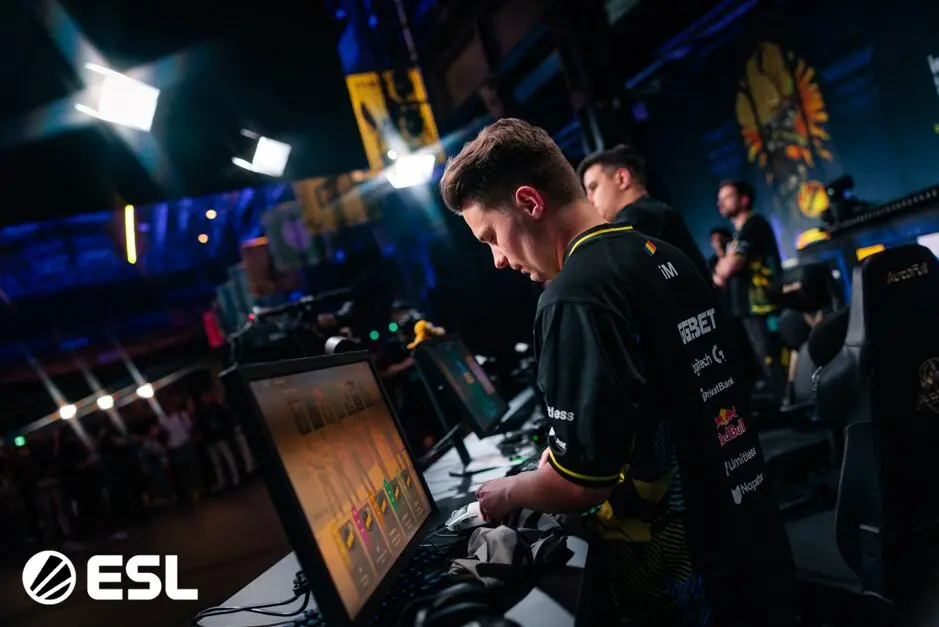
But Counter-Strike isn’t built on just five rankings. frozen would require strong positions and space, and his arrival would alter the roles of makazze, b1t, and even the structure of late rounds. NAVI would have to give up some of their established chemistry for the sake of a stronger player who would still need to fit into a strict system. Such a risk is justified only for a player of this caliber; there’s no point in replacing iM with yet another rifler whose rating is barely above one.
A change just for the sake of change would weaken NAVI
The main argument against roster changes is the season’s results. NAVI won two tournaments, reached the finals of BLAST Open Rotterdam and BLAST Rivals Season 1, and finished the VRS split in fourth place. This is not a team that needs saving. One disastrous Major doesn’t negate several months during which the five-man squad regularly reached the decisive stages.
Moreover, B1ad3 has already shown that he doesn’t make roster decisions based on emotional reactions. Before the start of 2026, NAVI kept its roster intact, even though there were reasons for changes following an inconsistent end to the previous season. In the spring, that decision paid off with two trophies and raised the bar for any potential newcomer. Now, a candidate must not only show promise but also immediately make one of the world’s best teams noticeably stronger.
Cutting makazze after a single weak Major is particularly illogical. He is 19 years old, playing his first full season at the highest level, and has already shown that he can be a key source of aggression. His inconsistency can still be considered a growing pain rather than a definitive judgment. If NAVI decides to make a roster change, it would make more sense to look for an established star rather than an experienced player with a clear ceiling, rather than giving up on the youngest member of the team.
NAVI needs reinforcement, not a new face
After the loss to G2, B1ad3 admitted that NAVI might need to refresh its roster. However, the coach did not announce any specific changes: first, the coaching staff must determine the strategy for the next season and assess whether the current five-man roster is capable of consistently competing for titles. If the team does not see that potential, the organization will consider other options.
The right question, therefore, isn’t “who to cut after the Major,” but “which player will solve NAVI’s specific problem.” A newcomer should not just refresh the atmosphere, but also boost firepower, maintain role balance, and provide the team with a new source of initiative. frozen meets these requirements far better than most other options, but there are almost no players of this caliber on the market. A lateral move would disrupt part of the system without raising its ceiling.
The current NAVI roster may indeed need a shake-up: the core has been together for too long, opponents know its habits well, and the individual skill of certain players isn’t always enough to overcome a slump. However, the season has also shown the opposite—this lineup is still winning tournaments and is capable of competing with the best. Therefore, not making a transfer wouldn’t be cowardice or self-deception if the club can’t find a guaranteed upgrade. Sometimes the smartest move in the transfer market is to resist the temptation to replace a strong team with just another one.