MPKBK: “The Russian-speaking audience now accounts for nearly 50% of the entire Counter-Strike audience.”
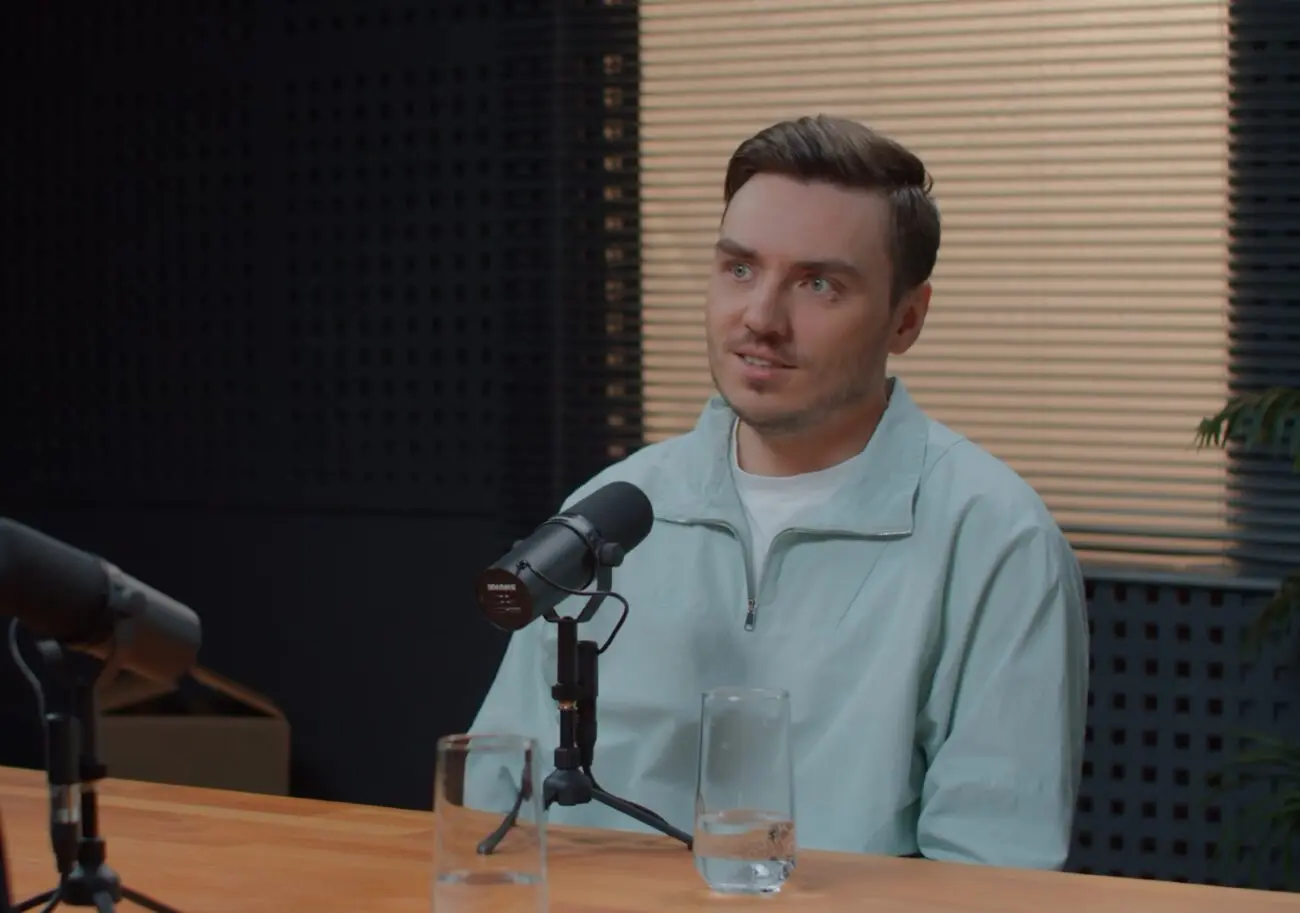
Tournament organizer Andrei “MPKBK” Ermakov discussed potential organizational challenges that may arise in the future in a video on the OFFSTAGE YouTube channel, commented on the likelihood of sanctions being imposed on the Russian-speaking tournament scene, and compared the professional level of Russian talent to that of players abroad.
On potential challenges with organizing events
Well, yes, they [Valve representatives. — Ed.] might say that we’re putting an end to tournaments with entry fees and that from now on we have to hold events using VRS invites and qualifiers. But they’ll probably still stick to the line that even if you issue invites via VRS, you’re still taking money from the teams for it—well, because it seems to me that both the Serbs and Roman Imperium wouldn’t be able to host tournaments if it weren’t for the influx of money from the teams themselves. Right now, the whole scene has become terribly impoverished. DraculaN also seems to rely entirely on registration fees. I don’t think they’ll get rid of it, but this could really put a damper on things. Then, what else... <…>
What else could ruin things? Well, let’s say they decide to bring in some kind of oversight, requiring that either a representative from Valve or HLTV be present at the tournament. And HLTV only came to see me once—just now at the fourth CIS LAN—because there was a chance that K27 would qualify. And they’ll often refuse to come; it’s quite an expensive undertaking for them right now. Even though the guys who come here are Russian-speaking, we might still see some kind of supervision pop up. Well, to put it simply, compared to Exorcists—they’re given VRS status, and there’s never an admin in your room, meaning the teams are completely on their own. You can imagine what that leads to. There’s just one camera watching over the shoulders of the five players. You can still see on the stream how it’s positioned—whose monitor isn’t visible. And the most obvious violation I can spot is checking the economy on HLTV—the simplest thing you can do. And we’re not even talking about what else could happen—if you have people who know how to cheat and there’s no one supervising, there’s a sea of possibilities. Yeah, that’s exactly what I’d like to see: stricter regulation.
On sanctions for the Russian-speaking segment and top talent
I don’t think any sanctions will be imposed on our Russian-speaking segment. It’s well-known from HLTV, and there’s so much talk about Twitch that the Russian-speaking audience now makes up nearly 50% of the entire Counter-Strike audience. Even when it comes to ESL broadcasts, which are in English, 50–40% of the viewers are Russian-speaking fans who simply can’t stand Russian-language broadcasts and watch the content in English instead. I have to be honest here: no matter how many attempts we’ve made, we have at most two people who can match the level of that entertaining content produced by the English-speaking guys. In our Russian-language segment, I can say with 100% certainty that Hooch is the one—he’ll always give you great analysis and great commentary, and, well, probably... Who’s been on FISSURE lately? Yeah, I’ll keep promoting Malik as usual—I just really like Tyoma.
On comparing English-speaking talents with Russian-speaking ones
We have a huge problem in that there’s no talent development. I mean, there are studios—they come and go—but how do those studios actually work with someone who ends up getting cut? They give him money, but they don’t prepare him for it at all; no one there… You know what’s starting to pop up now? In studios, they’ll write you a guide, for example, showing who plays which position, who calls the shots on this team—it’s cool that this is happening, but the level is still really low. I’m sure that studios at the ESL and BLAST level have signed commentators on the payroll. Here, it all varies from project to project. I think the only one that had signed commentators on a salary—who were actively supported with the message, “You work for us, so keep developing”—was FISSURE. Here, it’s a case-by-case situation, but in Europe, for example, there are Scrawny and Launders, who are from BLAST—and both are from Canada, by the way. And I consider Scrawny to be, probably, the best in-studio commentator. His commentary always includes pre-prepared phrases. It’s obvious he didn’t just come up with them on the spot—he has them written down somewhere in a notebook, and he’s like, “Oh, this is the right moment—I’ll use that line.” There are tons of moments like that, and he’s incredibly good at hyping up the crowd. Probably the most memorable moment was when he was paired with that Parisian rich kid—the fact that he didn’t just commentate on the finals, but basically the entire competition. And in general, this duo is often booked for finals, and I’m sure they have a producer who works specifically with them. They’re sent to speech classes, acting classes; they work at other tournaments—they’re literally told: “Go train, work at ESL.” In other words, they make arrangements with other tournament organizers, and it’s not like, “You’re ours, and we won’t let you go anywhere—you’ll only work for us.” You have to constantly keep up with CS—specifically Tier 1 CS—and never fall behind. They might recap there what happened in the last three tournaments in a row. It’s tough for a caster here who, for example, only covers one type of tournament to fully keep up with the rest of the scene. It depends on the person’s initiative, but it shouldn’t be that way—it should be completely controlled by the studio. That means production and, of course, the numbers. If the guys are English-speaking, they’re working for 100,000 or 150,000 online viewers; they have completely different salaries, completely different pay. You sit there and think, “Oh, this is a cool job—I’ll try to get into it.” I’m not sure that even our highest-paid casters and analysts felt that this job was a permanent one for them, that it wouldn’t just fall apart at some point and that they wouldn’t have to think about something else. Even during the “good old days” with big budgets, that kind of security wasn’t guaranteed. And our numbers are smaller anyway.
In the second part of the interview, Andrei “MPKBK” Ermakov also talked about where and what kinds of events he plans to organize in the future, picked his favorite from his past tournaments, and discussed Team Spirit Academy.