Which countries are the best at esports? We found out based on the results of the 2026 Esports World Cup

Which country is the strongest in esports? Who plays games better: Europeans, Americans, or Asians? Where are players best at pressing buttons? It’s very easy to answer this question within the context of a specific game—but esports as a whole is so diverse that leaders in some disciplines become hopeless underdogs in others.
The strongest esports nations could be identified at the Esports Olympics or the Esports Nations Cup, but one project has already been canceled, and the other has been postponed. The 2026 Club Esports World Cup won’t be quite as revealing—but by bringing together 24 popular games and participants from around the world, it still offers a rough picture.
Today, we’re wrapping up our coverage of the Esports World Cup, highlighting the achievements of specific countries and regions. Together with you, we’ll try to figure out which country in the world is truly the most dominant in esports.
National and Regional Composition of Participants
A total of 1,979 esports athletes participated in the main stage of the 2026 Esports World Cup, representing 95 different countries and territories (including Hong Kong, Kosovo, and several other similar examples). This is fewer than at the various Olympic Games, but it’s important to note that the EWC does not have separate quotas for nations or small regions.
The World Cup in Paris attracted esports athletes who are capable of competing at the world level—and it turns out that almost every major country has such athletes. The only exception is Africa, where competitive gaming is very underdeveloped: not a single player from Nigeria (population 242 million), Ethiopia (138 million), or the Democratic Republic of the Congo (116 million). The largest countries without esports are also easy to guess: Afghanistan (45 million people) and North Korea (26 million). As for European countries, the only ones without participants were small nations such as Albania (population 2.7 million), Cyprus, and Luxembourg.
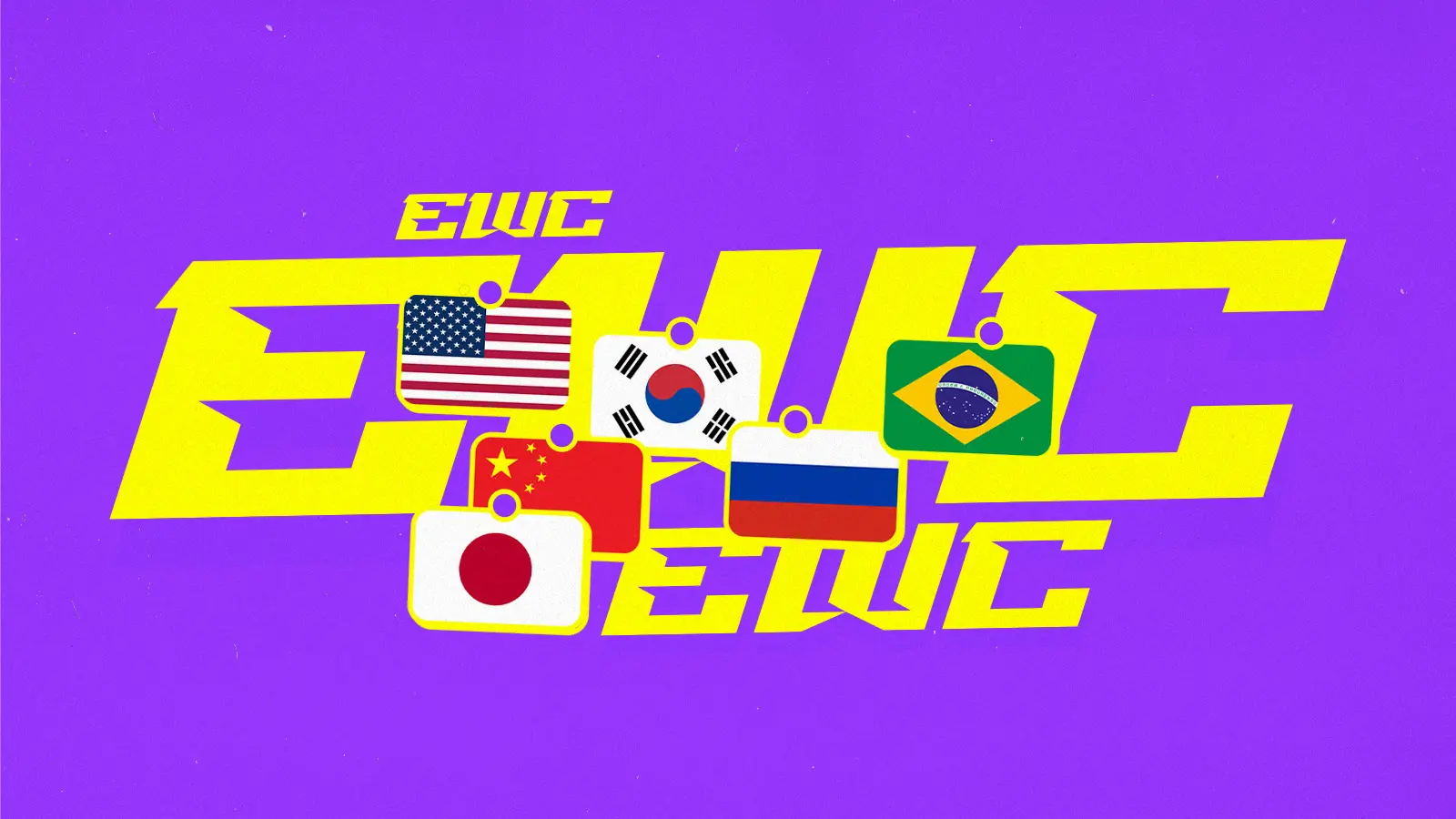
The United States had the largest delegation—201 players—followed by China (183) and South Korea (137). Russia sent 92 esports players to the EWC, ranking fifth among all countries. We’ll break down the statistics for the top esports nations in more detail below. As for regions, Asia clearly holds the lead: nearly half of the participants in the 2026 Esports World Cup came from there, even if we consider “esports Asia” and classify the Middle East as part of EMEA along with Africa:
- The Americas — 428 players (21.63%);
- EMEA — 617 (31.18%);
- Asia — 934 (47.2%).
When looking at smaller regions, the global leaders are clear: East Asia (China, Japan, South Korea) and Southeast Asia (the Philippines, Indonesia, Malaysia, and so on) are far ahead of the rest. Esports is least prevalent in Central Asia, South Asia, Oceania, and Africa.
- North America — 256 (12.94%)
- South America — 172 (8.69%);
- Western Europe — 261 (13.19%);
- Eastern Europe — 180 (9.1%)
- Middle East — 124 (6.27%);
- Africa — 52 (2.63%);
- Central Asia — 63 (3.18%);
- East Asia — 427 (21.58%);
- South Asia — 57 (2.88%);
- Southeast Asia — 342 (17.28%);
- Oceania — 45 (2.27%).
Compared to last year, many regions showed significant growth, but this is due to the expansion of the World Cup: while 1,300 players competed in the 2025 EWC, this time there were nearly 2,000. As a result, the number of participants from Africa doubled (compared to 23 a year ago), and North America claimed many of the additional slots (166 participants in the 2025 EWC).
Leading Countries in Esports
One of the key indicators of the popularity of video game competitions is the number of participants in top tournaments, and the Esports World Cup 2026 can be considered such an event for most well-known disciplines. The U.S. and China lead by a wide margin (each accounting for about 10% of the total), followed by South Korea, with Brazil and Russia rounding out the top five.
It’s also important to note that several games are popular in all of these countries. The U.S. was represented in 21 events on the World Cup schedule (excluding Free Fire, Honor of Kings, FC 26, and CrossFire), followed by China (16 games) and Brazil (15). This is partly due to the importance of these regions for developers—they are the largest markets, where everyone is trying to grow their product by hosting top-tier leagues and championships.
At the same time, each country has its own top games. For example, the U.S. leads by a wide margin in Call of Duty and Apex Legends, China dominates in CrossFire and Honor of Kings, and South Korea leads in Overwatch and LoL. For Russia, these games are Dota 2 and Counter-Strike 2.
Large local Mobile Legends communities have helped the Philippines and Indonesia make it into the overall top rankings; Japan has a large number of top Apex Legends teams and fighting game players; and CrossFire stands out in Vietnam.
| Country | Players | Share | Disciplines | Top Games (more than 10% of all players in the discipline) |
| United States | 201 | 10.16% | 21 | Call of Duty: Black Ops 7 — 35 (50%) Apex Legends — 30 (24.8%) Call of Duty: Warzone — 21 (23.3%) |
| China | 183 | 9.25% | 16 | CrossFire — 25 (30.9%) Honor of Kings — 22 (21.6%) TeamFight Tactics — 19 (29.7%) |
| South Korea | 137 | 6.92% | 12 | Overwatch — 43 (44.3%) League of Legends — 32 (40%) PUBG — 17 (17.7%) |
| Brazil | 124 | 6.27% | 15 | Rainbow Six Siege — 22 (19.8%) Free Fire — 16 (13.7%) Counter-Strike 2 — 16 (11.8%) |
| Russia | 92 | 4.65% | 12 | Dota — 27 (22.5%) Counter-Strike 2 — 18 (13.2%) |
| Indonesia | 79 | 3.99% | 10 | Mobile Legends (women) — 15 (18.8%) Free Fire — 16 (13.7%) |
| Japan | 78 | 3.94% | 10 | Apex Legends — 23 (19%) Street Fighter 6 — 13 (40.6%) Fatal Fury — 11 (34.38%) |
| Philippines | 70 | 3.54% | 8 | Mobile Legends — 27 (21.4%) Honor of Kings — 14 (13.7%) CrossFire — 10 (12.4%) |
| Vietnam | 61 | 3.08% | 10 | CrossFire — 16 (19.8%) PUBG — 12 (12.5%) League of Legends — 10 (12.5%) |
| Thailand | 56 | 2.83% | 9 | Free Fire — 20 (17.1%) PUBG — 12 (12.5%) |
Winning Countries of the 2026 Esports World Cup
The number of participants can be explained by developers’ interest in the market and regional quotas: for example, players from the U.S. qualify for almost every tournament because they face no competition in the North American qualifiers. But the World Cup results show that the top five countries in esports remain the same—China, Russia, the U.S., South Korea, and Brazil. However, identifying a clear leader is no longer so straightforward.
For example, the Chinese team won three tournaments at the 2026 Esports World Cup, but outside of TFT, Honor of Kings, and CrossFire, they failed to achieve any results. Due to struggles in Dota 2 and a failure in League of Legends, the Chinese no longer have much to be proud of—aside from their dominance in those three games, they haven’t posted strong results anywhere else, even though the country is represented in nearly every event.
For Russia, this EWC was undoubtedly the best: three “gold” medals in the three most popular games, including upsets in both the men’s and women’s MLBB. If we factor in Team Yandex’s third-place finish in Dota 2 (with two Russians on the roster) and Danila “Malibuca” Yakovenko’s victory in Fortnite (which he shared with the Austrian player vic0), then our country can be called the leader of the World Cup. That said, it’s not as if Russian esports has reached its peak: our players are capable of achieving top results in Apex Legends, PUBG, Rainbow Six, Valorant, and chess.
Teams and solo players from the U.S. made it into the top 3 in six different disciplines. In several other tournaments, Americans have also performed successfully on international teams: Alan “Busio” Tsvalina finished in the top 2 in LoL, and Anthony “Anziety” Moran, alongside Canadians, won the EWC in Warzone. Individual players excel in Dota 2, Counter-Strike 2, Fortnite, and fighting games—it’s safe to say that the U.S. has the most diverse Tier 1 scene.
Next come South Korea, Brazil, and Japan, thanks to their successes in their respective disciplines; however, it will be more difficult for them to reach the top 3: they simply lack the depth in other games where they could significantly strengthen their position ahead of the 2027 Esports World Cup. simply don’t exist here.
We can also note France, Saudi Arabia, and Thailand, each of which has achieved two strong results (which we consider to be top-3 finishes) in different games. Canada and a number of European countries are also missing from the table: they are strong in team-based games but won as mixed teams. For example, Vladimir “No[o]ne” Minenko won the Dota 2 championship with PARIVISION, and a Ukrainian duo from FUT reached the CS2 final, but for the “nation standings,” we included NAVI PUBG, which took bronze.
| Country | First-place finishes | Second-place finishes | Third-place finishes |
| China | 3 (TFT, Honor of Kings, CrossFire) | 2 (TFT, Honor of Kings) | 2 (TFT, CrossFire) |
| Russia | 3 (Dota 2, MLBB, CS 2) | 1 (Dota 2) | 1 (MLBB Women) |
| United States | 2 (Valorant, CoD: Black Ops 7) | 3 (Apex Legends, VALORANT, Rocket League) | 4 (Apex Legends, CoD: Black Ops 7, Rainbow Six, Chess) |
| South Korea | 2 (LoL, Overwatch 2) | 2 (LoL, PUBG Mobile) | 3 (Valorant, LoL, Overwatch 2) |
| Brazil | 1 (Rainbow Six) | 2 (Rainbow Six, CrossFire) | 2 (Free Fire, CS 2) |
| Japan | 1 (Apex Legends) | 2 (Fatal Fury, Street Fighter 6) | 2 (Fatal Fury, Street Fighter 6) |
| France | 1 (Trackmania) | 1 (Fortnite) | — |
| Saudi Arabia | 1 (Rocket League) | 1 (Overwatch 2) | — |
| Indonesia | 1 (MLBB Women) | — | 1 (MLBB) |
| Canada | 1 (CoD: Warzone) | — | — |
| Romania | 1 (EA Sports FC 26) | — | — |
| Turkey | 1 (PUBG Mobile) | — | — |
| Mexico | 1 (Fatal Fury) | — | — |
| Pakistan | 1 (Tekken 8) | — | — |
| Thailand | — | 1 (Free Fire) | 1 (Tekken 8) |
Thus, based on the results of the 2026 Esports World Cup, we can confirm the obvious: China, the U.S., and Russia remain the leaders in global esports. The U.S. has the most diverse scene; our players achieved their best result in the history of the World Cup, while China is still developing in a number of disciplines.
South Korea and Brazil can also be considered major esports nations, closely followed by Japan, Indonesia, the Philippines, and other Asian countries. France and Saudi Arabia are newcomers to the top ranks; to achieve full status as esports powerhouses, they still need to consistently demonstrate strong results over the long term.