Overwatch Ranks: Rankings and All Titles in Overwatch


Overwatch’s ranked mode lets you compete against players of roughly the same skill level and gradually climb the ranks. Rankings are calculated separately for different roles, and at the top of the system is a leaderboard of the best players. In this guide, we’ll break down all Overwatch ranks, how the ranking system works, and the requirements for unlocking Competitive Mode.
Read also: Overwatch Season 4.5 Tier List: Best Heroes
All Ranks in Overwatch
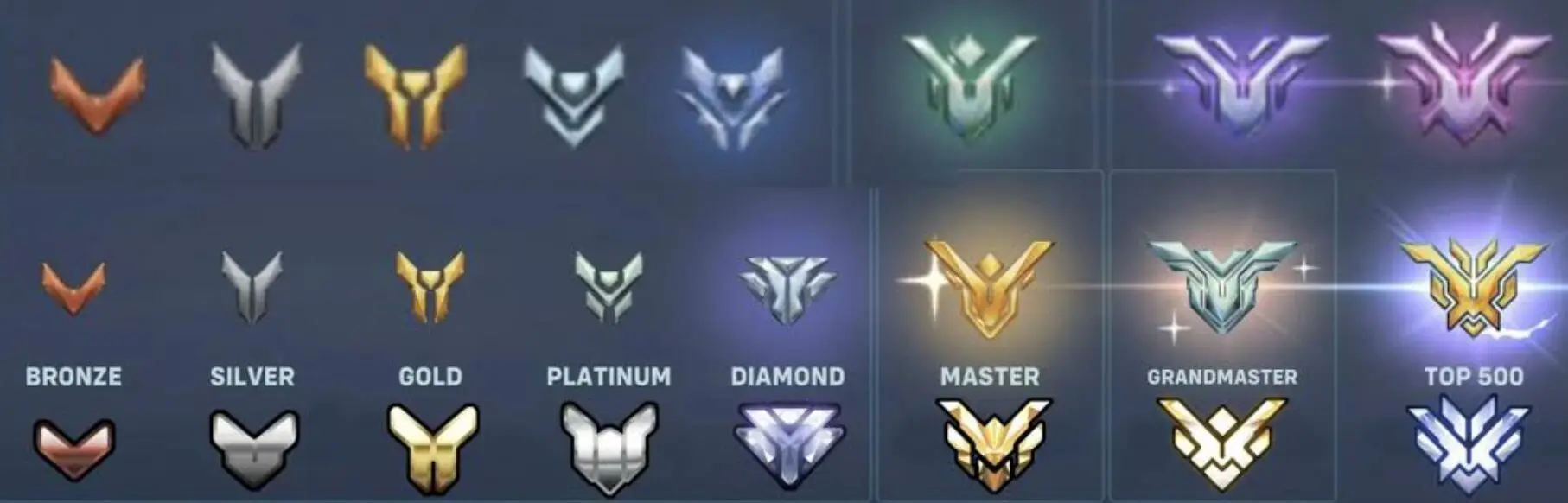
There are 10 main competitive ranks in Overwatch. In Season 4, a new rank—Emerald—was introduced between Platinum and Diamond. Each rank is divided into five divisions: 5 is the lowest, and 1 is the highest. After completing the first division, a player moves on to the next tier of the ranking system.
- Bronze V–I;
- Silver V–I;
- Gold V–I;
- Platinum V–I;
- Emerald V–I;
- Diamond V–I;
- Master V–I;
- Elite V–I;
- Grandmaster V–I;
- Champion V–I.
Champion is the highest normal rank in Overwatch. There is also a separate Top 500 Challenger leaderboard for the region’s strongest players, but this isn’t another rank above Champion—it’s simply a list of the top players.
How the Overwatch Rating System Works
After each competitive match, your rank progress increases or decreases. A win usually increases your progress, while a loss decreases it. The exact percentage change depends on your MMR and the match conditions. The game may take into account opponent strength, win and loss streaks, and other modifiers, which are displayed on the progress screen after the match.
However, the visible rank and MMR are different metrics. Overwatch uses hidden MMR for matchmaking, rather than the directly displayed ranks such as Bronze, Gold, or others. MMR changes primarily based on match results.
In role-based queues, the rating is calculated separately for each role. Therefore, for example, a player might be Diamond as a fighter, Platinum as a support, and Gold as a tank. The open queue also has its own separate rating.
In early 2026, Blizzard reset the ranks: players were once again assigned “Unranked” status and had to complete 10 placement matches for their respective roles and the Open Queue. However, the reset was gentle—the system retained information about players’ previous levels.
How to Unlock Overwatch Ranked Mode
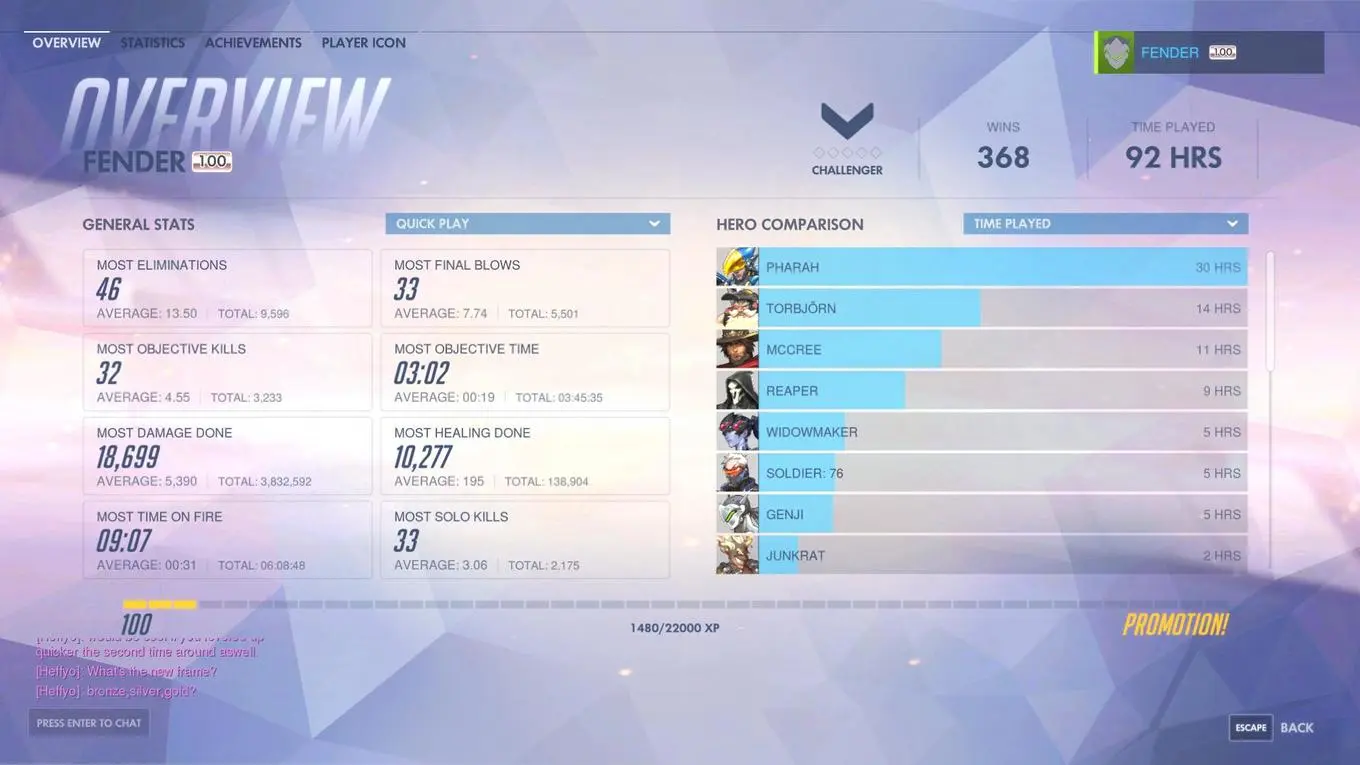
To unlock the Overwatch ranking on a new account, you must win 50 matches in Quick Play. In May 2026, Blizzard increased the requirement from 20 to 50 wins. Once this condition is met, Competitive mode will become available in the menu.
You can check your progress in the Competitive Challenges section. If Competitive Mode was already unlocked on your old account, you don’t need to earn 50 wins again.
Rating Calibration in Overwatch
After your rank is reset, you’ll need to play 10 calibration matches. Calibration is done separately for Tank, Fighter, and Support roles. You’ll also need to play 10 matches in Open Queue.
After each match, Overwatch displays your projected rank. Wins and losses during the calibration period have a greater impact on your rating, so your projected rank may change significantly over the course of 10 games.
However, your previous rating isn’t completely reset. Blizzard performs a soft reset, so after calibration, most players end up at roughly the same level as before. For example, during the reset in February 2026, the developers maintained the previous distribution of players across ranks.
The Highest Rank in Overwatch
The highest rank in Overwatch is Champion 1. It is above Grandmaster and is intended for the strongest players. You can’t reach Champion 1 solely through a successful calibration; after that, you’ll have to climb the ranks in regular competitive matches.
There is also the Top 500 Challenger—not a separate rank above Champion, but a leaderboard. It includes the highest-ranked players who have earned enough Challenger Score and met the mode’s requirements. However, Top 500 players retain their regular rank, such as Grandmaster or Champion.
Rank Reset in Overwatch
Ranks are not reset at the start of every season. In 2026, Blizzard performs a reset once every three seasons. The last reset took place in February 2026.
If a new season begins without a reset, you do not need to recalibrate.
Frequently Asked Questions (FAQ)
Нужно сыграть 10 матчей для каждой роли или Открытой очереди.
Максимальный ранг — Чемпион 1.
Нет. Top 500 Challenger — таблица лучших рейтинговых игроков.
Нет. В 2026 году сброс проходит раз в три сезона.
Последний сброс рангов прошёл в феврале 2026 года.