StrangeR on the talent shortage: “The most pressing problem is with offlaners: there aren’t enough of them anywhere.”

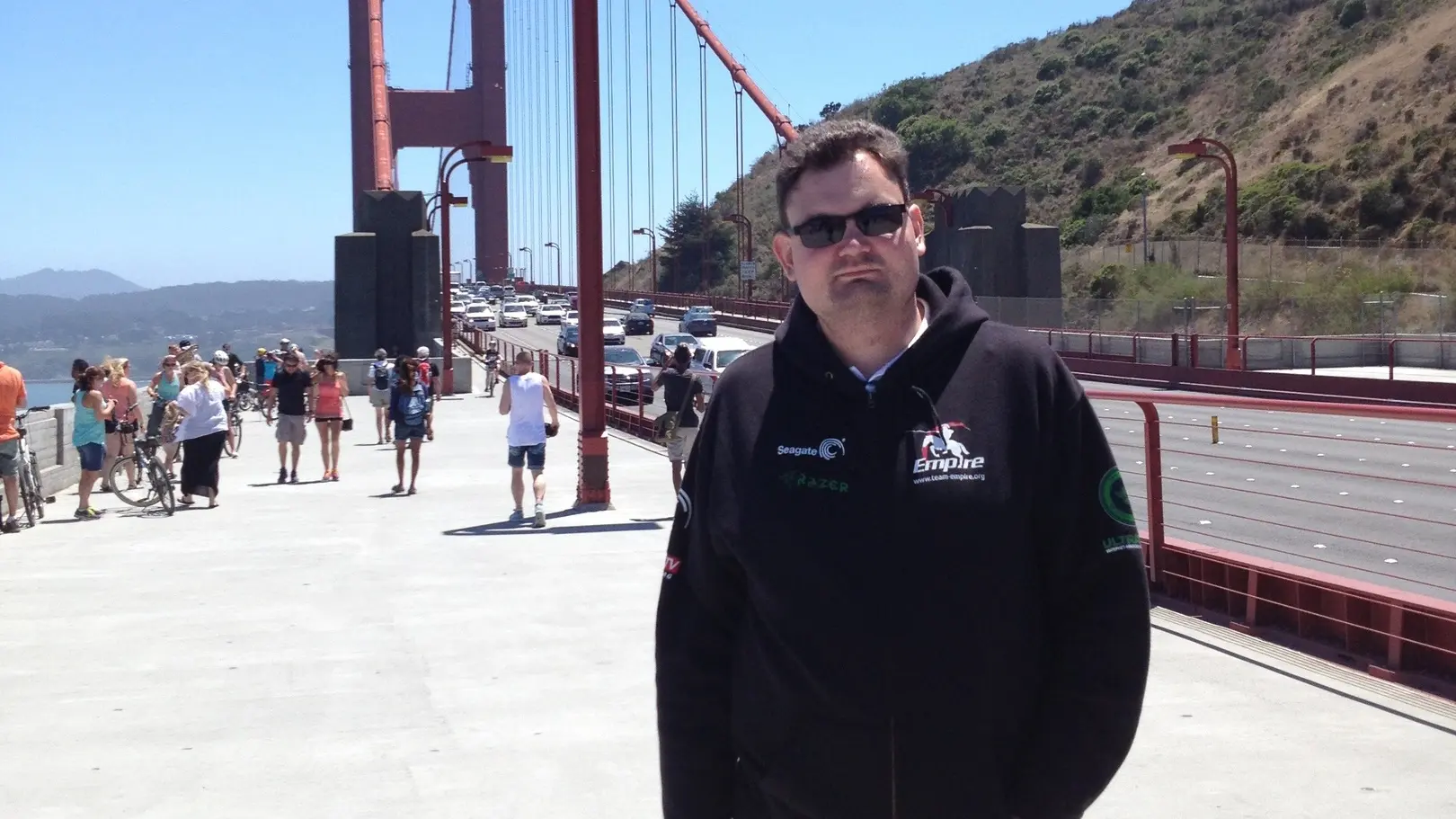
L1GA TEAM’s sports director, Alexander “StrangeR” Solomonov, spoke in an interview on the organization’s YouTube channel about his return to esports after a hiatus, economic changes in the professional scene, and his approach to working with players.
On his career hiatus
The break—I wouldn’t say it was very long, though by esports standards, it might have been. I finished working with One Move in August or September of last year and thought: finally, a break—I can rest and relax a bit. That’s exactly what I did during the first month. In fact, it was the first New Year’s I’d celebrated without dealing with team business or planning a boot camp. And when all the teams—and I was following the scene—headed off to boot camp as early as January 2–3 to play monthly qualifiers, it was really nice just to spend the holidays at home and watch it all from the sidelines.
But as time went on, already in January, I felt that I was still missing that esports drive. I’d worked in esports for so many years, gotten used to that routine, and it had started to feel a little boring. So I started looking for someone to work with: I tried out some mixed teams, worked with Team Tea and SoNNeikO’s team, and talked to various players. In the end, I decided to reach out to L1GA’s management myself and offer my services—and that’s how I ended up on the team.
On economic changes in the pro scene
These are natural economic processes. The global economy is changing, and we have to adapt. What’s happening now isn’t so much a restructuring as it is an adaptation, a change. Some will leave, and some will join. As I’ve already written on my Telegram channel, it’s obvious that the scene will change, and—let’s be realistic—it’s unlikely to be for the better financially. There will be changes in salaries, most likely cost-cutting measures for teams. This will happen first and foremost in Dota 2, because all organizations understand that it’s very difficult to monetize. But the discipline remains popular nonetheless, especially in our region, so we don’t want to walk away from it either—we want to stay in a way that’s profitable for the club or at least doesn’t drag the bottom line down too much.
In this regard, I actually like L1GA’s approach: everything is fairly optimized and is steadily moving in the right direction. I think some clubs will leave, and perhaps new ones will emerge, but only sporadically—fewer than before—and the players will simply be redistributed. The main question is whether Tier-1 players will be able to adapt to lower salaries. Many clubs will try to cut costs, and perhaps some Tier 1 players will wonder if it might be more profitable for them, for example, to become streamers. But we’ll see—all of this will happen after The International.
What The International Means
For me, as a manager, prize money has never been the deciding factor—the players received the lion’s share of the prize pool anyway, and the organization always took its cut. For me, The International is about the title, the atmosphere, and the fact that it’s the season’s final stage. And no matter what anyone says, the players still want to make it to TI. Of course, there are those who play solely for the money, but most are still eager to compete in the main tournament, step onto the stage, and experience all those emotions.
On working with players
In my view, my main work with players consists of two functions. The first is the initial roster selection. I don’t get involved in drafts or strategies: I might discuss something with the coach or share my opinion, but that’s not my area of expertise. The second is communication. Communicating with players in various situations: before a match, after a match, during wins, and during losses. There’s no magic formula or set script I follow—every time, people are different.
On Discipline and Punishments
We have good discipline on our team. There are penalties, but, thank God, we haven’t had to enforce them yet. I never act rashly—anything can happen: I allow for the possibility that someone might oversleep once if a game is early. That doesn’t mean you have to punish them right away; the next time, it’s a warning, and then a financial penalty. In general, throughout my career, I’ve repeatedly imposed financial penalties on players who violated even just training discipline. And if I find out that a player is throwing a game—which is simply a “322”—then how can he even be on the team, how can he be trusted, and how can we continue to work with him? To be honest, I personally haven’t had any situations that would have led to an immediate dismissal.
On Young Players
Players reach out to me—in private messages, sometimes via email, sometimes on [messenger]. Sometimes even acquaintances of my parents, knowing that I’m in esports, ask me to talk to their children and assess their prospects—where they should go. And this isn’t just about Dota 2, but CS2 as well. And I always say: you have to understand that this is a leap of faith of sorts, one that might not work out. And if it doesn’t work out, it’ll be a loss—a waste of time—because, frankly speaking, it’s impossible to balance a full-time academic program with esports. Yes, you can study remotely, but it’s still extremely difficult. That said, it’s possible to break into esports—there’s still a shortage of strong players. Just look at the talent shortage: I think it’ll still be there next season.
The most pressing problem is with offlaners: everyone is short on them. There’s also a shortage of “fives”—Team Spirit had to switch their “four” to “five” because they couldn’t find a player. So, if you have the faith and confidence that someone is ready to invest their energy and time, to go above and beyond, and to achieve something—it’s worth giving it a shot. Maybe I’m scaring people a little, but that’s just how it is: it’s a risk. I’m always ready to help in this regard and would be happy to see new players join. I hope some new rising stars will emerge next season.
Read also: StrangeR on the 2026 Esports World Cup: “Today, the whole team received our French visas.”
Earlier, L1GA TEAM’s sports director Alexander “StrangeR” Solomonov and the team’s coach Alexey “TheChosenOne” Karanevich commented on the team’s successful qualification for The International 2026.
Photo: Alexander “StrangeR” Solomonov.