Valorant Ranks in Order: All Titles, the Rank Chart, and How the Rating System Works


Valorant’s ranked system allows players to compete against opponents of their own skill level and gradually climb the ranked ladder. Players gain Ranked Points (RR) for wins and lose them for losses. In this guide, we’ll explain the different ranks in Valorant, show you the rank table in order, and explain how the promotion and demotion system works in ranked mode.
All Valorant Ranks in Order
Valorant has nine main ranks: Iron, Bronze, Silver, Gold, Platinum, Diamond, Ascendant, Immortal, and Radiant. All ranks except Radiant are divided into three divisions: I, II, and III. After earning 100 rating points (RR), a player moves up to the next division or rank.
Valorant Rank Table:
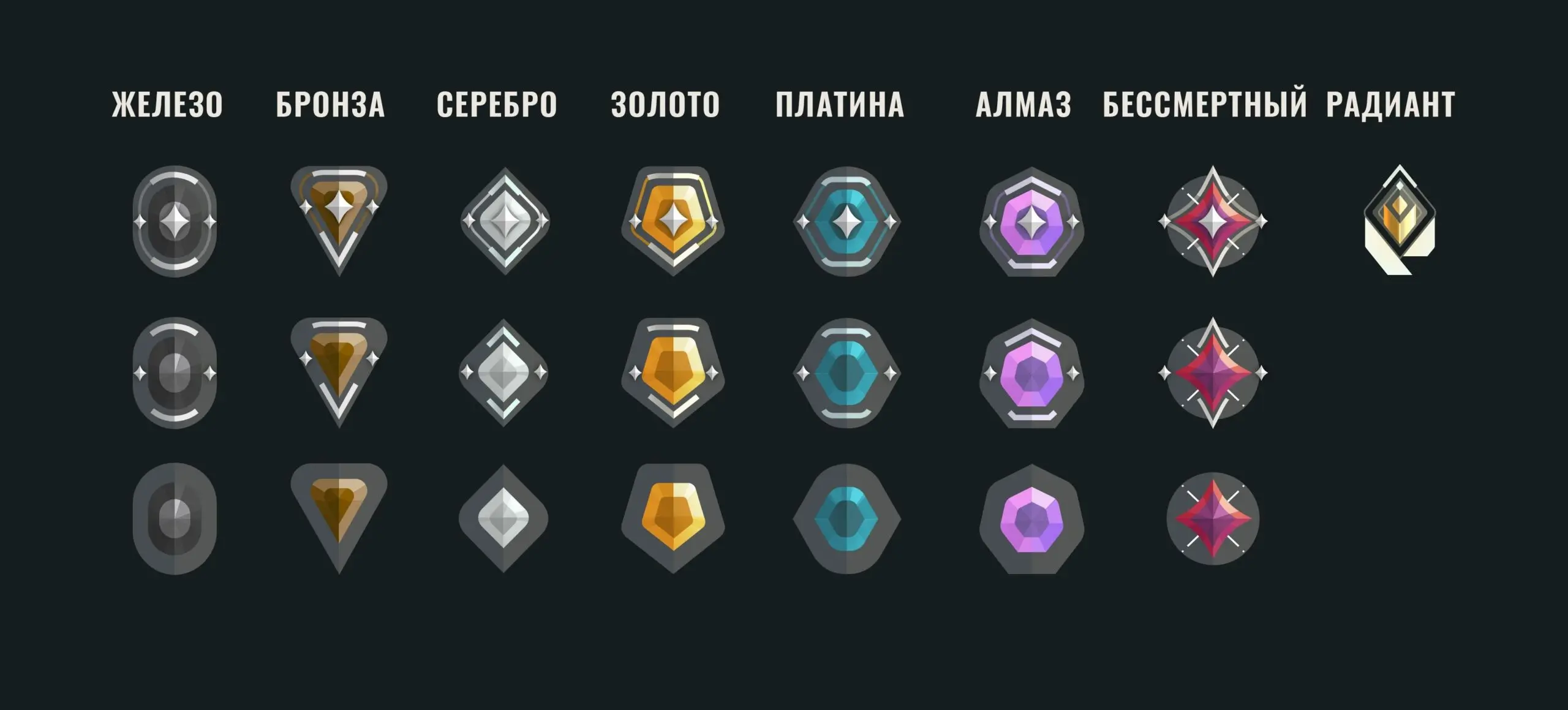
Most players are in the Silver, Gold, and Platinum ranks, while Immortal and especially Radiant are considered elite ranks that only a small percentage of the community reaches. Only the best players in the region, who occupy the top spots on the leaderboard, achieve these ranks.
How the Ranked System Works in Valorant
Valorant’s ranked mode uses two systems: the visible Ranked Rating (RR) and the hidden Matchmaking Rating (MMR). RR consists of points that you see after each match. As is standard, these points are awarded for wins and deducted for losses. To advance to the next division or rank, you need to earn 100 RR.
Meanwhile, the MMR system—a hidden measure of your skill level—operates separately. It’s what determines which opponents and teammates the system will match you with. If your MMR is higher than your current rank, the game will award more RR for wins and deduct fewer points for losses to bring you up to your true skill level faster. Conversely, if your MMR is lower than your rank, you’ll earn fewer points for wins and lose more for losses.
The main factor affecting your rating remains whether your team wins or loses. However, at lower ranks, the system also takes into account a player’s individual performance: kills, contribution to rounds, and overall effectiveness. At high ranks, individual statistics have almost no influence, and the match result takes precedence. This is why two players of the same rank sometimes receive different amounts of RR for the same match—the system determines that their actual skill levels differ and attempts to gradually bring them to the appropriate rank.
How to Unlock Ranked Mode
New accounts cannot play in Ranked mode right away. To unlock Ranked in Valorant, you must level up your account to Level 20. You earn experience from any match, so the fastest way to level up is by playing regularly and completing daily challenges.
Once you reach Level 20, Ranked Mode will become available automatically. You’ll then need to play five placement matches so the system can determine your starting rank. The highest rank you can achieve after placement is Ascendant III.
How to Rank Up Quickly in Valorant
It’s not the number of matches that helps you climb the ranks quickly in Valorant, but consistency. In Reddit discussions, players most often advise against grinding ranked matches for 8 hours straight; instead, they recommend playing in short sessions, warming up before matches, and stopping if you start to tilt. A tired player is more likely to make bad decisions and lose RR even with good aim.
Esports players and streamers recommend:
- play with 2–3 main agents, rather than the entire agent pool at once;
- practice basic mechanics: shooting, movement, counter-strafe, and spray control;
- keep your crosshair at head height and pre-aim at possible enemy positions;
- don’t rush to buy a weapon every round; keep an eye on your team’s economy;
- use voice chat for brief updates: where the enemy is, how much damage you’ve dealt, and where you’re moving;
- review your own matches or others’ match analyses to identify recurring mistakes.
Aim isn’t the only thing that matters for ranking. Positioning, timing, understanding the economy, the ability to play as part of a team, and adapting to opponents’ habits are just as important—especially if you’re already consistently hitting your targets. The key is not to try to change everything at once. Pick one problem and work on it for a few days. This way, your progress might feel slower, but your rank will improve more steadily.
Frequently Asked Questions (FAQ)
Сосредоточьтесь на нескольких агентах, регулярно тренируйте стрельбу и не играйте в состоянии усталости или тильта. Стабильность даёт больше результата, чем большое количество матчей.
На низких рангах хороший аим помогает выигрывать больше дуэлей, но на высоких рангах не менее важны позиционирование, экономика, использование способностей и командная игра.
Нет. Многие игроки советуют делать перерывы после нескольких поражений подряд. Длинные игровые сессии часто приводят к усталости и большему количеству ошибок.
Да. Короткая и полезная информация о противниках, ротациях и планах команды помогает выигрывать больше раундов даже без выдающейся стрельбы. Не поддавайтесь на провокации и не начинайте ссору с тиммейтами, это не поможет выиграть игру.
Да. Многие игроки достигают высоких рангов за счёт хорошего понимания игры, правильных решений и грамотного взаимодействия с командой, даже если их механические навыки слабые.